Yosemite Nature Notes · Volume 27, Number 2
February 1948
NATURE NOTES
Vol. XXVII February 1948 No. 2
THE MONTHLY PUBLICATION OF THE YOSEMITE NATURALIST DIVISION AND THE YOSEMITE NATURAL HISTORY ASSOCIATION, INC.
C. P. Russell, Superintendent D. E. McHenry, Park Naturalist H. C. Parker, Assoc. Park Naturalist R. H. McIntyre, Acting Asst. Park Naturalist
VOL. XXVII FEBRUARY. 1948 NO. 2 A GEOGRAPHER LOOKS AT THE YOSEMITE
By Millicent Todd Bingham Editors Note : Mrs. Bingham is the outstanding woman geographer in America, and an authority on the works of Emily Dickinson. As a result of her hobby, the study of nature and the problems of conservation, she founded the Todd Wildlife Sanctuary in Maine. As I prepare to leave the Yosemite Valley on this shining blue and gold October morning, I should like to jot down a few impressions which have made the past week memorable.
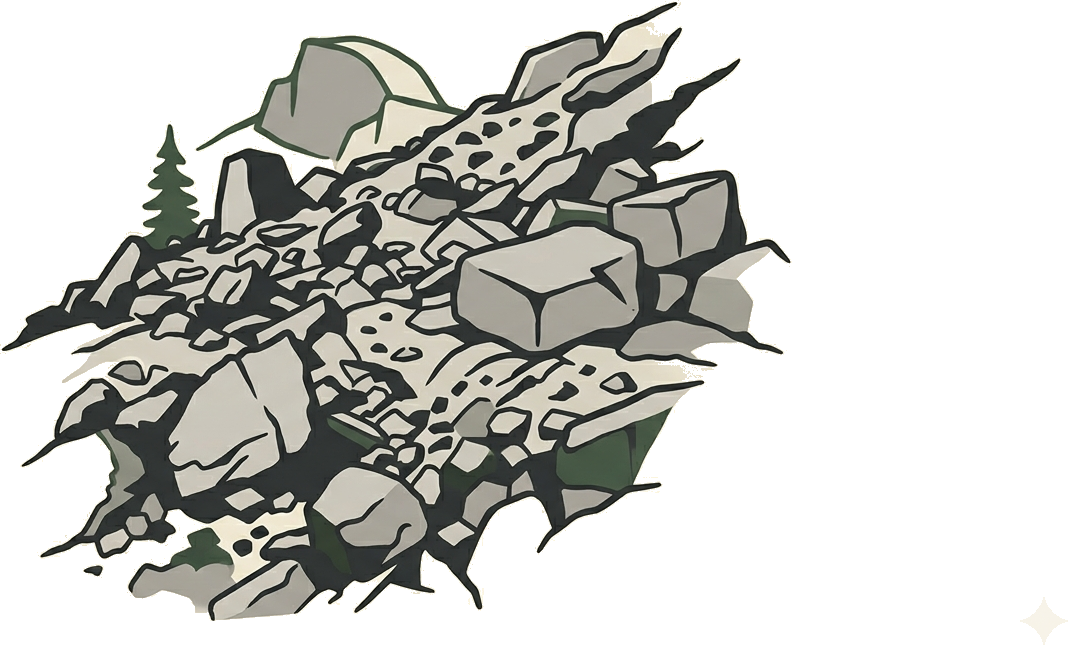
To a geographer the most striking fact observable everywhere in the park is the activity of geological processes. Physiography has been called current geology. But in the Yosemite the words sound inert. For here geology is alive. We can see the watercourses in the act of wearing away the rocks which support them. We see layers of granite, pried up by water and frost, loosen their hold and flake off, with the result that by just so much the width of the valley is increased. We observe talus slopes and, conspicuous at the foot of hanging valleys, alluvial fans spreading out farther and farther into the clear cold lakes, which, as the level of the valley is raised, will at last fill up and disappear. When we climb up to the Alpine meadows we see how, in similar fashion, the seedlings are moving out across the open spaces, which in consequence are on their way to merge with the surrounding forest.
Far above, on the crest of a granite dome, the rock is being pulverized beneath sun and rain, to trickle off as white sand in a thousand rivulets carrying with them an infinitesimal part of the lofty summit, down to the river and off toward the sea. Here earth activities are in full swing. On such bare granite surfaces, sufficiently flat to hold water in small depressions, we found circular pools, some larger (as much as ten inches across), some smaller. At first glance they looked like pot-holes, but all are shallow. To my query as to why they should expand in area without deepening, the Naturalist had a ready answer: while the smallest rock particles are carried off by the overflow, heavier particles remain in place, protecting the bottom from further erosion as the pool fills, empties, and fills again. These little weather-pits, so-called, entice and puzzle the visitor until their life history is elucidated.
Another type of disintegration characteristic of the millenniums is taking place on this same mountain top. Beneath a transparent layer of ice, minute streams of water are carrying capacity loads of sand, adding their own ounce of effort to the general processes of dissolution—sub-glacial rivers in miniature visible in this laboratory of Nature.
Henry Thoreau once remarked to my grandfather as they floated down the Concord River in a little boat and passed beneath the overhanging branches of a great tree, "There is enough in that oak tree to occupy a man his entire life!" How much more the countless aspects of nature in this incomparable Valley! They are providing material for study now, and they will continue to do so until the mountains are once more level with the sea.
The ever-changing face of the earth and the ways in which those changes take place by the action of air, wind, rain and snow, frost and ice, together with interrelationships between soil, plants and animals, are here dramatically displayed for those to observe who have eyes to see, ears to hear, and minds to comprehend. And as the secrets in rocks, in streams, in forests and meadows with their wild inhabitants are disclosed, as the effects of each upon all are understood, one by one, and their interaction explained, a story of surpassing grandeur is unfolded, to be passed on to those to whom the vision has not yet been revealed.
To interpret these things to visitors who come by tens of thousands to enjoy themselves is the high mission of the resident Naturalist. Parks, I have found out, are not for recreation only. They also serve another purpose. Their great value to the American people is not alone to contribute to our education, important though that is, but to bring to us an uplift of spirit as well. What can be of more lasting value than to create in a human being an attitude of wonder, which is indeed the beginning of wisdom! --Anderson Photo On the summit of Sentinel Dome.
A LIVELY VISITOR AT THE MOUNTAIN HOUSE
By Margaret Malby During the winter of 1946-47, my husband, Ray, and I were stationed by the Yosemite Park and Curry Company at Glacier Point, to manage the Mountain House, which is kept open in winter for the accommodation of skiers and other visitors. With the exception of mice scampering through the walls, there were few noises to break the silence that surrounded us, so when we heard one foreign to our ears it called for an immediate investigation.
One bleak afternoon in February, 1947, we were listening to the radio when we heard a louder than usual noise in the storeroom in the rear. We went in to find the cause and saw a long brown tail disappear behind the egg crates. Upon further investigation we discovered it to be a weasel-like animal about sixteen or so inches long.
The animal was looking frantically for a place to escape. In trying to avoid us it crowded into a cage that enclosed the motor for the freezing unit. Ray quickly placed a shingle that was lying around over the place where it had entered. But, before we could think of a safe, effective way of transferring it from the cage to a box, the marten, for such it was, found a safer and more effective way of escaping through a crack against the wall.
All of the time that the marten was trapped in the cage she was growling angrily at us in language which, had I understood, I'm sure I wouldn't have wanted to hear. For a while she seemed to be nothing but mouth and teeth, so we decided to make a temporary retreat in order to let her ire cool.
After allowing a sufficient cooling off period, we returned to the field of battle to find her still growling at us. After a minute or two, she climbed into a small hole in the ceiling. We immediately slapped another shingle over that hole and started thinking fast and furiously, racking our brains for a way to make her come out of the hole and into a box. Our brain power just wasn't up to the situation, so we decided to make another orderly retreat to let her come out of her own accord.
I momentarily gave up the chase, but my husband had the idea of opening the door to the storeroom a crack, then putting pieces of cardboard from the top of the door down, except for a small opening at the bottom at which a wooden box with a sliding trap door was placed. I might add that while he was putting the cardboard on the door the marten tried her best to shut the door by pushing against it. The drawback to this idea was the fact that someone had to remain in the room to shut the door of the trap if the animal walked in, but as long as a human was present the marten would not come in. Unfortunately we couldn't think of another way to fix the trap door due to the lack of materials and tools. That idea was finally abandoned, and before returning to the game of "try and catch me," we talked by radio to the rangers who said that the naturalists would like to have her to take some pictures for the museum.
With this good reason for catching her, we returned with renewed ambition to the chase. When we again entered the room the marten jumped down between two sturdy boxes behind some egg crates that were setting on a table. Ray put a board over the bottom of the hole while I held one on top. While the animal was thus
Here is the Pine Marten in the story. trapped, he placed a bag over the entrance and then removed the board. I then forced her into the bag by means of a long stick, and Ray grabbed her around the neck and when she poked her head out through a hole in the bag. Thus the battle was over and we had our marten. The next day we hiked down the four mile trail, with the animal securely imprisoned in a cookie tin, riding in my husband's pack. The captive was delivered to the naturalists at the museum, safe and sound, and from then on, it was up to them.
The Marten, Martes caurina sierrae Grinnell and Storer, was transferred to an improvised photographic cage. It was "shot" in black and white and color motion picture film, before it was released, apparently none the worse for its adventure. We are very grateful to Mr. and Mrs. Malby for the trouble they took in order to assure us the opportunity to make these fine photographic records. Mr. McCully, Henry and I each took one of the containers that the animal had occupied to our homes and the scent was such that we had no more mice around the house that winter! (The animal, a Sierra Nevada Pine H. C. P.) Two significant events have recently taken place in the life of Dr. Francois E. Matthes, author of the "Geologic History of the Yosemite Valley," Professional Paper No. 160, of the United States Geological Survey.
At the Commencement Exercises of the University of California in Berkeley on June 21, 1947, Dr. Matthes was given the honorary degree of Doctor of Laws. The degree was conferred by President Sproul upon the recommendation to the Regents of the University by a committee of the faculty representing the Academic Senate. At the investiture ceremony President Sproul read the following citation:
"Francois Emile Matthes, Senior Geologist of the United States Geological Survey; able geomorphologist and student of glaciers; topographer of the Sierra Nevada and especially the Yosemite Valley; by his artistry in the delineation of landforms and his clear, scientific descriptions, he has interpreted the
FRANCOIS E. MATTHES HONORED — RETIRES
By Donald Edward McHenry, Park Naturalist
beauty of the western American landscape to the mind as well as the eyes of all who love the mountains."
This occasion was a fitting prelude to Dr. Matthes' retirement on June 30, 1947, from a long and distinguished career with the United States Geological Survey. Joining the Survey in 1896, he first served seventeen years as topographic engineer, making maps. Then, having taken a postgraduate course in geology at Harvard University, in 1904-05, he qualified for the position of geologist. His ability to delineate the distinctive forms of mountains and canyons early won him the privilege of mapping several of the outstanding scenic areas in the United States, and so he became intimately familiar with the great western national parks. He first mapped the central portion of Glacier National Park; then the spectacular upper reaches of the Grand Canyon of the Colorado River; next the Yosemite Valley, and finally Mount Rainier.
Most difficult of all, he declares, was the task of representing the cliff sculpture of Yosemite Valley. So close and so intricate was the web of contour lines on the Yosemite map that even the most experienced engraver of the Geological Survey had to call upon him for assistance.
It was on July 12, 1905, that Dr. Matthes placed at Glacier Point the bronze benchmark tablet which was to become the main reference point for the determination of the altitude of the peaks surrounding the Valley and the height of its cliffs. In 1913 he returned to the Valley, this time as geologist, commissioned to trace, as far as might prove practicable, the successive stages in the evolution of its landscape. The investigation required several field seasons and made it necessary for him to study the adjoining parts of the High Sierra and visit the other great chasms in the range, including the Kings River Canyon. In 1919 he was requested to explain to King Albert of Belgium, at Glacier Point, the mode of origin of the Yosemite Valley. The king, well versed in geologic science, was deeply impressed, and afterwards conferred upon Dr. Matthes the cross of Chevalier of the Order of Leopold II. Although now retired, at his new home in El Cerrito, California, (north of Berkeley), Dr. Matthes with unabated enthusiasm continues to pursue his geologic and glaciologic studies. He remains chairman of the Research Committee on Glaciers of the American Geophysical Union and secretary of the International --Photo by Bachrach
Carl Parcher Russell --Anderson Photo
Commission on Snow and Glaciers. His duties with these organizations keep him in contact with scientists throughout the United States in many foreign lands.
His interest in the Yosemite region is, however, still one of his primary concerns, for he has recently contributed a chapter on the geology of the Sierra Nevada to a book about to be published on that range. Currently he is occupied in writing a popular booklet interpreting the scenic features of the Yosemite region. This booklet will not only be written in the same charming style characteristic of his professional paper, but will contain the new data which Dr. Matthes has uncovered in recent years. It is expected that this booklet will be off the press in late spring of 1948. His original Professional Paper No. 160 is fast becoming a collector's item.
CARL P. RUSSELL BECOMES NEW SUPERINTENDENT
By Donald Edward McHenry, Park Naturalist Dr. Carl Parcher Russell, recently Chief Naturalist in the Office of the Director of the National Park Service, assumed the responsibilities of his new appointment as Superintendent of Yosemite National Park the first of December, 1947. Carl, as he is affectionately called by his many friends in the park, is just returning "home" for he and Betty came to Yosemite for their first wedding anniversary in 1923 to remain as Park Naturalist until 1929.
Carl Russell brings to Yosemite a broad and extensive experience in National Park Service work, including not only such administrative responsibilities as Regional Director in Region One which includes National Park Service areas in the eastern states, but also the direction of the museums and the natural history interpretation program for the entire Service. Deeply imbued with the fundamental idealism of the National Parks concept, Carl will administer his new responsibilities with genuine sympathy for the inherent values of this world famous park. Newton B. Drury, Director of the National Park Service, says of Carl, "Dr. Russell possesses a fund of knowledge of this great park and an appreciation of its scenic and scientific values. He will continue the work of his predecessor in protecting the area and resisting trends that would impair its greatness. He will lead, too, in the interpretation of the natural features of Yosemite."
Carl Russell's leadership is generally recognized among his colleagues in the National Park Service and it is felt in broader fields. A year ago he was appointed to the Chairmanship of the National Parks Committee within the International Council of Museums, United Nations Educational and Cultural Organization. His travels and studies in foreign countries facilitated his work in initiating this committee work on a world-wide basis.
Carl Russell's interest in research has continued to be lively in spite of the weight of his administrative responsibilities. He is still working on his writings dealing with accounts of the early fur traders of the West, a work which will appear eventually in three volumes and will constitute a noteworthy contribution to that phase of pioneer history which Jefferson National Expansion Memorial in St. Louis represents. In addition to many statements on various phases of National Park Service policies and programs appearing over the years in numerous national periodicals, Carl is the author of the popular and authentic book, "One Hundred Years in Yosemite," now in its second and revised edition.
The sincere friendliness of Carl and Betty have always won friends both for themselves and for the National Park Service wherever they have represented this organization. Their old friends are glad to see them back and wish them well.
CHRISTMAS BIRD COUNT
By Bona May McHenry During Christmas week, for the 48th consecutive year, the bird-watchers of America spent a day counting birds in their respective regions. The results are published in the March-April issue of Audubon Field Notes, a supplement of Audubon Magazine. In this country-wide cooperative project the birds of Yosemite Valley have been counted in twelve seasons, starting in 1931 and being interrupted in 1942. This year the project was resumed in Yosemite.
The 1947 Christmas Count showed a total of 32 species and 414 individuals spending the holiday season in the section from Mirror Lake to El Portal as follows: Common Mallard, 2; Western Red-tailed Hawk, 2; California Pigmy Owl, 2; Western Belted Kingfisher, 10; Red-shafted Flicker, 5; Western Pileated Woodpecker, 2; California Woodpecker, 40; Red-naped Sapsucker, 1; Modoc Woodpecker, 10; Northern White-headed Woodpecker, 3; Blue-fronted Jay, 108; Long-tailed Jay, 5; Short-tailed Chickadee, 38; Plain Titmouse, 3; Red-breasted Nuthatch, 3; Sierra Creeper, 14; Dipper, 9; Western Winter Wren, 2; Dotted Wren, 6; Western Robin, 2; Northern Varied Thrush, 1; Western Bluebird, 19; Townsend's Solitaire, 1; Western Golden-crowned Kinglet, 42; Western Ruby-crowned Kinglet, 10; California Purple Finch, 6; Cassin's Purple Finch, 4; Northern Pine Siskin, 12; Sacramento Towhee, 4; Sacramento Brown Towhee, 8; Thurber's Junco, 39; Modoc Song Sparrow, 1.
A comparison of this census with that of 1942, the last taken, does not show anything unusual in the recent count. The total number of species is nearly the same—32 in 1947; 29 in 1942. The number of individuals does not differ greatly—414 and 573, respectively. Species seen in 1942 that were not seen in 1947 were Nuttall's Woodpecker, California Bush-Tit, Wren-Tit, Hermit Thrush, Russet-backed Thrush, and Audubon's Warbler. Species seen in 1947 that were not seen in 1942 were Red-naped Sapsucker, Western Winter Wren, Dotted Wren, Northern Varied Thrush, Townsend's Solitaire, Northern Pine Siskin, and Modoc Song Sparrow.
Over a period of years Christmas Bird Counts in Yosemite Valley show the relative abundance of various species. Ornithologists experienced in interpreting the results, taking into account weather, food, and other factors, can determine the reasons for fluctuations in the bird population. It may be that the greatest value of the Christmas Bird Counts is to the individuals counting. There are a thousand delights of ear and eye, and long afterwards the remembrance of them. There is the thrill of the unexpected. One may foretell many of the birds that will be on the list, but not all—and so the bird counter goes out not knowing what surprise may be in store. In Yosemite Valley there is added a wonder and awe inspired by the uniquely beautiful sculpturing of the walls that encompass the census area.
Digitized by Yosemite Online Library Dan Anderson