Yosemite Nature Notes · Volume 47, Number 9
July 1980
YOSEMITE JULY, 1980 VOLUME FORTY-SEVEN, NUMBER 9
Published for members of Yosemite Natural History Association Spanish Coin Found in Indian Cave In the spring of 1978, a young woman was hiking with friends around the Indian Caves, a group of rockshelters on the Valley floor. After climbing some distance above the larger "caves", they stopped for a rest at a small rockshelter. Picking up a stick from the cave's floor, the young woman idly jabbed it into the ground; suddenly a small, circular object flew into the air. Picking it up, she saw that it was a coin. On her return to camp she cleaned it of its patina and found it to be a silver Spanish real with a mint date of 1781. Through a series of curious circumstances, we finally heard of the discovery of this coin and later obtained it from its discoverer. The woman was reluctant to part with it and even more reluctant to give her name, she left the park shortly thereafter. The curators will never be certain in which of a score of rockshelters the coin was found, but its discovery sparked an immediate interest in the possibility of Spanish contact in Yosemite Valley and again raised the problem of managing archaeological resources in a heavily visited area such as Yosemite National Park. The impact of the Spanish in the Sierra Nevada near Yosemite was never direct. Gabriel Moraga, in 1806, led a group of soldiers from Mission San Juan Bautista into the foothills below today's Mariposa County. (Cook, p. 248) This benign expedition was a part of the Spanish plan to establish an interior chain of missions, similar to those which had been built on the California coast. (ibid) Moraga passed through the area again in 1810, but it is unknown if other Spanish groups explored this area. After the Mexican Revolution in 1812 and Secularization in 1833, the Mariposa area was inhabited by a mixture of Native Miwok and ex-mission Indians. Those people who formerly had lived at the missions had a good command of the Spanish language and many were expert horsemen. Making forays across the San Joaquin Valley, they stole herds of horses
from the Spanish ranchos, driving the animals to their villages in the Sierra foothills. Horse flesh had become an important part of the diet, and had replaced a number of native foods. (Bigelow, p. 130) In 1845, John C. Fremont traveled through the Mariposa area and remarked on "Horse-Thief Indians" with whom he battled. (ibid) Soon, the Gold Rush of 1849 brought over 6,000 miners into Mariposa County and conflict with the local Indian people was inevitable. Indian people were killed, their village destroyed. They retaliated by destroying trading posts, driving off miners' horses and mules, and attacking the miners at their camps. (Bates, op. cit.) The Mariposa Battalion was organized in 1851 to solve the "Indian problem", it probably was the first Anglo party to enter Yosemite Valley. (ibid) The Indian people in Yosemite Valley at this time were a mixture of Southern Miwok and Mono Lake Paiute groups. It is unknown whether any of the people from the lower foothills had joined them. Yet, the only person able to converse with Chief Tenaya, leader of the Yosemite band, was Sandino, a "mission Indian" who accompanied the Mariposa Battalion. James Savage, leader of the group and reputedly conversant in several foothill Indian (Miwok?) dialects, was unable to understand Tenaya. None of this sheds any light on when or how the coin could have come to rest in Yosemite Valley. The coin is quite worn, an indication it had been handled by many people for many years. Could the coin have been brought from the missions by the "Horse-Thief Indians"? Could it have been a gift, or could it have been lost by one of Gabriel Moraga's soldiers? These were thought to be possibilities. But an even more likely one remained. The Gold Rush brought thousands of people into California over a short period of time. This migration, and the sudden acquisition of California as a part of the United States, created a shortage of U.S. currency on the West Coast. Contemporary accounts from that time tell us: "Specimens of nearly all the coinage of the civilized world were in constant circulation. Approximate values were bestowed upon the pieces, and if anything like the mark, they readily passed as currency. The English shilling, the American quarter-dollar, the French franc, the Mexican double-real were all of the same value; so likewise were the English crown, the French five-franc piece and the American or Mexican dollar...the smaller silver coins of whatever denomination and of every country were all alike bits, and passed for the same value... Besides the coins mentioned, there were Indian rupees, Dutch and German florins and guilders, the many coinages of South America, and in fact every known piece of money that circulated in Europe, and in many other parts of the world. The deficiency in the American proper coinage was thus amply made up..." (Soule, p. 363) "Mr. Hudson had paid us off every Saturday night, and it was laughable to see the kinds of currency tendered and accepted as a matter of course. He would come with a bag filled with roleaus(?) of silver coin, foreign coins of every description, simple slugs of gold stamped with their weight and value, miner's bank coins, etc. Everything went in those days and in whatever shape wages came, there was no grumbling, as there was not sufficient coin in circulation to supply the demand." (Gardiner, p. 71) "...as the 5 franc pieces pass for dollars here, just as other foreign coins which have about the same value. One is no longer particular, and everything, from the Mexican coins which have less value to the old piastres struck with the image of the Spanish kings which have a higher value, is accepted here at the same value." (Nasatir, p. 83) Because of this shortage of coins, the U.S. Treasury Department established a mint at San Francisco in 1852. After beginning operation in 1854, attempts were made to recall all private and foreign coins from circulation. When the mint was closed for repairs in 1856, coins became scarce again. Coinage from private mints and presumably foreign coins filled the void. When the mint reopened shortly thereafter, the minting of private coins and apparently the use of foreign coinage soon became a thing of the past. From this data, it is certain that the coin, minted in Mexico City in 1781 for Charles III of Spain, could have reached Yosemite in a number of ways. It is known that the area near Indian Caves was in 1851 the site of an active Miwok village, (Bunnell, op. cit.), and it is quite possible that the coin did not reach Yosemite until that time. Such coins, while not common, occasionally were found in Native American sites in the Sierra Nevada. An Irish half-cent, with a mint date of 1766, and a Spanish real with a date of
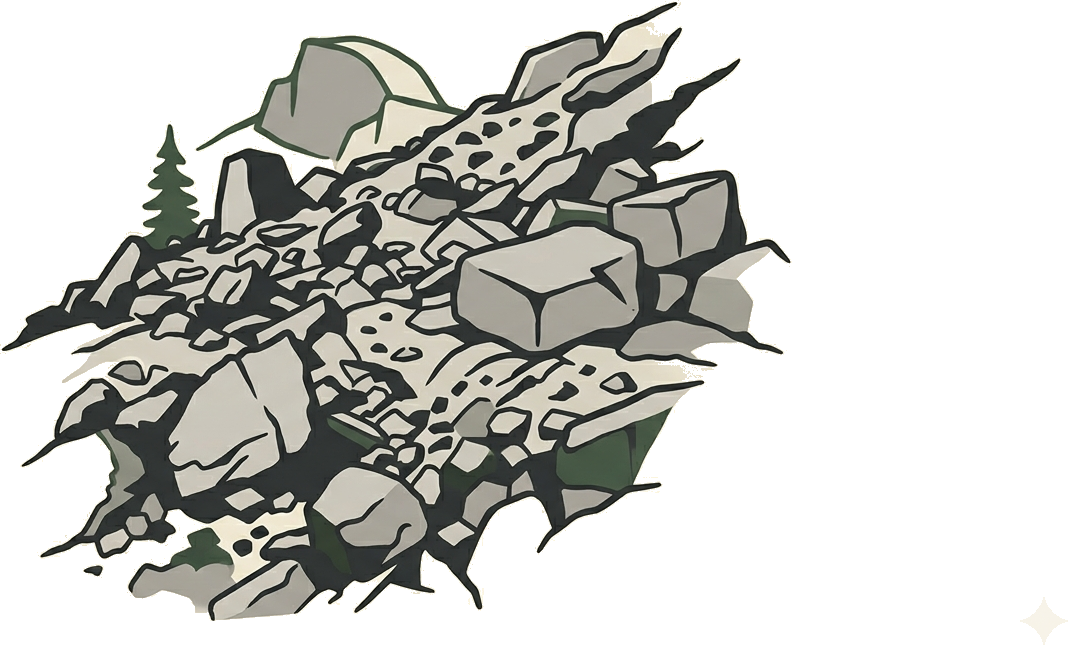
1804 were found in an Indian grave excavated near Coulterville before 1921. (Catalog numbers 545 and 546, National Park Service Collections, Yosemite National Park.) Interestingly, one of the coins is drilled as if for suspension from a necklace, perhaps indicating that coins were treated much as aboriginal abalone shell ornaments. Such usage has been recorded for the Northwestern Maidu and other groups (p.c. Henry Azbill, 1971). How much more archaeological material of this type has been taken from the Yosemite region never will be known. It is impossible to patrol, fence or otherwise protect the literally thousands of archaeological sites found on the 1,189 square miles in Yosemite National Park. Of the multitudes of people passing through the park yearly, few are aware of the impact they make on irreplaceable archaeological areas. The Indian Caves, perhaps the most well known of all archaeological sites in the area, is an excellent example of this problem. Formed by fallen granitic slabs and boulders at the edge of a talus slope on the north side of Yosemite Valley, they are easily reached and hence visited by thousands of people each year. By 1920, visitors had destroyed beyond recognition the pictographs once painted upon the cave walls. A few fragments of baskets now in the park collections are indicative of the unauthorized collecting activities which must have taken place. Constantly changing talus slopes above the caves presents fencing them, and the ranger force that must protect the entire park is unable to patrol the area. The coin provides us, then, not only a link between the Anglo and Indian occupation of California, but also serves as an indicator of the problems inherent in protecting archaeological resources on public lands. — by Craig Bates
BIBLIOGRAPHY
-Adams, Edgar (1912, reprinted 1974) PRIVATE GOLD COINAGE OF CALIFORNIA, 1849-55, ITS HISTORY AND ITS ISSUES, Stackpole Press. -Azbill, Henry (1971) Personal communication with the author. Bates, Craig D. (1975) A HISTORY OF THE INDIAN PEOPLE OF MARIPOSA COUNTY, unpublished manuscript, National Park Service Research Library, Yosemite National Park. Bernstein, Bruce (1980) Communication with the author, Old Mint Museum, San Francisco. Bigelow, John (1856) MEMOIR OF THE LIFE AND PUBLIC SERVICES OF JOHN C. FREMONT, Derby and Jackson, New York. Bunnell, Lafayette H. (1911) DISCOVERY OF THE Yosemite, G. W. Gerlicher, Los Angeles. Cook, S. F. (1960) COLONIAL EXPEDITIONS TO THE INTERIOR OF CALIFORNIA, CENTRAL VALLEY, 1800-1820, ANTHROPOLOGICAL RECORDS., VOL. 16, NO. 6, University of California Press, Berkeley. Crampton, Gregory C. (1957) THE MARIPOSA INDIAN WAR, 1850-51, DIARIES OF R. ECCLESTON, University of Utah Press, Salt Lake City Dawson, Lawrence E. (1978) Personal communication with the author. Gardiner, Howard C. (1970) IN PURSUIT OF THE GOLDEN DREAM, REMINISCENCES OF SAN FRANCISCO AND THE NORTHERN AND SOUTHERN MINES, 1849-1857, Western Hemisphere Stoughton, Mass. King, Thomas F., et. al. (1969) THE ARCHAEOLOGY OF THE BUCHANAN RESERVOIR REGION, MADERA CO., CALIFORNIA, San Francisco State College Anthropology Museum Occasional Papers #5, Parts III to VII. Moratto, Mike (1978) Letter to the author, July 20, 1978. Nasatir, A. P., editor (1964) A FRENCH JOURNALIST IN THE CALIFORNIA GOLD RUSH, THE LETTERS OF ETIENNE DERBEC, The Talisman Press, Georgetown, California. Russell, Carl, P. (1951) "Geography of the Mariposa Indian War", Yosemite Nature Notes, Vol. XXX, Yosemite Natural History Association, Yosemite National Park. Soule, Frank, et. al. (1855) THE ANNALS OF SAN FRANCISCO, D. Appleton and Company, New York. Stefanelli, V. Clain (1978) Letter to the author, August 25, 1978. Uttberg, Neil S. (1966) THE COINS OF COLONIAL MEXICO, 1536-1821 AND THE EMPIRE OF ITURBIDE, 1821-1823, Edinburg, Texas. Walker, Edwin F. (1963) EXCAVATION OF A YOKUTS INDIAN CEMETERY, Kern County Historical Society, Bakersfield, California.
WILDFLOWER TRAIL HONORS MORGENSONS. In November, 1979, Dana Morgenson, Yosemite botanist, photographer and writer, and his wife Esther were honored by Dana's employers, Yosemite Park and Curry Co., for 35 years of service with that company, to the park and its visitors. At the ceremony held at The Ahwahnee, Ed Hardy, YPCCo. head, said We want to recognize the dedication of these two fine people to Yosemite National Park and their unique and valuable contributions to its appreciation and preservation. To do this, we hope Y.N.H.A. will accept this check for $750 for the creation of a "Dana and Esther Morgenson Wildflower Trail" on the grounds of The Ahwahnee." Dana has served many years as Chairman of Y.N.H.A.'s Board of Trustees and over the years has had thousands of park visitors on his famed "camera walks", and at his slide programs. He has written and illustrated two outstanding books : Wildflower Trails of Yosemite and Four Seasons in Yosemite. Carl Stephens, The Ahwahnee's landscape gardener and a native-plant expert, and Len McKenzie, Chief Park Interpreter, met in late May to lay out the trail. Essentially, there will be two trails, one around the reflection pool near The Ahwahnee entrance, the other will flank the creek and an edge of the (former) golf course. This is an open area and will provide a good growing site for sun-loving plants. The general habitat areas along the trail will be described on small, low-standing plaques and, as the various plants bloom, will be identified. We hope to use some of Dana's plant descriptions in the interpretive signing. We're very pleased that Dana and Esther have received this tribute, and a fitting one it is. THE FIRST STEP. At 8:00 a.m. on Tuesday, May 19, N.P.S. crews began the removal of the concrete curbing that surrounds the nearly four acres of pavement in the Village Mall. This represents the first step in the implementation of the General Management Plan with more to follow this year. Much of the mall blacktop will be removed. Level spaces will be provided for interpretive programs and the grades will be changed to make access to the visitor Center easier. The entire area will be made barrier-free and accessible to visitors in wheelchairs. Trees, shrubs, and grasses will be planted to restore the area to a natural condition. Some of the other projects on the schedule are: New shuttle stops in Yosemite Valley; Restoration of Glacier Point and removal of old roads; Tuolumne Meadows visitor Center; New shuttle buses ordered; Pilot revegetation project in Yosemite Valley; Opening of information stations in gateway communities; Removal of old buildings in Yosemite Valley; Opening of El Portal office; Conversion of part of the N.P.S. administration building to exhibit space. The theme common to these projects is : Emphasize use by people, reduce intrusion by the car, stress natural values and de-emphasize the manmade, provide barrier-free access to visitors in wheelchairs, expand information and interpretive programs, conserve energy and restore natural conditions.
PORTRAIT OF A Yosemite PIONEER. Among the colorful characters who helped shape Yosemite history such as guardian Galen Clark and naturalist John Muir, was a wizard with a Winchester named James Duncan. Scant biographical background was recorded on Duncan, but two noted authors, Muir and J. Smeaton Chase, described his exploits in books. In 1875, Duncan told Muir, his hiking companion, that he had already killed 49 bears and "wanted to kill an even hundred...enough for glory." His 16' by 16' log cabin, near the shore of 7,000 foot Crescent Lake, was 16 miles from Wawona, the principal tourist stop in southern Yosemite. Muir observed that Duncan's home "was full of meat and skins hung in bundles from the rafters, and the ground around it was strewn with bones and hair — infinitely less tidy than a bear's den." A notched timber noted Duncan's bear kills. Bears, deer, even mountain lions were so plentiful that hunting for meat, skins and, less commonly, sport, was an avocation with many pioneers. To Duncan, hunting was a life-style which made him a legend in his lifetime. On one gory day, he killed a family of five bears, and during a three-week rampage with a rifle, shot seven "monsters of the forest," including a grizzly estimated to weigh 1,000 pounds. Duncan sold meat and skins to the proprietors of the Wawona Hotel who also purchased horses from him as he raised and bred mares. This activity gained him the nickname "Studhorse" Duncan. In winter he grazed his stock at lower elevations, and mined. He owned a quartz mill, was a registered voter, served on a trial jury, kept a diary of his hunts, and guided tourists on high country trips. At least one of them, a Boston publisher, noted that Duncan was "rough in his ways and hard to manage. I got along with him without a quarrel though, which was doing well." His closest neighbors were Bob Wellman and his wife. Wellman grazed cattle in the area. Wellman's log cabin home was roughly three miles and several mountains apart from Crescent Lake. Records show that James Hayden Duncan was born in Wisconsin in 1835 and had come to California in his early 20's to prospect for gold. While herding hogs near Wawona in 1857, he encountered his first bear which so intimidated him that he "ran for dear life." Pig-loving bruins were so numerous, however, that he had to master his fear to protect the porkers. By 1866, Duncan had notched 37 bear-kills and because of his prowess as a hunter, he was hired by geological surveyors, Clarence King and J. T. Gardiner to supply them with meat. They provided him with enough knowledge to reel off the botanical names of trees, shrubs and his prey, Ursus americanus. Despite his skill, Duncan admitted that "the more he knew about bears, the more he respected them and the less he feared them... he never fired until he had every advantage, no matter how long he had to wait and how far he had to go before he got the bear just right." Early in his career, Duncan had diminished the few grizzlys in the still-unprotected Yosemite area, and, in October, 1887, collaborated with his "neighbor" Bob Wellman, in killing the last one. After Wellman found a partly-consumed cow, he showed Duncan tracks which measured ten by thirteen inches. The hunter exclaimed "a grizzly all right!" After the men spent three chilly, sleepless nights atop a granite rock awaiting the bear they built a shooting platform ten feet off the ground in a grove of fir trees. When Duncan climbed the pole ladder to their perch on the fourth night, he said, "Well, Bob, of all the foolish things I ever had any hand in, I think this is the silliest!" During the night a wolf and three young bears gnawed on the carcass, but it was after midnight before, in Wellman's words, "...there appeared a black shadow, darker than the night...and it continued to advance. The bear had seen the white platform of our scaffold and came Shirley Sargent, noted Yosemite writer/ historian, contributed this piece on James Duncan, a mid-70s pioneer in what was one day to become Yosemite.
straight on — to its doom." As it "assumed an upright position...our two rifles barked as one." Although critically wounded, the grizzly staggered off into a thicket of aspen where the hunters followed, their search lighted by a torch of pine needles. They located the half-dead creature, and Wellman fired the final shot. Next morning, they skinned the grizzly and the hide measured "nearly ten feet from tip of nose to tip of tail." (After drying and tanning, length was seven-and-a-half feet.) Artist Thomas Hill was delighted to buy the skin and display it in his studio at the Wawona Hotel. Subsequently he painted a landscape called "The Grizzly Bear Hunters," showing Duncan, Wellman and two loaded pack mules returning with the kill to Crescent Lake. Years later, Hill's daughter gave the impressive hide to the Museum of Vertebrate Zoology at the University of California, Berkeley where it is still preserved. Creation of Yosemite National Park in 1890 limited Duncan to hunts in the then-excluded Wawona Basin, and an attack of erysipelas in 1891 forced him to hang his guns up in his forlorn cabin, Wellman and his wife cared for him, but he never fully regained his health, and his bear killing record was halted at between 80 and 90. His diary disappeared, so the exact count died when he did at 63, on October 3, 1898. Oddly, Jim Duncan's demise had nothing to do with his longtime prey. Instead, his death, near Sacramento, was caused by malaria — killed by a bug rather than a bear. Sources: MARIPOSA GAZETTE files; OUR NATIONAL PARKS by John Muir; Yosemite TRAILS by J. Smeaton Chase; FURBEARING MAMMALS OF CALIFORNIA by Joseph Grinnell, Joseph S. Dixon and Jean M. Linsdale; Biographical and Cabin files in the Yosemite Reference Library. LETTERS OF JOHN B. TILLESTON. A NOTE FROM JEFF SAMCO — YNHA members will recall that in March, we wrote about a park interpreter, Jeff Samco, who had a severe sight deficiency. We asked the membership to help us provide funds ($500) to be used for Jeff to hire a "reader" for about a year. The letter went out on March 8; by March 18 we had received $550. To the present, $1,622.44 has been received from 120 members. Your response has been overwhelming and indicates to us that you care deeply about Yosemite and about the work of at least one of the people who explains its wonders to park visitors. The money, sufficient to last several years, is deposited in the Jeff Samco Fund. We thank you sincerely. Jeff, too, sends along his thanks. Dear Friends, I would like to express my sincerest appreciation to all of you, and YNHA, who gave so generously to my "reading fund '. It was such a surprise when I first learned of Len and Henry ' s thought of asking you through the members ' letter --- and that touched me. But, with your overwhelming response, I cannot fully express what it means to me. The fund will pay a reader to record material relating to my work as a naturalist. There have been many things left unread, which will help in the development of programs and to build up my background knowledge. Thank you for your interest, and generous support for my work. Gratefully yours, /s/Jeff Samco At the time this bulletin went to press, these members had made contributions. Emily Stover D. & J. Robertson Elwyn Heller Mrs. R. Norton Sacramento Davis San Diego Anaheim B. K. Tow L. Newcomb E. Harker Sterling Cramer El Cerrito Palo Alto Palo Alto San Francisco Jane Krill R. R. Delareuelle Catherine Manning Helen Clyatt Pleasanton Walnut Creek Costa Mesa
YOSEMITE
Steven Gambee D. Barich Charles Berolzheimer Kim Smith Palos Verdes Sacramento Stockton
YOSEMITE
G. Sherbish Adrien Favareille I. Rogers H. Browder Los Angeles Sonora Watsonville Coarsegold Thomas Roland Delmas Gorr Lawrence Prager Mrs. R. Walters Oxnard San Francisco San Mateo Coarsegold Mrs. H. DeStaebler M. Irma Clockedile James Huning Katherine Hart Portola Valley San Lorenzo Mission Viejo Altadena S. Schwabe M. Engle Kathy Hill Catherine Rose Rancho Palos Verde San Francisco Groveland Pasadena
Steve Cunha Terry Hall Gary Dillon William Simpson Pasadena Shell Beach San Jose Los Angeles Henry Berrey Bruce & Mary Frey Dorothy Krivancik Harry Namitz Midpines Daly City Bayonne, N.J. Carmel Fred Fisher Robert Kirby Richard Edwards Mrs. J. Tanaka Campbell Merced Oakland Santa Clara Frank Bonaventura Elizabeth Rieger Robert Delahay Lloyd Henning
YOSEMITE
San Francisco Richmond Pismo Beach G. Choffin Carole Fredy Harry Turner C. E. Zidell Hayward Petaluma Portola Valley Burbank Jean-Marie Spoelman Mary Test P. S. Milburn Jerome Bettman Fremont S. Pasadena Oakland Woodside Paul Simpson Judy Dunn Charles Franklin Dave Blackburn San Francisco San Francisco Fresno San Jose James Wurgler F. Yost William Cummings Mrs. R. Smits
YOSEMITE
Fish Camp Berkeley Lafayette Russell Spachman Ernest Johanson M. DiGiorgio Virginia Adams Los Angeles
YOSEMITE
San Luis Obispo Carmel Richard Hargreaves Lyle Rogers Marian Waver Howell-Lowe Oakland
YOSEMITE
Ames, IA San Jose Leo Hopkins Robert Allen Claire Haley Alan Coleman Petaluma La Grange
YOSEMITE
Dallas, TX Walter Herzmann Robert Potts Donna Miguelgorry P. Ehrnstein Menlo Park Coarsegold San Jose Beverly Hills Stanley Wong Elizabeth Maury Ginger Springer Barbara Allen Santa Ana Fresno Los Osos Palo Alto Mrs. J. Bigelow Robert Crippin G. Lockwood Keith Peterson Kensington Oceanside Big Sur Los Altos Phil Tyler N. Ladenes Fred Merrill Marilyn Imbach Mt. Hood, OR Torrance Inglewood Mariposa Mrs. J. L. Mohr Mrs. E. Bruno R. W. Marshman Art Chan Los Angeles Sacramento San Jose San Francisco Linda Persson Dale Graham Wayne Durston J. Vlahos San Mateo Yorba Linda Mesa, AZ Kensington Patty Tokuda D. Trask Tom Taylor Helen Putt Granada Hills Carlisle, MA Palo Alto Los Altos A. E. Mason Connie Bean Robert MacWilliamson Morgan Sinclaire Los Gatos Newport Beach Morgan Hill Santa Monica James Zidell B. Jennings Leo Traub Linda Foster Los Angeles Pacifica Menlo Park
YOSEMITE
Felipa Errecart George Weamer Mrs. M. Snitzer Bruce Wright Modesto Walnut Creek Los Angeles San Francisco Barbara Montgomery Mrs. J. Wilson Mrs. A. Francis Charles Piercey Calimesa Mill Valley Yucaipa Palo Alto + 2 anonymous gifts WE HAVE BEEN familiar with the National Parks and Conservation Association for a number of years. While the policies it espouses don't always agree with those of the National Park Service, we feel the organization presents objective values and appears to be free of political involvement. With this in mind, we're now selling the National Park's and Conservation Magazine at our visitor Center book shop and are passing along a statement from the Association regarding its purposes. The 1980s will be the most difficult decade for the national parks in this century. The energy crisis, budget cuts, air and water pollution — all will threaten what are, in many cases, the last refuges of our natural and cultural heritage. For more than 60 years the National Parks and Conservation Association has worked for the protection and improvement of the National Park System and the Association stands ready to meet the challenge of today. A private, non-profit, membership organization, NPCA is both educational and action-oriented. As advocates for the parks, NPCA's staff is in daily contact with legislators and government officials. We endeavor to cooperate with the Park Service while at the same time serving as a watchdog on that agency. Each month, through the pages of National Parks & Conservation Magazine, our members are kept informed about what is happening in and to the parks — both good and bad — and are alerted when they can act to protect the parks. For more information about how you can help, write NPCA, Membership Director, 1701 18th Street, N.W., Washington, DC 20009. — M. Steven Kell, Development Director, N.P.C.A.
NEW MEMBERS. We welcome to membership in YNHA the following good people. Spafford Ackerly Harold & Irene Gibson Stephen Pace Joele Allison Kathy Gill Phillip Pack Charlotte Anderson Charlene Gliniecki Carolyn Palmer George Bairey Steve & Roxanne Goodrich Paul M. Pierce Mr. & Mrs. Albert Bandura Lorraine Gotelli Thomas Pruitt Adele Bartholomew Fritz Gramkowski Howard Ramsden J. C. Beaton Kenneth & Audrey Greene Janis Rasmussen Karen Beatty Karl & Susan Gahm Gwen Reuben Allen Finney Bedwell Sarah Haase Synthia Richter Wanda Belland Mary Hackenbracht In memory of Christopher Robk Robert Beringer Hubert Halkin Barbara Rolhkrug Charrise Bickford Steve Hammack Naomi Rosen Dolores Boutin & Family Judith Hammitt-Megrditchian Erving Ruhl Teresa Brand Jean & Jeffrey Hanson Marianne Sala Douglas Brennecke Joan & Martin Hardy Fermin Salas David Brown Pauline Harrison Martha Scherf Gertrude Brubaker Cheryl Harville Susan Mary Schulz Sandy Burrow Peter Hayes George Sewell Thomas Campbell Sandra Hayes S. Shamsoian-Sakamoto Sharon Carpino Harold Hill Kaye Sharp Chrystal Cass Andrew Hinds & Family Cathy Shumaker Tom Cassidy Frank Holden George Sinclaire Judith Castle William Holman David Smith Mary Cedarholm Nancy Holmes Esther Smith Jean Clark Lacey Hood Hugh Smith & Family R. Ranae Clark Tammy Hopkinson Shirley Smith Elden Coburn Ed Irvine (L) Lee Stanley Jim Cokas Wilbur Jacobs Dick & Jodi Steenstrup Robert Cook Anne Jimenez Richard Steil John Copeland Barbara Johnson Barbara Stevenson Luva Coulson Marian Johnson Audrey Stoye Natalie Cremer James King Marianne Straub Betsy Crowder (L) Stephanie King Vicki Summers Brooke Crutcher Beverly Kivel Walter Sydoriak William Cummings Mr. & Mrs. Jay Krumholtz Audrey Tast Chita Daniels & Family Elizabeth Lague Bob Tateishi & Family Thommy Davis Stacia Lavergne Anthony Tinervia Ann Dellavalle Frank Laza Paul L. Travis Lynda Detterman Harold Levin Albert Tsao Janet Dibble Rick Lloyd Linda Turner Carole Dillon Teri Loveland Lynne Ubhaus Ernest Eddy Harold & Mary Ellen McDonald Frank & Helen Ungeheier Karen Eikland Joy McFarland Irene Van Tassel Jack Eldredge Dean & Katherine Malley (L) Teresa Vandiver Judith Elias Doris Malley Terry Varner Matthew Ekegren Arthur Manly Paula Vaughn Steve Ekstrom Sally Maramonte Larry Wailes Linda Elkind Bonnie Martin Jeff Walker Phillis Faber Joan Matterson John & Nancy Walter Merrilee Fellows Sandy Maurer James Weaver & Family Ron Felzer Joseph Medeiros Dr. Cherie Wetzel The Ferguson Family Nancy Menken Barbara Whalen Lawrence Flournoy Carol Merrill Scott Williams Sharon Floyd Virginia Mickelson Robert Winter Catherine Foster Lois Miller Mary Wolthius Calvin & Virginia Fox John Minch (L) Priscilla Woods Joe Frantz Marguerite Moore (L) Margaret Worland Suzanne Freeman Joseph Morici Betty Wyatt Arthur Fruhling Tom Morris Richard & Linda Yaxley Irene Gaasch Shirley Mraz Richard Yoshioka Biff Galbraith Geraldine Murphy (L) Jann Young Pete Garcia Cathy O'Brien Patricia Garske Emily Oshita Nancy Gaskill Christopher Overs (L) indicates LIFE member
Digitized by Yosemite Online Library Dan Anderson