Yosemite Nature Notes · Volume 24, Number 4
April 1945
Vol. XXIV April, 1945 No. 4
THE MONTHLY PUBLICATION OF THE YOSEMITE NATURALIST DEPARTMENT AND THE YOSEMITE NATURAL HISTORY ASSOCIATION
A. Kittredge, Superintendent C. F. Brockman, Park Naturalist M. V. Walker, Associate Park Naturalist
VOL. XXIV APRIL, 1945 NO.4 AN ASCENT OF MOUNT HOFFMANN
By Helen K. Sharsmith r We were five in our base camp on youngest member, Linnea, 1.4 years May Lake. We had left our car on old, we had brought a tent. John, the the Tioga Road at the entrance to 4 1/2 year old, was snug and happy the trail, and had carried in on pack with a tarp and sleeping bag. Mr. boards the equipment and food we Carter, 75 years old, the senior memwould need for a two weeks' stay. ber of our group, slept beside the With the May Lake High Sierra grub to shoo away the bears. camp abandoned for the present, we We took many excursions from our had a solitary camp among the camp. On these trips Linnea rode great hemlocks at the upper end of contentedly in the ""hickey," the Pithe lake, where the tiny stream ute word for cradle board or papoose which trickles down from the higher carrier, on her mother 's back. The reaches of Mount Hoffmann flows in hickey had been built for John and to the lake. It was a beautiful and had carried him on many mountain peaceful camp, in many ways a luxtrips, but now John trotted along on carious one. For the benefit of our his own sturdy legs.
May Lake lies poised, saucer-like, on the slopes of Mount Hoffmann. Directly behind our camp rose the Whitebark pine sloping granite wall of the mountain. On the morning of August 15, 1944, the five of us started out for the summit of Mount Hoffmann, following upward the "hide and seek" stream that spilled into the lake through the middle of our camp. We followed its every twist and fanciful eccentricity up the steep granite wall. Far up the glacier-smoothed slopes we trudged, while the lake grew small below, and the trees, as we approached, timberline, grew small around us The stream, too, grew smaller, until under the northeast ridge which leads to the summit plateau of Mount Hoffmann we came to snow bank from which the first drops of our stream trickled. Then our route took us up a long ridge to the plateau that lies beneath the summit. Just under the rim of the plateau the boulders were enormous and small John found the climb not hard, but Linnea only smiled at the jouncing she was getting in her ""hickey." On the plateau we found ourselves already filled with the exhilaration of accomplishment, so we celebrated by eating lunch behind a protecting outcrop of rock, for the wind was strong. Here the only trees were whitebark pines, bent in supplication to the wind, and all the other vegetation hugged the ground in lowly form, thus escaping the wind 's greatest fury. From our lunch site it was a long, gentle walk over the loose granitic sand of the plateau toward the summit rocks. Small alpine locoweeds were blooming in profusion in the disintegrated granite, but the grasshoppers were in even greater profusion. They had stripped many of the locoweeds and were wasting no time on the rest. We were close to the sheer north face of the mountain now, and snow was still thick in two of its perpendicular chutes. Then we made the last
The ascent to the summit. From the hemlock-fringed shores of Mt. Hoffmann May Lake to the very tip of the mountain we had had full measure of those satisfactions for which the mountain climber labors. But there is something unique in this climb to Hoffmann's summit; for Mount Hoffmann lies almost in the center of Yosemite National Park, and from its nearly 11,000 foot summit, Yosemite scenery radiates in every direction to give about the most comprehensive view of the Park that can be obtained. With the aid of a topographic map it is simple to identify most of the major peaks in the Park, and to orient oneself to the Park topography as a whole. So we were glad we had climbed Mount Hoffmann, and proud as we wrote our names in the register, for we think our group had the
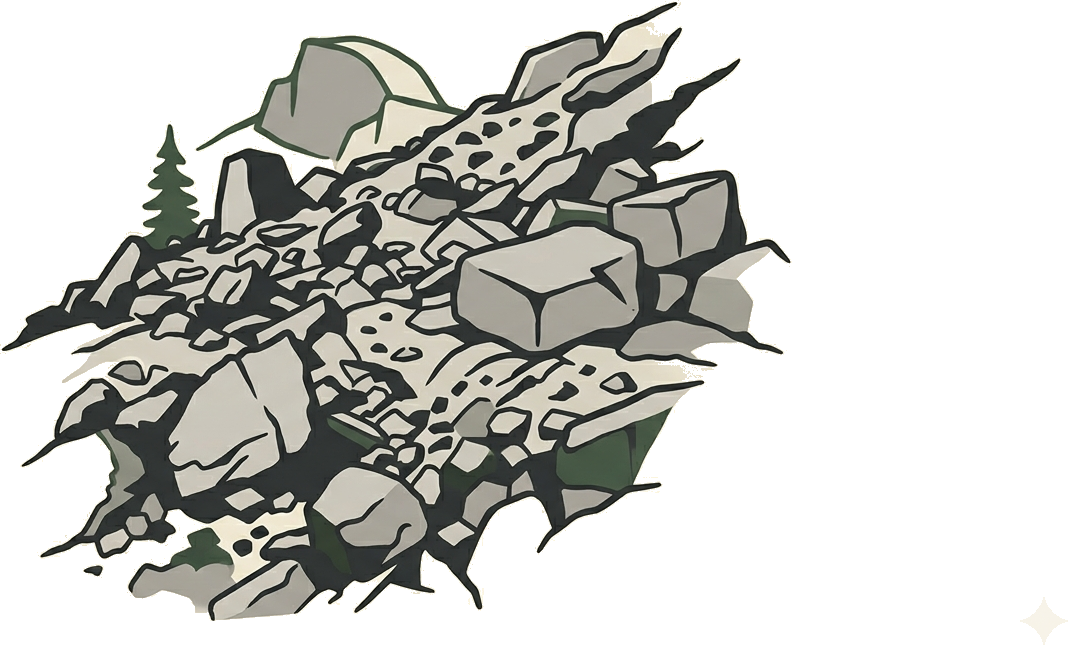
distinction of including both the youngest and the oldest ever to climb this lovely mountain. This Month's Cover Illustration calls attention to the snow survey trip made March 28-April 2 to the Tuolumne Meadows region. This is the most extensive of several similar surveys made each winter at various points in the park. Snow depth and water content is determined on five courses. Results this year indicated a heavier than average snow pack. Past Average (inches) 1945 results (inches) Snow depth Water content Snow depth Water content Snow Flat (8700') 104.0 42.4 146.2 51.2 Tenaya Lake (8157') 77.0 35.2 112.8 37.2 Tuolumne Meadows (8605') 56.1 23.3 84.0 28.2 Dana Meadows (9700') 87.0 33.5 103.0 38.9 Fletcher Lake (10,300') 81.5 33.1 103.8 44.2
YOSEMITE—TYPE LOCALITY FOR RECENT MAMMALS
By Myrl V. Walker, Associate Park Naturalist An earlier article in NATURE NOTES sis mariposae Grinnell), were being (December, 1944) listed the various taken in Yosemite Valley, while the species of amphibians and reptiles Lyell shrew (Sorex lyelli Merriam which had been "discovered" in Yosemite very interesting form, was taken semite National Park. It also seems near Mt. Lyell on the crest of the appropriate to call attention to the Sierra. various species of mammals with Yosemite. Two other small forms that were semite as their type locality. taken in Yosemite Valley are the Yosemite Although most of the mammalian semite meadow mouse (Microtus types discovered here are of the montanus Yosemite Grinnell), and smaller forms, there is one that belongs to the middle-sized division of the Yosemite pocket gopher (Thomomys longs to the middle-sized division of mys alpinus awahnee Merriam). The the carnivore group—the Sierra pine two type specimens taken in the Tuolumne marten (Martes caurina sierra Grinnell Meadows are the Sierra cantankerous and Storer). The type specimen meadow mouse (Microtus was taken in Lyell Canyon. The type mordax sierrae R. Kellogg), and the specimen of the Yosemite cony Sierra Nevada lemming mouse (Phe- (Ochotona schisticeps muiri Grinnell nacomys intermedius celsus A. B. and Storer), was taken in the vicinity Howell). of Ten Lakes. The cony belongs to It is interesting to observe from the the "rabbit" family. It is the smallest above listing of type forms that of the member of the family present in this total number of nine types from the area, being much smaller than the park four came from Yosemite Valleyordinary cottontail rabbit. ley, two from Tuolumne Meadows, The Yosemite mole (Scapanus latimanus sericatus Jackson), and the two from near Mt. Lyell, and one from the Ten Lakes area. Yosemite shrew (Sorex montereyen-
NEW ACQUAINTANCE
By Grace V. Sharritt "Painted Robins" they are someIt was in some such mood that I es called, in spite of an imposing stalked my birds. They looked like Latin title, (Ixoreus naevius). But robins, yet they weren't robins. its more correct common name is "Fancy robins" I called them. The Varied Thrush, for their feathers are backs of the birds had the same Varied indeed; from a gorgeous colbrownish coloring. They scratched ed neckpiece to a smart black among the dead leaves on the band across the breast. ground like robins and thrushes and Numbers of these interesting birds came down from the north last autumn to winter in Yosemite Valley and lent exciting bits of interest to with brilliant orange throat patches and the same vivid and lent exciting bits of interest to feathers above the eyes. There was bird walks on wintry days. It takes color on the wings when the birds a gray day, dripping with fog and flew — but how much or exactly where, I could not determine. For aware of the Varied Thrush for such like a delightful dream that escapes is the kind of weather they prefer. conclusion upon awakening, just so Like my first experience.... did my dream birds escape identification. The skies were leaden but the air was sharp with pine fragrance as I The birds eluded me all the way walked briskly from the Ranger Club back to the Museum. I rushed up toward Yosemite Lodge. The Stellar jays winging above and just in front of me seemed to deepen the shadows findings into the amused ears of jays winging above and just in front of me seemed to deepen the shadows. findings into the amused ears of naturalists Brockman and Walker. ows of the November afternoon, when suddenly a streak of tawny When I had finished with my effervescences they spoke as one voice sunshine flitted from the path into of authority, "You saw the Varied the thick, green boughs of a cedar. Thrush." What were these birds? I did not The news affected me like all sudden acquaintances with new birds I did not know. Now, as everyone knows, a strange bird is a personal challenge to any ornithologist. But when the people who are interested in nature and the outdoors, for all my life to any ornithologist. But when the I had wanted to see this beautiful bird is found by one traveling in new thrush pictured in western bird zones and territories, the adventure books. It took Yosemite to produce assumes Robinson Crusoe dimensions. It took Yosemite to produce the feathers-in-the-flesh to a neophyte from east of the Mississippi.
FOOD HABITS OF YOSEMITE MAMMALS AS INDICATED BY THEIR TEETH
By Lt. (jg) Richard G. Miller
PART III
Moles and Shrews (Insectivora) Moles are common in Yosemite, but are very seldom seen. They spend a lifetime underground and rarely come to the surface, even at night. They feed on grubs, worms, and other insect food which may be found in the soil, seeking this nourishment by tunneling just beneath the surface, and finding their prey among the roots of plants. The little trails of arched sod that are seen in the meadows and upon the forest floor of Yosemite are made by the upheaval of the soil as the mole pushes its way along. These ridges readily belie the path of the burrows. By scooping into the loosened earth with your hand a neat round tunnel several inches in diameter will be exposed. It isn't likely that you would see the mole, however, even if you waited for him, for he would avoid coming into the lighted part of the tunnel. Practically no vegetation is consumed by moles. Plant damage along mole workings is attributed to insects (on which the mole feeds) or is caused by mice which find that fresh mole workings open up new sources of food. ' The teeth of moles are specialized for cutting through the outside skeleton of insects. The first upper incisors are broad blades which are useful in clearing the underground passageways of roots as well as in cutting up food. The other incisors, canines and premolars are sharp, grasping meat-teeth. The upper molars lay in the back of the mouth are set just outboard of the lower molars, and these opposing teeth perform as shears. The head is long, pointed, and slender and seems designed for the main purpose of housing this oversize and formidable set of teeth with modification of eye and ear to the status of rather unimportant organs. The whole body is built for a life of burrowing, being modeled as an "entering wedge." Although the mole is small, soft, and tender in appearance it is withal a rugged and hardy creature. It has powerful shoulders and neck muscles. Its jaws are strong. It feeds in a savage and voracious manner, and it is said it eats its own weight
Insects daily. At night it may forage on the surface and is sometimes preyed upon by owls and other nocturnal predators. weight in insects or other animal food daily in order to sustain their tiny bodies. The common shrew ventures forth from its tunnel under and among the forest litter in search of anything it can devour. The water shrew goes into the small streams to secure water insects as a large part of its food. Moles and shrews are active throughout the summer and winter and are an important source of food for the foxes, weasels, coyotes and owls of Yosemite. Bats (Chiroptera) In all Yosemite bats the teeth are specialized for catching insects. The canine, or "corner" teeth, are exceedingly large for so small an animal, those of the upper jaw being Moles related to those in Yosemite are of widespread distribution in North America. They belong with the shrews in the order Insectivora. Shrews found in Yosemite resemble the moles in having a long mobile snout, small or hidden eyes and ears, elongated head, and a voracious appetite for insects. Their teeth, though fewer in number than those of a mole, are even more highly specialized for an insectivorous diet. Shrews possess an almost insatiable appetite and a rapid rate of digestion, and seem to need food at rather short intervals. They have to consume several times their own quite tusk-like, and ideal for grasping. The molars and premolars, on the sides of the mouth, are offset because the upper jaw is wider than the lower and work like two pairs of jagged meat cutting scissors. Bats catch food on the wing. Swift and maneuverable, these little flying mammals wing through the dusk and the dark devouring the many kinds of insects encountered in the
air. forth at dusk when a certain degree Because both are insect-eaters, of darkness has been reached, this the bat's teeth have some resemblance to those of a mole, although there is little similarity between the varying among the different species. Insects are a rather concentrated there is little similarity between the form of food, and this may account light body of the bat and the sturdy for the bat's ability to acquire wedge-shaped build of the mole. The enough nourishment in an hour or arms of the former are long and so of feeding to last it through the slender with finger bones greatly elongated. These fingers are the "umbrella ribs" over which the skin night and day till feeding time the next evening. In late summer bats brella ribs" over which the skin start getting fat, storing up enough membrane stretches to form the flying surfaces. The bat's nose is short and rather dog-like, but with large nostrils. The eyes may be seen through the fur and the ears are large and upright. It has been discovered that these forward-directed ears are attuned to catch the reverberations of the bat's squeak echoing from branches, wires, and other obstacles in the line of flight. Thus warned of these obstacles, the bat may alter its course to avoid collision without ever seeing the obstacles. The ears are also of unquestionable importance in locating insects in flight. Which species of bats hibernate, and which migrate to warmer climate is still the subject of study. Bats are widespread in Yosemite, and though the records are few the animals appear to be present in considerable numbers. Eleven species ing from branches, wires, and other of bats are recorded for Yosemite obstacles in the line of flight. Thus National Park, and are fundamentalwarned of these obstacles, the bat ly similar in form. may alter its course to avoid collision without ever seeing the obstacles. The ears are also of unquestionable importance in locating insects in flight. All North American bats are insect-eaters, those which have teeth obstructions. The ears are also of unspecialized for eating fruit, or blood, questionable importance in locating never occurring this far north. insects in flight. In consuming large quantities of Bats spend the daylight hours and wood - boring beetles, moths and much of the night at rest in dark and other flying pests which are dessheltered seclusion, foraging only tructive of forest trees, the bats are of during the evening hours and someunquestionable value in the Yosemtimes just before dawn. They come ite region. Part IV—Even-toed Hoofed Mammals (Artiodactyla), and Hares, Rabbits and Pikas (Lagomorpha), will appear in the next issue.
Digitized by Yosemite Online Library Dan Anderson