Yosemite Nature Notes · Volume 23, Number 3
March 1944
NATURE NOTES
Vol. XXIII March, 1944 No. 3 Ice Cone at base of Upper Yosemite Fall.
THE MONTHLY PUBLICATION OF THE YOSEMITE NATURALIST DEPARTMENT AND THE YOSEMITE NATURAL HISTORY ASSOCIATION
A. Kittredge, Superintendent C. F. Brockman, Park Naturalist M. E. Beatty, Associate Park Naturalist
VOL. XXIII MARCH. 1944 NO. 3 THUMBNAIL SKETCHES OF YOSEMITE ARTISTS
By Elizabeth H. Godfrey, NPS Staff
THOMAS HILL
Thomas Hill, born in Birmingham, England, in 1829, was brought to Taunton, Massachusetts, by his parents at the age of 11. He began his career by painting coaches. Later he decided to become an artist, and studied at the Philadelphia Academy of Fine Arts.
When Hill returned to the United States he made his residence in Boston, Massachusetts. From a previously made Yosemite sketch, he painted his "Yosemite Valley," which won him instant popularity, as it was one of the first revelations to eastern art lovers of the existence of such majestic scenic grandeur.
Poor health prompted Hill to go to California in 1861. In San Francisco he established a studio, and thereafter for a period of six or seven years he made frequent sketching trips to Yosemite. His "Trial Scene From the Merchant of Venice" was awarded first prize by the San Francisco Art Union, and that organization also purchased the painting for $700.
In 1868, public favor and recognition of his work prompted Hill to go to Paris for six months to study under Paul Meyerheim, a well known figure painter and member of the Salon. When Meyerheim saw Hill's completed painting of a forest scene of Fontainebleau, he was greatly impressed, and advised Hill to concentrate on landscapes, rather than to carry out his ambition to become a portrait painter.
In 1871, Hill's health again necessitated his returning to San Francisco. Here, Hill joined a colony of such contemporaries as Keith, Yelland, Williams, Tavernier, and others. In that same year, the San Francisco Art Association was founded, and Thomas Hill was one of its ardent supporters and early vice-presidents.
Hill's painting the "Great Canyon of the Sierras," which had received great popularity when exhibited in Boston and New York, was now exhibited in San Francisco with equal success. On a canvas, 10 x 6 feet, it revealed a powerful view of Yosemite Valley from about one mile be-
low Inspiration Point, and included such features as Bridalveil Fall, El Capitan, Cathedral Spires, North Dome, Royal Arches, and Half Dome. Judge Crocker of Sacramento purchased it for $10,000.
Hill continued to make frequent trips to the Yosemite area, and would often return with as many as a hundred oil sketches, which he would later finish in feverish haste in his studio in an effort to keep apace with the rush of orders and commissions. Thus his paintings went far and wide to homes and art galleries over the United States and even to the remote corners of Europe.
In 1875, Hill exhibited his paintings "Yosemite Valley" and "Donner Lake" at the Philadelphia Centennial Exhibition, and was awarded first medal for landscape. This honor further established his rating as one of the outstanding artists of the period.
Hill's most unusual painting, however, did not relate to Yosemite, but to an historical event--the meeting of the Union and Central Pacific Railroads, and was entitled "The Last Spike," which was driven on May 10, 1869. The spike was of pure California gold, and the hammer that drove it of Nevada silver. Governor Stanford had commissioned Hill to paint the picture at an agreed sum. When the painting was completed, however, the Governor declined to accept it. The reason is believed to have been that Hill had painted the Governor so prominently in the large group witnessing the driving of the last spike that other of his influential colleagues also in attendance, but less conspicuously represented by Hill, were offended. Hill was greatly disappointed when the painting was refused. Following his death it was purchased because of its historical significance, and now occupies a place in the Crocker Gallery in Sacramento.
In 1885, with his health again failing him, Hill decided to establish a summer studio at Wawona with winter quarters at Raymond, California, some 25 miles distant.
"In the Heart of the Sierras," by J. M. Hutchings, opposite page 25, there is a reproduction of Hill's painting, "The Wawona Hotel," showing the semi-circle group of hotel buildings around a plaza and driveway. (Many of the original structures are still in use today). The west end, facing the plaza, Hill's studio — a cozy, frame structure with a lengthy screened porch skirting almost the entire house, afforded full summer-time enjoyment.
Hill's daughter, Stella, married John Washburn, one of the Washburn Brothers, who operated the Wawona Hotel and Yosemite Stage and Turnpike Co. Stage Lines. After dinner it was the practice for the Washburns to skillfully direct guests over to Mr. Hill's studio, where his specimens of mounted animals, as well as a fine collection of Indian implements, very likely attracted as much interest as his paintings.
*Hill's studio stands today on its original site, and is used as a recreation building for guests and employees of the Wawona Hotel
In her book, "A Round Trip in North America," published in 1895, Lady Theodora Guest** gives the following account on page 141 of her visit to Mr. Hill's studio:
"After supper we were conducted to the studio of a painter--one Mr. Hill, who had made some effective pictures of Yosemite, chiefly from one point of view; and he said that autumn was the best time for color here; and no doubt he was right. He had various curiosities hung around his studio wasp nests, hideously large, dead rattlesnakes, skins of coyotes, squirrels, and wildcats, and other engaging wild beasts; some flowers beautifully dried by his daughters, retaining their colors, and some of them showed them to us, also the head of a Black-tailed Deer."
Other records state that Hill's collection of wild animals included a monstrous Grizzly Bear.
From a business standpoint Hill's Wawona studio was ideally located, and commanded the attention of the "cream" of tourist travel — a fact which undoubtedly created some feeling of professional rivalry on the part of Charles Dorman Robinson, a contemporary artist, who had a studio on the valley floor. Mrs. Cosie Hutchings Mills, second white child born in Yosemite Valley and daughter of the early Yosemite Pioneer, J. M. Hutchings, stated while in Yosemite in 1943, that Hill's paintings were executed mainly in browns and yellows, while Charles Dorman Robinson preferred blues and grays.
Although Hill made several small fortunes during his lifetime, he was not a shrewd investor, and he consequently suffered many financial losses. In his studio he was genial and hospitable. Of medium height and of sturdy physique, he painted usually with a cigar in one hand and his brush in the other. A crowd of laughing, joking friends around him, contributed to, rather than hindered, his execution of a painting. He is said to have been at times very absent minded. In later years he wore a rather long, heavy, white beard. He possessed no Bohemian traits, and was devoted to his family of several sons and daughters.
One of his sons, Robert, opened an art shop and gallery in 1884, and exhibited and sold many of his father's paintings.
At the Yosemite Museum, the work of Thomas Hill is represented by paintings of Vernal and Nevada Fall, and of the California Snow Plant.
Hill passed away at Raymond, California, on June 30, 1908.
** During her visit to Yosemite Valley, Lady Theodora Guest sketched a number of valley scenes, which she later used as illustrations in her book, "A Round Trip in North America." (Next month's Thumbnail Sketch: "Charles Dorman Robinson")
JOHN H. WEGNER, NEW CHIEF RANGER—SEQUOIA-KINGS CANYON NATIONAL PARKS
By Elizabeth H. Godfrey With the appointment of John H. Wegner, Acting Chief Ranger of Yosemite National Park, to the position of Chief Ranger, Sequoia-Kings Canyon National Parks, Yosemite loses a widely-experienced and highly esteemed "veteran" on the ranger force, for Wegner's service in Yosemite dates back to 1916, when he received his first appointment as temporary park ranger under Superintendent W. B. Lewis. Thus Wegner has participated in more than a quarter of a century of development and progress in Yosemite National Park.
In 1918, Wegner was appointed permanent park ranger, and in 1928, promoted to assistant chief ranger. For many years he has also served as the park's fire chief. In this capacity, he collaborated with officials of the U. S. Forest Service in the selection of peaks for the present fire lookouts, and with Chief Forester John D. Coffman of the National Park Service in working out the up-to-date system of fire protection now in use. Wegner has also instructed Blister Rust workers and temporary park rangers in the rudiments of fire fighting as well as hundreds of the former CCC enrollees.
In public contact work, Wegner has had an opportunity to meet and to help people in every walk of life derive the utmost benefit from a visit to Yosemite. In October, 1920, when King Albert of the Belgians visited the park with Queen Elizabeth and Crown Prince Leopold, Wegner was assigned to escort them on several trips. On one occasion he failed to please. That was when the Queen frowned on him for smiling when she scolded the King for the careless manner in which he was taking some photographs.
In 1923-24, Wegner was placed in charge of a number of camps established in outlying sections of the park in connection with a program put into operation by the State of California to stamp out the hoof and mouth disease which had spread from cattle to the deer of this region. It was Wegner's responsibility to see that all regulations were carried out by the hunters at these camps who were employed to shoot the deer. While the deer in the Valley were considered out of bounds
on the disease, they were corralled and led to keep them from wandering off into the hills where they would have been exterminated.
Wegner has been a member of the Safety Advisory Council for years, and was commended by Frank Ahern, Chief of the Safety Division of the National Park Service, for the interest he showed in the application of safety regulations in general, and in advancing the safe utilization of compressed petroleum liquid gasses. Having been awarded an instructor's card in Red Cross First-Aid, Wegner has assisted in the teaching of numerous First-aid classes conducted for temporary park rangers, new Park Service employees and local people.
With the passing of the late Chief Ranger Forest S. Townsley on August 11, 1943, Wegner was designated Acting Chief Ranger. Now as he leaves for Sequoia-Kings Canyon National Parks as Chief Ranger, his participation in local activities will be a great loss to the community and his fine work on the ranger force will be missed. His many friends regretfully bid him "goodbye," and wish him the best of luck and continued success in his new position.
As chairman of the local Red Cross War Fund Drives, Wegner contributed generously of his leisure time, and under his good management Yosemite did not once fail to meet its quota.
YOSEMITE
By Bob Poole
Mountains, trees and rivers all combining In Nature's ever glorious expression; People, plans, ambitions all entwining In madly modern civilized aggression. Two realms of physical manifestation, Contrasting greatly---thus so far apart, Never to meet in human contemplation Until one views the truth in Nature's heart. Yosemite is this vale of Inspiration, Beauty far beyond the passive human thought Of those who, with wondering realization, Awaken to the grandeur God has wrought. So experience here a remarkable transition, Where human cares and worldly tumult cease; And humility replaces mad ambition; Yosemite is in truth---a vale of peace.
A DISTURBANCE IN THE NIGHT
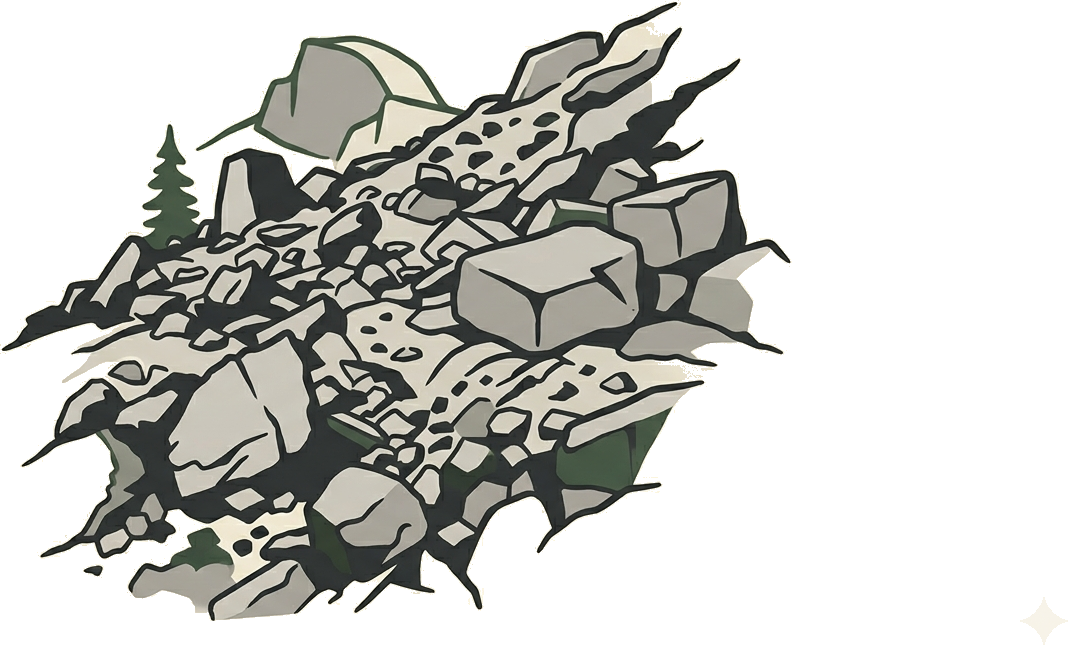
By Park Ranger John W. Bingaman About the stealthy nature of the cougar or mountain lion have been woven many stories, a good many of which have to be taken with the proverbial grain of salt. Few people —even those of us who have spent many years in the mountains—have had the good fortune to observe this animal in the wild under natural conditions, and perhaps the most certain way of causing any gathering to choose sides in an argument is to state flatly that the cougar "screams." Many woodsmen of long experience in a region where these animals are found, in fact many who have hunted, killed or captured this great predator, stand firm in the conviction that the cougar makes no sound. Others who are often equally experienced take an opposite stand. So it was with considerable doubt that I drove to the gate of the U. S. Naval Convalescent Hospital (formerly the Ahwahnee Hotel) late on the night of January 11th in answer to a telephone message to the effect that "a cougar was screaming" from somewhere on the talus slope adjoining the hospital grounds. Upon arrival at the gate I found considerable interest in the disturbance. The noise had been heard on several occasions earlier in the evening by a guard stationed at the gate, and several sailors who were present had also heard it from within the building and had come outside to investigate. In subsequent conversation it was brought out that it had also been noted on several previous evenings. Recognizing that many of the stories credited to the cougar were undoubtedly the result of hasty and inaccurate observation, coupled with a bit of imagination, I privately discounted the descriptions given by my informants.
The cougar or mountain lion, of course, is a part of the native Yosemite fauna but in spite of 22 years as a ranger here I had never heard one scream and only on one occasion have I ever actually observed the animal in this area. I was frankly skeptical. But our jocular conversation was suddenly interrupted by three shrill screams. They were startling, for these cries were loud and piercing and had no resemblance to anything that I had ever heard before. Whatever the source of the noise—for I did not observe any animal—I had to admit that it was certainly an unusual sound to say the least. The Valley had been visited by a light snowfall a number of days before the evening of January 11th and cold nights had caused a crust to form over the surface of the snow. On the following day an investigation was made in the vicinity of the talus slope in an effort to ascertain the nature of the animal responsible for the disturbance. Numerous tracks were discovered on the rocks of the talus slope as well as on the more level areas bordering the trail which skirted this location. These were definitely tracks made by some member of the cat group and apparently two animals were present. One was a large individual and the other small for the crust was sufficiently strong to support the weight of the latter in most instances, while the former had broken through the surface in practically every case. The larger tracks were 3 - 3 1/2 inches in diameter and spaced from 13-20 inches apart. (C. F. B.)
COON VISITS SOUTH ENTRANCE
By R. N. McIntyre, Park Ranger
Having come to Yosemite recently as a ranger from the state of Washington, where wild life is yet fairly abundant, I was not at all surprised on the crisp evening of February 5th, 1942, at South Entrance to see the head and paws of a coon emerging from the station garbage can. I was surprised, though, by the fact that when the wooly little fellow landed on the icy paving, he didn't run, but merely crowded behind the can for protection. With my flashlight directed on his location, I moved closer. The coon, sensing my approach, took a quick look at me from his point of vantage, decided it wasn't too good, fluffed up his fur at me and prepared to give battle. I held my distance of about fifteen feet and watched the color change as he rolled his bushy browed eyes in the glow of my flashlight. I talked to the little fellow and for an answer was given a "Bronx cheer" that disclosed some sharp little teeth which clicked audibly. With a half-hearted movement in my direction and a groan that turned into a hiss, the belligerent little ball of black and gray fur climbed the snow bank in a scramble of ice particles and disappeared.
At this point a car entered the station and brought me back to the everyday facts of life and the duties of a ranger.
Throughout February and early March "Little Hitler," as I called him, returned often to the vicinity of the station and rangers quarters. He often brought his friends. On March 7th before closing time at the station, "Little Hitler" and one of his pals engaged in a free-for-all fight over an orange. After fur had flown for a while and the noise had mounted to unheard-of proportions, I stepped in and parted the two combatants with my flashlight. After retiring this same night, I heard the battle begin all over again.
"Little Hitler" wasn't very smart in some ways, but with cooperation from his partner, he learned to operate on a covered garbage can. In his first attempt, I saw him stand on the lid and tug at the edges, trying to lift himself with the top, but an hour or two later he was back helping his partner chin the lid off while standing on the snow with his back legs braced. With this change of tactics the lid became loose and fell to the snow. Quick as a wink, one of the little fellows was in the container and double handfuls of debris began to come over the edge.
If you want to make friends with a coon, just produce a salmon tin that is not too well cleaned—but beware of the consequence if your furry friend has any competition.
One Saturday night late, I noticed eyes showing by the woodshed. After procuring bread and salmon tin from the kitchen, I advanced over the snow to feed the individual. Tossing the bread and can near the location of the eyes, I retired to a distance to wait for developments. One coon appeared from the wood pile and went immediately to the salmon container. In a few minutes he fluffed up his fur and tried to bury the can in the snow. On turning my flashlight toward the scene, I observed two other individuals closing in on the lone feeder. They looked me over, for a minute or two and then sparred for positions. With fur raised for battle, spitting and snarling, they dove into the culprit who was hogging the grocery supply. After a brief melee of flying fur and terrific noise, I broke up the fight, retrieved the salmon container, and decided that it was my place to keep the peace in that neighborhood. As it was, my wife suggested that I take my sleeping bag and make my home with "Little Hitler."
Digitized by Yosemite Online Library Dan Anderson