Yosemite Nature Notes · Volume 22, Number 2
February 1943
NATURE NOTES
Vol. XXII February, 1943 No. 2 Badger Pass Ski House
THE MONTHLY PUBLICATION OF THE YOSEMITE NATURALIST DEPARTMENT AND THE YOSEMITE NATURAL HISTORY ASSOCIATION
F. A. Kittredge, Superintendent C. F. Brockman, Park Naturalist M. E. Beatty, Associate Park Naturalist
VOL. XXII FEBRUARY, 1943 NO. 2 ENVIRONMENTAL ADAPTATIONS OF SOME YOSEMITE PLANTS
By Ranger Naturalist Carl W. Sharsmith Introduction Yosemite National Park possesses some 1400 different kinds of flowering plants including ferns. This approaches the total number found in some middle Western states with many times the area of Yosemite. One of the important reasons for this large number of plants lies in the extreme topographic diversity of the area, providing a greater variety of suitable habitats than would be available in a region of lesser relief. Most plants are pretty "choosy" as to where they will grow; hence, the greater variety of suitable places in a given area, the greater the variety of plants we may expect to find; thus the great diversity of Yosemite plants. In this article, however, we are not so much interested in the different kinds of plants in Yosemite as we are in their adaptations to certain conditions of environment, to either physical conditions of climate or soil, or biological conditions resulting from the association and interdependence of different plants and animals within a given community. Adaptations Resulting from Physical Conditions of Environment Among the diverse species of plants, differences in altitude and exposure, and certain climatic or soil conditions have selected out of the totality of plants those more congenial than others. Plants, quite regardless of the kinds of species, only those which are best suited to any given set of conditions because of their particular adaptations, are so restricted to areas suitable for them. Such adaptations, either structurally or by their behavior, or both, when possessed in common by most of the plants, give a characteristic aspect to the vegetation. Therefore we have the familiar "life zones" or belts of vegetation. Variations in the physical environment, particularly those which produce differences in altitude and exposure, on vegetation is scarcely surpassed in our country. Yosemite National Park as an exhibit of the results of these environmental differences
Plant Adaptation in the Foothills
CHAPARRAL
The similarity of vegetation in response to a particular set of conditions is well exemplified in the lowest altitudes of Yosemite National Park around El Portal, where the vegetation is in blazing sunshine through much of the year. Temperatures here are highest, and available water is at a minimum. Even the occasional thunderstorms of the middle altitudes, such as those which bring refreshing rains to Yosemite Valley during the summer months, fail to reach this lower foothill area. The result is a type of vegetation suited to dry, hot conditions, and the adaptations exhibited are among the most interesting of any in the park, producing a characteristic appearance to most members of the foothill community of plants. This is in large part due to a most striking adaptation that of the hard, leathery leaf, or what is technically known as the "sclerophyll" type, literally meaning "hard leaf." Despite water loss from such leaves, their rigid structure prevents them from wilting. Recovery from excessively dry conditions is easy; in softer leaves, on the other hand, wilting would occur which if continued would result in permanent injury and death. Hard leathery leaves are characteristic of such diverse shrubs as Live Oaks, Buckbrush Ceanothus, Manzanitas, Holly-leaf Cherry, Chamise (Adenostoma), Yerbasanta (Eriodictyon), etc. These are all trees or shrubs prevalent in the El Portal region, and their rigid, hard, evergreen leaves lend a distinct charm to this type of vegetation. Most of them are shrubs, and they constitute the well known "chaparral."
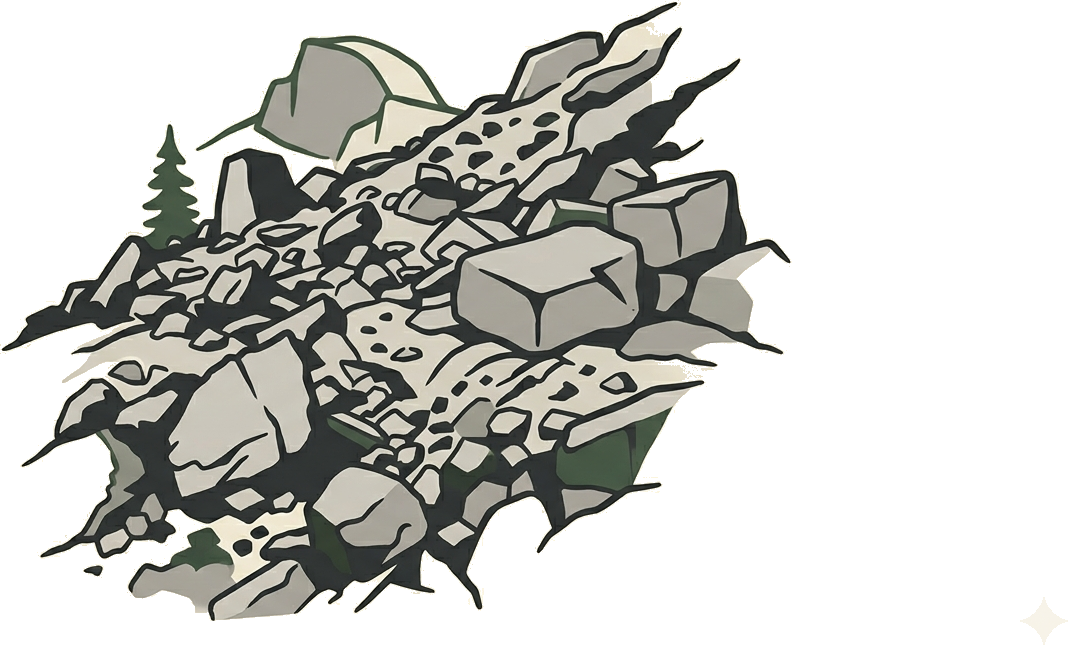
Hard-leaf chaparral is not necessarily restricted to the foothill region, although reaching its highest development here. At altitudes higher than Yosemite Valley, patches of chaparral occur, especially on the recent talus on south exposures. The almost impenetrable brush in portions of Tenaya Canyon is typical. Talus slopes in this canyon, a couple of miles above Mt. Watkins, are thousand feet high and are covered with a perfectly solid olive-green mantle of hard-leaf chaparral. Here, however, the chaparral is composed almost entirely of Huckleberry Oak, and is temporary, subject to change into forest as the pioneer chaparral builds up soil of greater water holding capacity. Even in these altitudes, however, the chaparral, during its reign, reflects many conditions similar to those responsible for the production of the same type of vegetation in the foothills where the chaparral is permanent.
DECIDUOUS PLANTS AND ANNUALS
To descend to the foothills again another notable plant adaptation is seen in California Buckeye. Possessing large, rather soft leaves ill suited to the dry, hot climate, it "outwits" these conditions by shedding its leaves in June or early July, and passes the summer and fall in a leafless, dormant condition---in the sleep of aestivation rather than in that of hibernation. The small annuals, like Gilia, etc., escape the early drought of the foothills by maturing and shedding a crop of seeds before the dry season begins. These seeds carry on the species, but the parent plants die with the waning of spring.
Plant Adaptations in the Alpine Area
CUSHION PLANTS
Far up among the peaks, at and above timberline, another plant adaptation is seen which gives a characteristic stamp to many of the alpine species. Here a modification is developed which protects against drought produced, not by abundant summer rainfall and intense heat as in the foothill zone, but by the rocky, thin soil of high altitudes, the excessively brilliant sunshine, dry, rarefied air, and violent winds. The problem is also one of meeting violent daily changes of temperature, from warm days to freezing nights. The growth form most frequently developed by alpine plants to meet these extreme conditions is that of the "cushion" plant. The cushion is formed by closely crowded plant shoots which make a solid, roughly circular mass one or two inches high and several inches wide. Often such a cushion is tough enough to support a man's weight. The advantages to alpine plants of such a form of growth are obvious when it is realized that rest buds are protected within the cushion, and also that its center is lined with dead leaves and drifted dust which retain water very well. Such cushions are developed in the Yosemite alpine zone by phloxes, drabas, sandworts, etc.
ALPINE PERENNIALS
In the extreme altitudes and resultant extreme environmental conditions of the alpine zone, another adaptation has been developed which meets the short and often uncertain growing season. Almost all of the 300 or so different flowering plants at and above timberline in the Sierra are perennials. If, because of early frosts and other climatic reasons, a failure of seed crop results, the plants are still alive to try again another year, or still another. If the plants were annuals, unfavorable conditions which might occur at critical times in their development would exterminate all of them before they could shed seeds. This probably accounts for the scarcity of annuals in the alpine flora.
Beaten Ground Plants In all the previous examples, the adaptations have been obvious structural ones. An adaptation which appears to be physiological rather than structural is seen in plants which prefer the beaten ground of trails and roads. A striking example of this kind is seen in a very common species of Rush (Juncus balticus var. montanus) in Tuolumne Meadows. Here swards of this grasslike plant cover local areas which have in the past been subjected to much trampling, and border or cover old roads, practically to the exclusion of other vegetation. Non-flowering Plants
RED SNOW
The phenomenon of Red Snow, due to the presence in the snow of microscopic green algae (usually Sphaerella nivalis) is frequently seen on the summer snow fields of Yosemite's higher mountains, and has been described in a previous nature note (Sharsmith, C. W., Yosemite NATURE NOTES, August 1935). These algal plants are single-celled, the characteristic green pigment being masked by the presence of a bloodred pigment, and their presence in countless numbers gives the snow its red coloration. In winter they are dormant, but when the summer sun melts the surface snow, the cells become active, grow, multiply, and swim by means of two cilia or "feelers" through the melted snow water in the interstices of the unmelted snow grains. The remarkable fact about snow algae is their physiological adaptation to an environmental temperature at which, in most organisms, all outward signs of vitality usually cease. Several theories have been advanced to explain how snow algae live at freezing temperatures but none has proven, although one of the most plausible is that the red pigment absorbs heat rays in sufficient quantity to allow life processes to go on despite the low temperature of the environment.
CLIFF-DWELLING ALGAE
The dark or black vertical stripe on Yosemite's cliffs, as on the face of Half Dome, often cause comment or query among Yosemite visitors "When are you fellows going to start drilling for oil?" was a question once fired at the author while conducting a caravan tour of the valley. True, the streaks might suggest oil stains, especially when the walls are moist and the stains are darkest. Actually these interesting streaks are caused by algae which are carried downward over the cliffs by the drip of water. They also are an illustration of a remarkable adaptation to about the most extreme drought to which plants may be periodically subjected. These cliff-dwellers of Yosemite are individually microscopic in size. Enormous numbers are present to make a visible black streak. Several different kinds are present, but all are alike in being unicellular and provided with a mucilaginous coating outside the cell wall. This mucilaginous coat helps retain moisture in the cell. When the algae subsequently form a dense layer to produce an appreciably thick gelatinous coating on the smooth rock surface, this gelatinous layer functions especially importantly in retaining moisture during long dry spells. For these vertical cliffs, especially when facing the summer sun, are dried out about as completely as anything could be outdoors in a drought sufficient to annihilate any other kind of plant but these lowly algae.
The gelatinous coating, however, is not the whole story of the remarkable adaptation to drought in these plants. Vital water is held in the cell by the protoplasm, and also by imbibition in the cell wall and its coating, to an extent probably not equalled in other plants. Although these cliff algae become practically dormant during drought, few if any plants restore themselves to active growth more rapidly when moisture is again supplied.
These algae are the plant pioneers on bald rock surfaces. Some of them penetrate as much as five-eighths of an inch into apparently solid rock, growing between crystals of granite. Through the growth activities of both the algae on the rock surface and those in the crystal interstices, there is formed with water a weak acid which slowly eats into and thus decomposes the rock. Due to this activity and also from the accumulation of dead algal cells, they form the first thin layer of soil needed for other plants to follow. (To be concluded in the March issue).
A "HORSE-TALE"
By Ranger-Naturalist Lee Haines When a Yosemite visitor goes afield with a Ranger-Naturalist on a nature walk, he little expects to see plants which have an antiquity of 300 million years, plants whose ancestors were components of the first "primeval forests," and were the cohorts of the extinct sail-backed reptile, Dimetrodon. Along the bridle trail just west of Tenaya Creek bridge grows a small colony of horsetails, ancient plants which today seem to take on an aspect of insignificance where they grow beneath the shade of the more modern oaks and pines. However, the ancestors of this contemporary horsetail, Equisetum laevigatum, were by no means insignificant, for during the Devonian period they attained a height of at least 75 feet and grew in a gigantic counterpart of our present day cane brakes or bamboo thickets. Of all the present day multicellular plants, the horsetails are exceeded in antiquity only by the clubmosses and ferns. They probably antedate the fossil sequoias by about 100 million years, so it is quite understandable that our modern horsetails should excite such universal interest among the trail travelers of Yosemite.
Today the order of plants known as the Equisetales survives in only one genus, Equisetum, which has about twenty-five species. These are low plants with simple or branching stems which are strongly furrowed longitudinally and are divided into sections by joints. For this reason these plants have often been called "joint-grass." The horsetails have remarkable small leaves, which for the most part are insignificant scales that occur in a whorl at each joint and are fused together to form a close sheath. Since these plants lack functional leaves, the job of food manufacture is performed entirely by the green tissue of the stem which is highly specialized. The outer wall of the epidermal cells are so impregnated by a deposit of silica as to give the characteristic rough feeling to the stem. This silica often amounts to half the weight of the ash yielded by burning the plant. We may thus say that the horsetails are one of the two types of plants that live in glass houses. The only other plants that contain silica in any appreciable quantity are the aquatic diatoms. It is the presence of this silica along the ridges of its fluted stems that has given horsetails its other name of "scouring rush." This name was first applied to Equisetum hyemale which grows abundantly in Holland where the immaculate Dutch housewives were in the habit of using the stems of the plant for scouring their pots and pans. The frontiersmen and early American pioneers later found other species to be quite efficient in cleaning their greasy frying pans. More than one feminine camper has found that the sand-impregnated stem of the "scouring rush" is an excellent nail file.
Fossil remains show that horsetails were formerly one of the most abundantly represented groups of plants. Every time we burn Pennsylvania coal we are releasing energy stored up by these and many other representatives of the "primeval forests." The tale of a horsetail thus began 300 million years ago, and no man may say when it will end.
YOSEMITE CONTRASTS
By Helen K. Sharsmith The vivid, deep impressions which Yosemite never fails to make on her visitors, and which are never forgotten, are those of mass, mostly an aesthetic appeal of granite: the great depth of the valley, accentuated by the vertical nature of the cliffs; the stupendous bulk of El Capitan, largest granite monolith in the world; colossal Half Dome; the tremendous height of Yosemite Falls; the magnificent bulk of Vernal and Nevada Falls in early summer; the tumultuous rush of the Merced River at Happy Isles; the terrifying drop to valley floor from Overhanging Rock on Glacier Point. Adjectives run out, and still there are massive impressions for the mind to record: the Giant Sequoias, oldest and largest of living things; the extensive forests of Sugar Pines, with their Gargantuan cones up to two feet long; the almost equally impressive stretches of Ponderosa Pine; the wilderness of high peaks; the innumerable alpine meadows; and almost everywhere expansive areas of wildflowers in riotous color and great diversity. To the visitor who returns many times to Yosemite come other impressions, other inspirations to carry away. These are not of mass, but of detail, and of that person who sees and learns to love these things, it can be said that he truly knows and understands Yosemite. To the prosaic and often monotonous task of earning a living, he will take back with him a kaleidoscopic vision of great and little things, all nature's handiwork, and all producing in him wonderment and interest and ever-deepening love of the moun-
tains. First, among details, comes the knowledge of the forces which produced Yosemite, an understanding of how the great cliffs and waterfalls were formed. Then an awareness of the variety and abundance of plant and animal life, an acquaintance with the habits of many of the individual species, and the delight of calling these by name, be it only the common name. Eventually comes interest in the scientific names, and the reasons for their use. Then, too, there is acquaintance with the turns and bends of the river, the changing aspect of the stream in different seasons, the pleasure of recognizing glacial polish, the never-failing array of mountain lakes large and small, even to the tiny tarns whose black waters often cast superb reflections amid surrounding hemlock forests.
These accumulative impressions of details grow gradually. Eventually interest and enthusiasm in Yosemite and its beauty spread to its minutiae, and these become as inspiring and awesome to the philosophic mind as the impressions of mass. Only to the leisurely, unhurried observer are these treasure gates opened. Time and a sense of relaxation are necessary. Idling beside the swiftly flowing river, one's interest is caught by a diminutive pool at water's edge, bubbles slowly circling its surface. How delicate they are! how iridescent their coloring! how apparently aimlessly they drift! yet at the mercy of the swift current just beyond, suddenly bursting when caught too near the vortex at pool's edge; life seems like that at times. One looks upward to patches of blue sky showing through the leaf canopy above — a single leaf becomes detached and flutters delicately down. A small spider rests upon that leaf — what home and family did this hapless creature leave behind? A tiny, trickling spring in rocky, fern-bedecked grotto—a cooling drink and a joy to the eyes; less beautiful than the magnitude of Yosemite Falls? It is only a difference in size. The lovely pebbles from the bottom of a diminutive creek, water-worn like the giant boulders in the Merced River; the black and white crystals which compose the granite, giving the rock its salt and pepper aspect; the endless tiny markings and contours of the massive cliffs, each as individual as Yosemite's major pinnacles and rock forms known the world over; the black algal streaks on the smoother cliffs, making one recall the beautiful thought, "the tears of time stain every wall"—all these are nature's handiwork, all compelled by the same complexity of forces which produced the massive features, all waiting to be seen and understood and loved by the Yosemite visitor who looks and learns.
Digitized by Yosemite Online Library Dan Anderson