Yosemite Nature Notes · Volume 20, Number 5
May 1941
YOSEMITE NATURE NOTES VOL. XX
May, 1941 No. 5
THE EL CAPITAN PINE
YOSEMITE--NATURE NOTES THE PUBLICATION OF THE YOSEMITE NATURALIST DEPARTMENT AND THE YOSEMITE NATURAL HISTORY ASSOCIATION
Published Monthly
VOL. XX MAY, 1941 NO. 5 THE EL CAPITAN PINE SURVEYED AFTER FIVE YEARS
By Harry C. Parker, Junior Park Naturalist As the result of considerable discussion about the actual height of the pine tree growing in the face of El Capitan, the park engineering department made a triangulation survey of the tree early in April, 1936. Measurements made at the time showed that this pine is growing 1,157 feet above the valley floor, and was 80.5 feet tall (See NATURE NOTES, June, 1936). On March 27, 1941, E. C. Smith, the same engineer in charge of the former work, resurveyed the tree, using the base line established five years before. The object was to determine, if possible, how much the tree had grown in a five-year period, and what the present height might be.
Unfortunately, but little information can be added to that previously available, as shown by Mr. Smith's latest report:
"A survey made today shows that there is practically no growth in the yellow pine growing in the face of El Capitan. There are indications that a very small amount of growth has occurred, but our instruments are not sufficiently precise to enable us to measure it. The tree seems to be in good healthy condition, with what appears to be considerable new foliage.
"While it is a disappointment not to be able to give the reader a new figure for the stature of our specimen, it is expected that a tree growing under rather unfavorable circumstances and perhaps approaching maturity would grow at an extremely slow rate. It is hoped that another survey to be made five years hence will give a significant difference when compared with results obtained in 1936."
The unique location of this tree is of great interest to park visitors. It is pointed out by naturalists while conducting auto caravans during the summer months; the bus drivers of the park operator show it to sightseers; local residents in the park make it an object of interest when guiding guests around the valley. Most of these visitors take delight in directing the attention of others to this interesting phenomenon, with the final result that the El Capitan pine has become one of
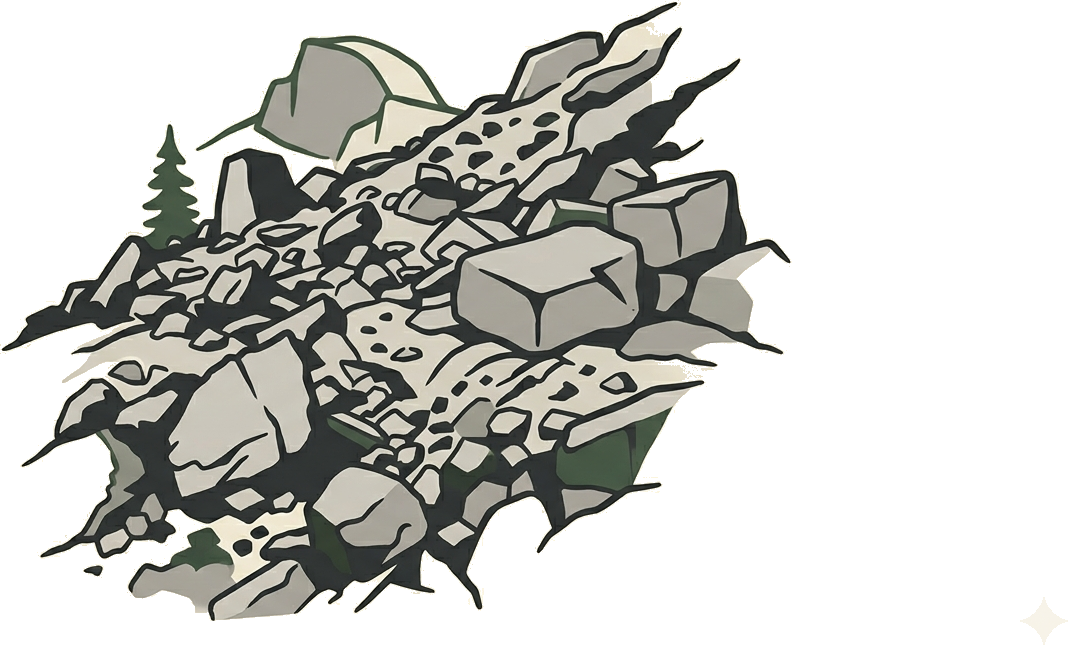
the best known trees in the park. Reference to the telephoto inset on the cover of this issue will give a fair idea of the site where this hardy pioneer has established itself and is carrying on successful growth under adverse soil conditions. This niche was probably produced in the face of El Capitan by the spalling off of the granite through the process of exfoliation. The 1936 survey showed that a space existed for 8.35 feet above the top of the pine, which added to the known measurement of the latter indicates a height of 89 feet for the opening. The width appears to be something over 300 feet at the greatest point, while the concavity does not go any great distance back into the granite—perhaps only ten or twelve feet at the point where the tree grows. The floor is strewn with boulders and other detritus, the former being present in sufficient numbers at the foot of the tree to obscure the basal portion of the trunk. A good-sized shrub grows at a point just in front of the bottom of the tree; other shrubs are scattered on the ledge and there is considerable herbaceous vegetation, particularly near the pine. The presence of this lesser vegetation is an indication that considerable soil must be present on the ledge, although not evenly distributed due to the number of large boulders which remain in evidence. One of the primary reactions of plants upon rocks is the decomposition of the surface into very fine soil, to which is added very slowly humus material in the form of remains of vegetative parts from dead roots, stems and leaves of generations of these plants. At first, on a newly exposed rocky area only the small drouth-enduring types can survive. Mineral nutrients are obtained by the secretion of carbon dioxide which with water form a weak acid that slowly eats into the rock. In the early stages, nitrogen brought in by rain or wind-blown dust completes the nutrient requirements of simple pioneer plants. Thus plants help corrode and decompose the rock, supplementing other forces of weathering, and by mixing the rock particles with their own remains make conditions possible for the growth of other vegetation. As they build up a film of soil, larger and larger types come in and establish themselves, thereby
hastening the soil building process through adding a greater bulk of humus and holding more of the residual mineral soil in place. A secondary reaction of plants upon rocks is the production and widening of cracks by means of roots. Larger roots work their way down from the surface along cracks which are already there and wedge rocks apart, while the finer roots gain entrance to minute crevices between mineral grains or in the cleavage planes of individual minerals, and thus help to break up the rocks. Examples of trees serving as rock breakers are common in the Yosemite region (see NATURE NOTES, October, 1939), and it is equally true that much smaller plants may perform the same function on a smaller scale. The roots, probably through the aid of a solution of carbonic acid in the root hairs, are able to absorb minerals from solid particles. All food materials must enter the plant in solution. Further, part of the thin layer of soil produced by plants and other weathering agents from the surfaces of the rocks finds its way into cracks and crevices. This slow production of a soil in shallow pockets is helped by the decay of pioneer plants themselves, which also increases the content of organic nutrients and the water holding capacity. The yellow pine seed (some authorities believe the El Capitan specimen is the Jeffrey Pine, a subspecies) is noted for its quick germination and immediate deep rooting, and can establish itself on dry warm slopes readily, It may be supposed that after countless other generations of plants had paved the way, the seed which produced our yellow pine was carried to the ledge, perhaps with the melting snow from above, or by an air current, thus finding its way into one of the pockets of comparatively deeper soil which had been formed in a crack in the ledge among the boulders. Seepage marks on the rear wall of the niche indicate an adequate, if not abundant, water supply which may drain from the face of the cliff and back over the ceiling to the
back wall and thence to the base. While the volume of water from such a source, together with that from wind-blown rain and snow is nowhere nearly so great as is received by a pine growing in one of the meadows, the climatic conditions in the sheltered nook are comparatively uniform; hence the loss from evaporation is not nearly so great as in the meadow. The southerly exposure assures plenty of light, and these two factors, water and sunlight, together with the soil, scanty as it is, provide the tree with the elements necessary for the manufacture of food and consequent growth. Nevertheless, growth must be slow, because of the scarcity of fine textured soil—the particles of which present more surface for the retention and solvent action of water and greater absorbing area for the roots—and other factors of the rather harsh character of the site. Understanding the conditions under which the El Capitan Pine is living, and the story that must have transpired on the ledge before its time, one is brought to an even greater appreciation of the history of the countless storm-scarred veterans that have established themselves elsewhere on the rocky surfaces of Yosemite National Park, and defied the elements for scores of years often under much more adverse conditions.
THE CORAL KING SNAKE A PREDATOR UPON THE RUSSET-BACKED THRUSH
By Ranger Naturalist George A. Petrides Miss Vera Frownfelter, a visitor to Yosemite National Park from Alhambra, California, reports that on July 12, 1940, she observed a Coral King Snake (Lampropeltis multicincta Yarrow) swallow a nestling Russet-backed Thrush (Hylocichla u. ustulata Nuttall) at Happy Isles in Yosemite Valley. When first observed, the snake was located in a low shrub near the thrushes' nest, and the head of the young bird was contained within the snake's mouth with the body still protruding. The parent birds were vigorously attempting to drive away the intruder. Within the next hour the snake descended from the plant, swallowed the nestling and again climbed to the nest when it was removed by the observer. The snake was captured alive and brought to the Park Museum where it was found to measure 33 1-2 inches in length. A bulge in its bodily contours tended to confirm the story of its feast. Three young thrushes were said to remain in the nest. The identity of the birds was made certain by the examination of museum skins by Miss Frownfelter. The specific identification of the nest was verified by Mr. Charles Michael of Yosemite, California.
YOSEMITE'S NEW PARK NATURALIST
By Associate Park Naturalist M. E. Beatty On March 27, 1941, C. Frank Brockman entered on duty in Yosemite National Park as Park Naturalist, filling the position vacated September 7, 1940, by C. A. (Bert) Harwell. Mr. Brockman was transferred from Mount Rainier National Park, where he held the position of Associate Park Naturalist, in which capacity he has developed and administered the interpretive program of that area since 1929, following a year's service in the same area as a seasonal park ranger and acting naturalist. He attended Colorado State College from 1920-1924, receiving the degree of Bachelor of Science. In 1930-31, he attended the University of Washington, and received the degree of Master of Science, having been granted leave from his official duties for that purpose. An additional year of graduate work was taken at Yale University in 1934-35 by means of an award of a National Park Service fellowship, which has been made available annually to National Park Service employees since that time. While Mr. Brockman's principal interests have been in the fields of forestry and botany, his activities have embraced many fields of natural history. Of particular note was his work in regard to the tabulation of glacier recession measurements in Mount Rainier National Park, which included annual studies of six of the principal glaciers of that area. The results of this annual survey were published in the Journal of Geology in 1936. He is also the author of "The Story of Mount Rainier
National Park," published by the Mount Rainier National Park Association in 1940, an account of the historical relationships of the area, and several issues of Mount Rainier National Park "NATURE NOTES" relative to the vascular plants of that area. He is a member of the Pacific Northwest Bird and Mammal Society and a senior member of the Society of American Foresters. In June, Mr. Brockman will be joined by his wife and two children, who are remaining in Mount Rainier National Park until the close of the school year. We are happy to welcome the Brockmans to our Yosemite Park Service family, and urge that our readers call at the museum on their next visit to the park and get acquainted with both Mr. Brockman, our new Park Naturalist, and Mr. Parker, our new museum preparator.
PHOTOGRAPHING YOSEMITE BIRDS AND SMALL MAMMALS IN COLOR
By Ranger-Naturalist Lloyd P. Parrott To get an image large enough to be worth while it is necessary to use a telephoto lens. Kodachrome is a very slow film having a Weston speed rating of 8. Combining the slow film with a telephoto lens requires a large lens aperture and relatively slow shutter speeds, and gives very little depth of focus. A lens aperture of from f/4.5 to f/6.3 and a shutter speed of 1/40th to 1/60th second are recommended, depending, of course, on light conditions. It is desirable that a tripod be used and the camera focused on a familiar spot. However, for quick shooting under varied conditions a steady hand gives best results.
At Glacier Point in front of the hotel a person has little trouble getting pictures of the California Ground Squirrel, Golden-mantled Ground Squirrel, and Tahoe Chipmunk. It is helpful to observe each mammal so that its characteristic actions and poses become familiar. After placing some food in a suitable spot and focusing on that area, it is rather easy to secure typical postures. The chipmunk moves with rapid, nervous dashes, and must be taken at just the right time, or blurred pictures will certainly be obtained.
At Tuolumne Meadows the Belding Ground Squirrels are abundant, but it is necessary to conceal oneself near the burrows to get close-up shots. After a short time they will come out and assume the distinctive stake-like position which has earned them the name "picket pin." They may be taken at 1/40th second after they strike this erect posture.
The Yosemite Cony or Pika (Ochotona schisticeps muiri) is found in rock slides on mountain peaks at elevations from 8,000 to 12,000 feet. After locating one by its "bleating"
call, it is a problem to find out where its favorite observation point may be, and to then focus on that point. While exploring Mt. Dana on July 27 and 28, 1940, this small mammal was seen frequently at elevations of about 11,000 feet just above timberline, living in conjunction with heather and cassiope amongst great masses of metamorphic rock. The particular cony we had an opportunity to photograph was sited on its observation rock, and as it called its whole body seemed to vibrate. Catching sight of us, it uttered its typical "bleating" call or danger-cry signal and quickly disappeared, but only for several moments. Soon it came out of its hiding place to take another look at us. After observing it for an hour—from 11:30 to 12:30—on July 28, we were able to take a number of representative pictures in natural color with a telephoto lens at distances of from 6 to 15 feet. This cony was pale grayish with a reddish cast on the shoulders. Its back was also reddish tinged with a few patches or streaks of black and white. In photographing birds, feeding trays with a perching support situated in good light are the best spots for tripod shots. If one remains quiet for a time, most birds will not be much concerned by the observer, but they are suspicious of sudden movements. The Blue-fronted Jays are the "bullies of Yosemite Birdland." They drive other birds away from the food tray, and after satisfying their voracious appetites will sometimes perch nearby seemingly to be sure that other birds stay away. One redeeming quality, however, is that they strike a beautiful pose. Western Tanagers become quite tame, and are very deliberate in their movements, perching for some time in one spot. One can never take too many pictures in color of the beautiful male. The female is quite somber in comparison, but is usually bolder at nesting times than her vivid mate. Black-headed Grosbeaks are more cautious and timid than the tanagers. They will perch nearby and crane their necks in all directions before coming to the station. Their favorite food seems to be watermelon, while bread crumbs and pancakes are liked in general by most
birds. The Western Robin is surprisingly shy at the feeding tray, especially the male. Females are more aggressive when feeding young. Robins will often spread their wings and tail, and crouch down on the ground to take a sun bath, giving the appearance of a dead bird. Brewer Blackbirds are exceedingly nervous, although they readily come to feed. They dash off in flight at the slightest provocation, and will jump up in the air at the click of the camera shutter, sometimes blurring the picture with this rapid reflex action. Juncos feed only on the ground, and hop around actively as they feed, making it difficult to focus on them for a picture. Red-winged Blackbirds are exceedingly difficult birds to photograph because they snatch a bit of food and dash away. The females come more readily to the feeding tray than the males, but are very nervous. Band-tailed Pigeons feed in flocks at the Government stables. They are very timid and hard to approach, except at nesting time, and will fly off at the slightest noise or movement. The California Woodpecker, although noisy and conspicuous, comes warily to feed in the presence of observers. However, when feeding young, the adults will come readily for suet, although they first cautiously investigate by flying from tree to tree before alighting at the station. The Red-shafted Flicker is probably the most timid of all the birds mentioned here. They come to the tray when it is in the shade, and when observers are at some distance. Sometimes they will light on the ground near the station, but in my observation they never appear in a desirable position for photographing. The California Purple Finches feed under the porch adjoining the kitchen of the Rangers Club. They belong to a very restless family and fly suddenly from one place to another, bursting into flight at the slightest disturbance. Being small, they look microscopic in a picture taken from the distance to which they will allow the photographer to approach.
Digitized by Yosemite Online Library Dan Anderson