Yosemite Nature Notes · Volume 19, Number 5
May 1940
YOSEMITE NATURE NOTES VOL. XIX
May 1940 No. 5
THE PUBLICATION OF THE YOSEMITE NATURALIST DEPARTMENT AND THE YOSEMITE NATURAL HISTORY ASSOCIATION
Published Monthly
VOL. XIX MAY, 1940 NO. 5 THE MARMOT IN VIRGINIA CANYON
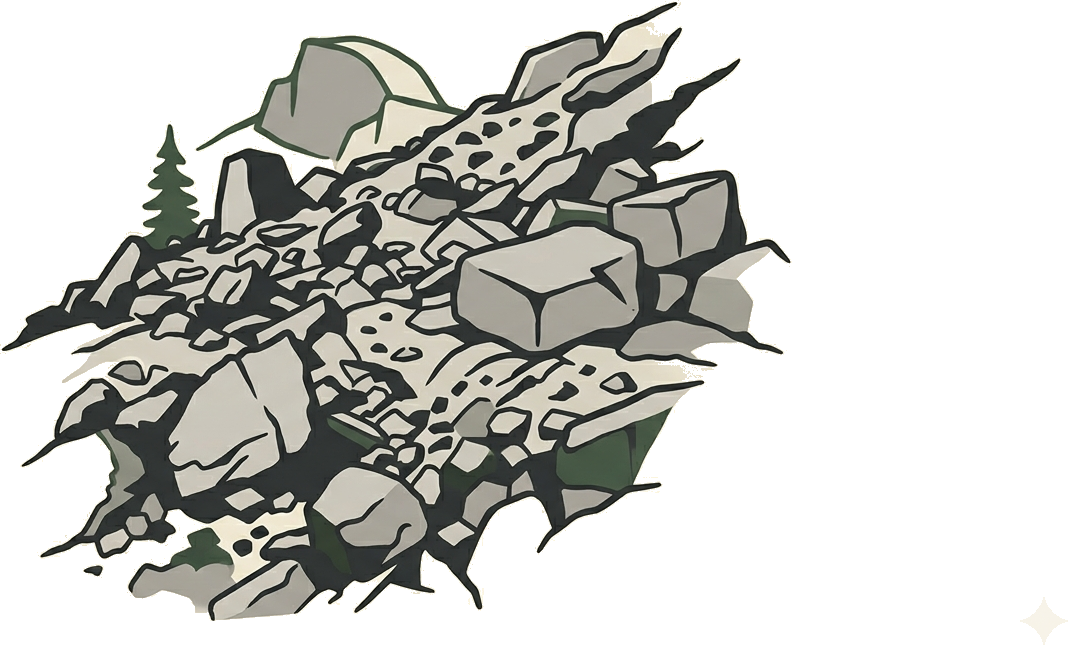
By Lloyd M. Smith, Field School '39 It is always a surprise when stopped at the mouth of a steep canyon to find that mounting such peaks as Twin Peaks and Shepherd's Crest over 10,000 feet high, there had been built up a talus slope of rather large metamorphic rocks. Beside this was another talus accumulation of smaller rocks, and beyond this was the foot of a cliff, marked by a few very large boulders. In the latter niche lived a family of marmots, composed of five or six individuals that dwells at such wind-swept altitudes with the Cony and Hare as neighbors. To see a large rodent one must have patience and perseverance. The procedure is to first locate a place where marmots were seen for safety. Then, if the observer posts himself nearby, situated on a rock overlooking the talus of small rocks, and the large talus beyond before reaching the grassy foraging area. This was a distance of almost fifty yards, a long way to flee from an enemy, and waits silently. In a few minutes the marmots will venture out of their rock-homes to look about. If you remain stationary, the animal will get braver and braver until eventually it will go about its business, ignoring your presence completely. Rocks in the large talus were preferred as sunning "porches," and invariably at least one marmot could be glimpsed sprawled flat on its surface, basking in the sun's heat. These flat-topped boulders are also used as defecating sites, and that is why the droppings are so noticeable. Such proved to be the case at the head of Virginia Canyon about 10,000 feet altitude. At a favorable location.
The family observed included one huge old grizzled matriarch or patriarch. It was the wariest of the group and the last to appear in view, and it was this individual that gave the shrill warning note whenever danger threatened. There were two fully adult marmots that appeared like the parents, if the old one could be considered a grandparent. They, too, were rather shy in exposing themselves to full view, but considered no danger involved if but half their body was in sight. To complete the family group, there were two or three half-grown young. These were the reckless adventurers of the lot and the first to appear after being frightened into seclusion. When disturbed, the first impulse of the marmot is to dash into a hole or rock crevice deep below the surface. But soon its curiosity overcomes its fear and it will poke its head out to see if the source of danger has gone. If no movement is discernible, it will venture slowly further and further into view, until at long last it will have taken up a post on some look-out rock. If undisturbed there it will then throw caution aside and go about its business of foraging or sunning. If the source of annoyance remains close by but does not threaten, the marmot will either stand erect, with paws held close to its sides, like a picketpin, or commence to voice its shrill barking-like calls about once every two seconds. The purpose of this latter habit is unknown unless it be a showing of annoyance. In the Virginia canyon area it was noticed that the cony and the marmot occupy two similar but separable ecologic niches. Whereas the cony lives in a talus composed mainly of small rocks, the marmot dwells in a talus of much larger boulders. This is, of course, explainable because of the difference in size between the two, but still it was noted that even where conies were seen in a talus of large rocks, they chose those spots where the small rocks were located and avoided the boulders to a noticeable extent. Large openings would expose large enemies to a cony, whereas small holes would bar the bulk of a marmot, consequently the two animals occupy the same habitat, a talus slope, but distinct niches in that habitat. One adult was seen to defecate and upon closer observation, six large droppings were noted. If this occurs at least once a day, it can readily be seen that in a very short time the amount of excretion will be considerable. So it must be borne in mind that although the sign may be very numerous on mountain slopes, that is no true indication of the number of individuals present.
TREES OF SENTINEL DOME
By Ranger-Naturalist Art Carthew On the summit of Sentinel Dome stands the famous Jeffrey Pine, one of the favorite subjects of photographers and of those who appreciate the staunch battle the old tree has been forced to wage against the winds and storms of such an exposed location. Thirty feet south from the famous tree is another tree, not noted, and one which lacks the charm and beauty of its illustrious companion. The second tree hugs the ground closely as though aware of its inferiority. The swollen trunk and its age is much greater than stunted size would indicate. Although a dwarf in size, the power of its roots is indicated by the crack made by them in the granite rocks, crack which bisects one of the mother pits so characteristic of the granite domes. Possibly in years to come the second tree will come of age and no longer pass neglected unnoticed by the many visitors to the dome.
AN UNUSUAL SIGHT
Ranger-Naturalist Enid Michael It was an unusual sight to see a great Pileated Woodpecker, a bird as large as a crow, being chased by a pair of California Woodpeckers. When first seen the bird was winging across the meadow, headed toward the cottonwood grove. As he approached the grove the California Woodpeckers flew out to meet him. Evidently the Pileated did not care to meet his smaller relatives for he turned and fled, with the California Woodpeckers right at his tail as he flew over the meadow. Three times when the Pileated approached the cottonwoods, three times the California Woodpeckers dived at him and kept him on the wing. After the third attempt to come into the cottonwoods, the Pileated gave up and flew on to disappear into the dense foliage of a cedar tree. I have seen California Woodpeckers gang together to run a Lewis Woodpecker out of an oak grove. This I could understand, for Lewis and California Woodpeckers have the same feeding habits and they like the same sort of food. The California Woodpeckers are resident birds and certain colonies of California Woodpeckers claim possession of certain oak groves. Naturally California Woodpeckers would object to outsiders raiding their acorn orchards. As a matter of fact, however, the Lewis Woodpeckers can more than hold their own and when they happen to stray into Yosemite Valley they take a share of the fruit in spite of the Californias. Why the California Woodpeckers should have objected to the presence of the Pileated Woodpecker is a mystery to me. Between these two species of woodpecker there is no competition along the forage lanes. Especially at this time of year the California Woodpeckers had no cause to worry about any shortage of food, for the oaks were loaded with acorns and the air alive with winged insects. The Pileated Woodpecker is not an acorn eater nor does he pluck insects from the air as do the California Woodpeckers. Both Hairy and Willow Woodpeckers were foraging in the cottonwood grove and to these the California Woodpeckers showed no resentment.
HABITS OF THE MOUNTAIN WEASEL
(Mustela arizonensis arizonensis Mearns) By Ranger-Naturalist M. D. Bryant Three Mountain Weasels were living within 350 yards of the contact station at the entrance to the public campground at Tuolumne Meadows during the summer of 1939. All of these lived in rocks located near colonies of Belding Ground Squirrels (Citellus beldingi Merriam) and also near water. My observations led me to the conclusion that each of the weasels had a definite range of activity and that there was little or no overlapping of the ranges. Most of the day was spent in hiding but the animals appeared at any time of day. When they emerged they usually stayed in the shelter of the grass but at times were remarkably bold and came into open areas. They showed little fear of people. At 3:30 p. m., July 27, a Mountain Weasel dashed from the rocks at the edge of the parking area and caught a Belding Ground Squirrel which was crossing the area. The weasel caught the ground squirrel by the nape of the neck and shook it vigorously. The ground squirrel offered little resistance. When a man hurried toward the scene, the weasel dropped its prey and ran to the shelter of the rocks. The ground squirrel ran in circles for a short time and then erratically made its way into the grass and escaped. Some five minutes later the weasel reappeared at the scene of the capture and searched the area carefully. Although I have seen the Mountain Weasel in trees and know that it captures birds, I am sure that its main article of food in this area is the Belding Ground Squirrel. The greater number of weasels present in the vicinity of Tuolumne Meadows this year is undoubtedly correlated with the abundance of ground squirrels. On August 1 a Mountain Weasel was seen carrying a pocket gopher into the rocks
CALIFORNIA GRAY SQUIRRELS COMING BACK TO YOSEMITE
By Ranger-Naturalist Enid Michael Twenty years ago the Gray Squirrel was a very common animal on the floor of Yosemite Valley. Then in the winter of 1921-22 came disaster—a fatal disease spread among Gray Squirrels and carried them to practically the very last animal. Now Gray Squirrels are really making a come-back and I do believe that although the number of individuals doubled the last year, some were found flattened on the highways — they are learning to avoid the automobiles. Last year, 1939, a mother Gray Squirrel reared two young in Camp. Every day the two youngsters were seen and it looked like old times to have the Gray Squirrels back to camp. As has been pointed out in previous NATURE NOTES when disaster struck the Gray Squirrels the Chickarees began to appear in the Valley and during the last ten years there has been a steady increase in their numbers and now they are very common. Really in years of acorn plenty there is little or no competition for food between Chickaree and Gray Squirrel. The acorn is the staff of life for the Gray Squirrel, while the Sierra Chickaree prefers pine nuts. Neither the Chickaree nor the Gray Squirrel hibernates, therefore, they must store food against the lean days of winter. The Gray Squirrel buries acorns; the Chickaree cuts down green cones and stores them away in some damp place where they will not open and shed their nuts. On the floor of the Valley the Chickaree may discover a leaky faucet and in the drip it may pile up a great heap of cones, from which it will draw from day to day during the winter months. The Gray Squirrels bury the acorns from two to four inches under the ground and carefully cover them over with loose material from the forest floor so as to leave no evidence of the burial to catch the eye of the ever watchful Blue-fronted Jay. Jays may watch a squirrel bury an acorn and then when the squirrel leaves will go and dig the acorn up and either eat it or bury it in some other place. However, unless the jay sees the squirrel bury the acorn it is not likely to find it. The squirrel leaves no sign to mark the spot where the acorn is buried; this is not necessary for so keen is its sense of smell that it can locate buried acorns by simply sniffing over the ground. A young Gray Squirrel that
has never buried an acorn in its life will sniff along the ground, pause, dig down and uncover an acorn. I have seen Gray Squirrels dig down through six inches of snow to uncover an acorn. In the Yosemite Valley Gray Squirrels will likely bury their acorns near the base of some tree where the snow does not pile up deeply in the winter. When snow covers the ground I have seen Gray Squirrels attempt to raid the stores of the California Woodpeckers. Seldom though was the raid successful, for the woodpeckers of the colony with help from the jays would make it too hot for the squirrel.
A CAPTURED RATTLESNAKE REGURGITATES FOOD
By Ranger-Naturalist Verlin G. Baysinger During warm, dry summer days the trails may become a bit commonplace. However, the rocky slopes and off-trail areas present some interesting sights. While exploring the region west of El Capitan Station between the highway and the cliff walls on Sunday, July 9, 1939, many interesting things were observed, such as a bear wallow, the stream orchids near the river and equisetum beds. The element of surprise, always found in nature, came when a rattlesnake stopped in our path. This snake was a specimen which we could use in the museum reptile exhibit and so it was captured with the aid of a forked stick and noose and placed in the live snake exhibit late in the afternoon. The next morning the rattler seemed somewhat emaciated. During the night it had regurgitated two rodents which it had taken during the last few days. The rodents were a Microtus californicus and a Peromyscus sp. The Microtus was in fairly good condition. Although it is not possible to accurately state the length of time the digestive processes had worked, I believe that the Microtus had been taken a comparatively short time before its regurgitation. When the snake was caught the mass of the Microtus could be discerned about one-third of the snake's length from the head. The Peromyscus was further digested and species identity was impossible. Of course, this rodent had been in the digestive process for a longer period of time. This observation is unique in respect to the possibility of the snake's reaction to its new environment. It may be that the excitement during the snake's capture was a factor. Also we have evidence of the food which the rattler commonly uses. The last fact from a naturalist's viewpoint certainly gives the rattlesnake a little higher station in the animal economic table.
WHITE-HEADED WOODPECKER NESTING IN MASSACHUSETTS TREE TRUNK
By Ranger-Naturalist Verlin G. Baysinger The Mariposa Grove of Big Trees is replete with all the beauty that could be packed into such a small area. From early dawn to the dark of the night bird songs rend and harmonize throughout the Grove during spring and summer. Even the squirrels and chipmunks behave as if they realized they were living in a sacred realm. Each tree and shrub holds its own orchestra of the songsters and furry animals. If a Big Tree should fall, it serves as a nature lesson to all, and what is more it may be the home of some animal. The Massachusetts Tree, which fell in 1927, teetering into bits of its former grandeur, was the center of much action. With a group of visitors one afternoon, the shrill rattling cry of the White-headed Woodpecker was heard in a White Fir nearby. An immediate response by several nestlings was heard and the nest was readily found in the south side of the split section of the trunk. It was during this spring that a White-headed Woodpecker built a nest in the split section which broke off about twenty feet above the base. While climbing the catwalk on the trunk of the Massachusetts Tree, from the stairway leading down from the top of the catwalk on the lower trunk section the hole could be readily seen and the feeding of the birds was watched. The parent bird carried in its bill several large grubs which had been taken from the inner bark of some tree. Several trips were made to the hole before the feeding was stopped. Evidently our presence was somewhat annoying to the birds. After the birds failed to return
for a time, a closer observation was made and peering deep into the nest three fledglings were visible. They were of fairly good size and should leave the nest soon. The security of this nest would seem a bit doubtful if we should consider the crowds of people who visit the Massachusetts Tree and also the great number that would disturb the parent birds by approaching the nest closely. This observation is interesting from these several angles presented. Then too, it is further evidence that the White-headed Woodpecker does work in the softer woods.
YOSEMITE BALSAM ROOT
Balsamorhiza deltoidea Nutt. By Ranger-Naturalist Enid Michael Yosemite Balsam Root is a large perennial sunflower-like plant from one to two feet high. A plume of great leaves, six to twelve inches long, lift out of the ground like a fountain and spray outward in graceful curves. This ambitious plant quickly lifts up strong stems on which are borne large, sunflower-like blossoms—and like most sunflowers they turn their open faces toward the sun. Because of this habit they are often called Compass-Plants. The triangular-shaped leaves are broad at the base and gradually narrow to the pointed apex. They have the pleasant perfume of Lemon Verbena in common with the leaves of Arnica discoidea that grows along the Mist Trail near Lady Franklin Rock. The Balsam Root grow in open sandy or gravelly places and is one of the few showy plants to bloom early—indeed it is the earliest with sunflower-like bloom. In the Yosemite district the plants are not common: a few occur on the Valley Floor and a great colony occupies a slope near the new trail to Nevada Fall at an altitude of about 5000 feet. In the Yosemite district are two other Balsam Roots with large sunflower-like flowers: Balsamorhiza sagittata Nutt. has silvery-gray leaves with often a heart-shaped base and Balsamorhiza hookeri Nutt. has gray leaves parted into many narrow lobes and sunflowerlike heads on leafless stems rising from the base. The latter may be seen above Big Meadows near the old Coulterville Road. These two species are rare in the Yosemite and bloom later in the year than B. deltoidea. The Yosemite wyethias are other plants in the same family with large sunflower-like blossoms but they bloom fully a month later than the Yosemite Balsam Root that blooms during April and May.
Digitized by Yosemite Online Library Dan Anderson