Yosemite Nature Notes · Volume 17, Number 2
February 1938
YOSEMITE NATURE NOTES VOL. XVII
February, 1938 No. 2.
THE PUBLICATION OF THE YOSEMITE NATURALIST DEPARTMENT AND THE YOSEMITE NATURAL HISTORY ASSOCIATION
Published Monthly
VOL. XVII
February, 1938 No. 2 Ta-bu-ce as a Weather Prophetess By Ranger-Naturalist Ernest A. Payne One rather warm morning during on the black oaks over our heads the middle of July 1936, I was talking in all parts of the Valley, but I ing with Maggie Howard, or Tawas also attracted by the number bu-ce as we prefer to call her, as of cones hanging from the conifers. she sat making a beaded bracelet The sugar pines at Glacier Point in her accustomed spot in the end at the Mariposa Grove were shade under the oak trees in the especially heavily laden with their museum garden. In the course of crop of long, cucumber-like cones the conversation which, at times, which would mature in the assumed the nature of a monologue tumn. with Ta-bu-ce listening rather pasTa-bu-ce could have said with lively, she remarked that the folequal accuracy, "look at the chiplowing winter was to be a very munks and golden-mantled ground cold one. Being interested in the squirrels," for before the first of aboriginal method of foretelling the September these little animals were weather, I asked her how she knew scurrying determinedly about in and what were her reasons for bethe Mariposa Grove with monstrous lieving the winter was to be severe. mouthfuls of fibers stripped from Without hesitating and with a tone the bark of the Sequoia for their that bespoke contempt for my igwinter homes. So interested were norance, she replied, "Look at the they in the task at hand that the acorns!" and continued with her usual peanuts and cookies proved bead work, useless lures in distracting their atNot only did I look at the acorns tention. One golden-mantled ground that were appearing in abundance squirrel actually wore a path from
its source of supply at the base impenetrable, oily smudge created of a red giant near our tent, to the by the southern California citrus entrance of its underground regrowers to protect their crops from treat. (See article by Ranger Lon the frost, did I recall Ta-bu-ce's Garrison, NATURE NOTES, July 1937, prophecy and her criteria for makPage 55. ing the forecast. Again my visit Many woodsmen and students of with our Indian friend was brought wild life place a great deal of faith to mind when official records of in wild animals as weather forecast the government weather bureau ers, others look upon them with inshowed that the temperature at Yocredulity. Dr. Raymond L. Ditmars semite reached a low at 5 degrees of the New York Zoological Park in below zero on January 21, 1937. his book "Strange Animals I Have Is Ta-bu-ce's ability to anticipate Known" states that "There seems weather conditions consistently acto be a deep-seated belief that ancurate or was she just lucky in imals are long-range weather prothis instance? We do know that in phets and anticipate extreme heat some aboriginal peoples there seems or cold by varying the thickness of to exist certain senses that we have their fur, care in digging burrows, apparently lost in the process of storage of food, lining of nests and civilization. However, in the presother activities. ent case of Ta-bu-ce, her statement "Year after year I have patiently to be based entirely upon her obwatched for evidence that would servation of visible natural phenindicate some creature's sensitiveomenon and her criteria proved ness to coming change of season. reliable. Today I am convinced there is nothing to such a belief.
AN ENTERPRISING JUNCO
"True, the coats of fur-bearing and hairy animals do vary in thickBy Ranger Jim Skakel ness from year to year; and the acThere are a great many ant-lion tivities of others in gathering windows just outside our bedroom winter food or preparation of their dow. I recently observed a Junco cold-weather domiciles may also hopping very purposefully from one vary. But the protective coats and to another, and making one quick the defensive toil seem to be influpeck in the bottom of each tiny enced far more by the season crater. One might expect this of through which the animal is pasquail, but this source of food supsing than by anything to come." ply would seem to be a rather unMany times during the months of usual discovery for a Junco to January and February when gropmake. ing my way through the banks of
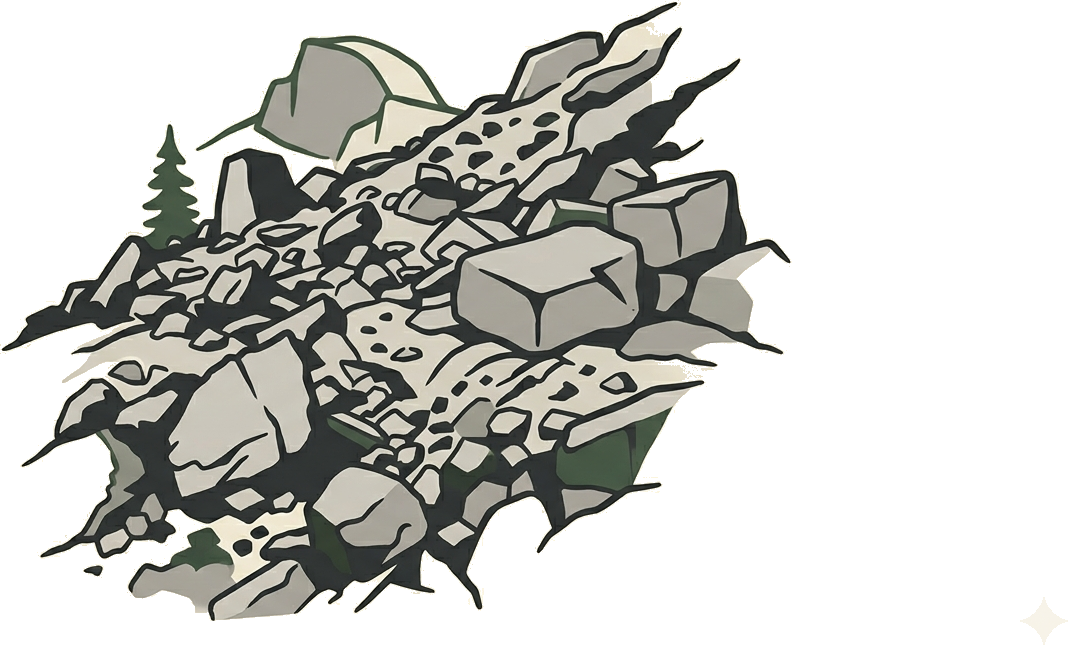
Marmots By Ranger-Naturalist Ernest A. Payne One of the first observations we grown young were observed cavortmade upon reaching Tuolumne ing playfully along the roads and Meadows last summer was the aptrails and in the rock slides. In parent abundance of Sierra Mardriving from Tuolumne Meadows mots. The presence of these animals toward Tenaya Lake on July 21, recalled to mind an article written 1937, our attention was drawn to a by Dr. H. C. Bryant which appearmoving form in the rock embanked in NATURE NOTES for October ment at the roadside about two 1929. In the article, Dr. Bryant dismiles east of Tenaya Lake. We cussed the scarcity of marmots in stopped the car and a half-grown the Yosemite area and presented a marmot ran from its hiding place number of possible explanations. and made for the car. I got out and One of the factors held responsible the little fellow was so fearless and for their apparent disappearance friendly I could have picked it up was the normal periodic fluctuation in my hands. Another car approaching numbers or, in other words, the ed and the animal became frightcycle of scarcity and abundance as ened and ran for safety under a found in almost all rodents. convenient boulder. We waited a In Tuolumne Meadows one of the few minutes and watched this marmost common inquiries of the park mot join two others of the same visitor during the summer was, size in a nearby pile of rocks. On "What is the large, reddish animal July 8 a similar incident occurred with a short nose and chunky body approximately two miles west of the we see on the rocky slopes?" lake. This latter location must have been near the spot in which Park On almost every naturalist-conNaturalist C. A. Harwell observed ducted trip we saw either the anthe marmots mentioned by Dr. imal itself or fresh evidence of its Bryant in the aforementioned napresence. A great number of halfture note.
Mr. Albert Duhme, custodian of lion but no apparent fear. the Sierra Club Parson's Memorial It was in 1929 that Dr. Bryant's Lodge at Tuolumne Meadows, reobservations were published, and ported that marmots were to be with the evidence for 1937, we wonfound commonly in that vicinity. der if the apparent increase during Naturalist-conducted hiking parties the past eight years would not supfound fresh droppings generally port his belief that 1929 or therethroughout the area in which the abouts marked the low ebb in marmot is associated. At the base mot population and that we are of Cathedral Peak, on the east slope now experiencing the upward swing of Mount Hoffman and on Mount in numbers approaching the period Dana the evidence of its presence of abundance which he suggested was abundant. Parties saw the anmight occur. imal at Glen Aulin, at Cathedral If this is the year of maximum Lake, and several individuals were numbers, or if it is approaching that seen repeatedly on the talus slopes period, would we not be justified in at the west side of Lembert Dome. expecting an increase in our carOn July 29, three individuals nivorous mammals and raptors that were seen by members of my party are predatory upon the marmot and on Mount Dana. While we were contribute to the maintenance of eating lunch on the summit of the that natural balance which exists mountain (13,055 feet) a mature between the rodents and their carfemale appeared from among the nivorous enemies. At any rate, we rocks and seemed to beg for atshould be prepared for the typical tention. Lunch scraps of bread cyclical diminution in numbers crusts and fruit were tossed to her, which will probably be manifest to which she responded immediatewithin the next two or three years. ly. She grasped each piece in her fore-paws and sat comfortably, squirrel-like, on her haunches unUNICORN BUCK til it was devoured, then she would By Ranger Lon Garrison look expectantly toward the group for more food. We were able to get September 16, 1937, a four-point within two or three feet of the anbuck mule deer, killed on O'Conimal and, I am sure, if we had had nor's ranch west of Yosemite, time she could have been persuaded checked through the Chinquapin to take food from our hand. During Ranger Station. The most conspicthe hour and a half we were on the uous feature of the finely antlered summit the marmot scampered head was the presence of a third from rock to rock just outside the horn. This was a stub about four circle of lunching hikers with a few inches long growing directly out of
the top of the forehead between the other two antlers. It pointed straight out, except for a slight upward curve. It was still in the velvet, but two knobs on the end indicated that it was slightly forked. The other antlers were free from velvet, and in good combat condition. The existence of bucks having a third antler is very rare. This recalls the occurrence of "Old Horny" the "rhino buck" well known in Yosemite some ten years ago. He sported an extra horn which sprang from a point about one third the way between the tip
OBSERVATIONS ON THE TOWNSEND WARBLER
Ranger-Naturalist Lowell Adams On the morning of August 23 at 8:30 o'clock a Townsend Warbler (Dendroica townsendi) was observed in the Museum Garden. When first seen it was standing in a small stream of water that crosses the garden path, where it seemed to be taking a bath. Frightened by the sudden appearance of the observer, the warbler flew directly into the lower foliage of nearby ceanothus shrubs and disappeared. Although the period of observation was short, sufficient time was had to make out clearly the showy yellow breast of evening primrose hue and the striking black and white mottling of the wings and back. It is interesting to note the distribution of this species which occurs at one part of the year or another over most of the North American area west of the Rocky Mountains, yet fails to grace the Yosemite region with its presence except as a transient. Dawson in Birds of California gives the general range of the Townsend Warbler as follows: Western North America. Breeds from Prince William Sound and the Upper Yukon, south to Washington and western Montana; winters regularly from central California to Guatemala, and sparingly north to Puget Sound. Migration includes western Texas and several of the Rocky Mountain States." As a winter resident of California the distribution according to the same author is "—west central California; of regular occurrence from Marin County south to Santa Barbara Islands. Also a
common migrant through southern ney B. Peyton, Secretary Cooper and interior California." Ornithological Club of Southern There is a possibility that these California observed them along the warblers may have regular habits Nevada Fall Trail. Thus we have that determine the time and route records for May, August and Deof migration of individuals or cember. And that, of course, is ingroups of that species, in which sufficient data upon which to base case we might expect to find them any conclusion. Grinnell and Storer appearing in Yosemite at definite are of the opinion that "numbers of times of the year. With present the birds undoubtedly pass through records, however, it is impossible the foothills in both spring and to define any such habit patterns. fall", in which case the individuals Grinnell and Storer in Animal Life seen at higher elevations were perin Yosemite, for instance, record haps only wanderers from the regTownsend Warblers in May (May, ular migratory course. It will be 1915 at Pleasant Valley and May interesting to note as more observa1916 at Mono Post Office), while Mrs. Enid Michael observed one tions are made whether we have in December 1929 in Yosemite Valley. this beautiful warbler a regular Again on August 21, 1937 Mr. Sidvisitor or merely a casual wanderer. Home Life on Yosemite's Summit Ranger-Naturalist Lowell Adams As fall months draw to a close tries is well known. Many days are the various species of Yosemite spent each autumn in cutting down Valley animals are putting the final the plant growth that occurs in the touches to their respective preparimmediate vicinity of the cony's ations for the coming winter. But home. The plants are carried in already the cold snow and frost large mouthful-sized loads to a have taken their stand at the highshady, well aerated nook beneath er altitudes; and the hardy denizens some protecting boulder and there of that long Arctic-Alpine winter, left to cure. One such pile of curhaving ceased their seasonal preing hay was observed near Mt parations, are now living snugly in Lyell base camp at 10,300 feet durtheir various retreats on the bouning the glacier survey last year. It ty of their providence. One is rewas conspicuous because of the nominded of the picturesque little ticeable lack of grassy plants in conies. Their method of wincomposition. So often in studies of tering by means of hay-pile panCony habits the observer is unable
to list the plants of the hay pile beespecially striking because of its cause of the difficulty of classifystrong, fragrant odor. The latter ing grasses. But in this case all but was furnished by the Pennytwo of the plants were identified at royal in particular combined with least as to genus. Besides the una general aroma of properly curing identified single grass and mossy green foliage. plant there were: Spiraea densiWise little conies! After inspectilora, Monardella odoratissima, Brying their bountiful supply of intoxanthus breweri, Phlox douglasii, icating fragrance one is forced to and a species of Senecio and Eriorespect them for their well-ordered phylum. Altogether there was about means of subsistence in spite of a half bushel of this material. In adverse living conditions—to envy addition there was a small amount them their luscious pantry—to wish of old hay that had been left over them all success for many winters from last year's over-supply, to come. May their enemies, the Apart from the interest in the weasels and martens, be not too composition of this hay-pile it was numerous! Conies at work making hay.
Wooden Windlass By Ranger-Naturalist M. D. Bryant A year or so ago a piece of wood At the present time the cottonwedged between two trees was wood is 29 inches in diameter and called to my attention. Inspection has a 4-inch growth over the end showed the condition to be manof the crosspiece. The ponderosa made so I decided to find out why pine is 31 inches in diameter and the piece had been placed there. I has a 2 inch growth over the end questioned a number of the "oldof the obstruction. The exposed timers" and finally found the ansportion of the cross piece is 4 feet wer, thanks to Mr. John Degnan. long and its wood is firm externalEarly in the '70's a Mr. Westfall ly but badly decayed around and decided to construct a cattle within the holes. slaughtering pen on the margin of This windlass may be seen to the the El Capitan meadow. The cornorth of the road as one drives rah wall was built of stone, portions down the valley toward El Capitan. of which still remain. In the cenIt is even with the Y formed by the ter of the pen were two trees much junction of the two roads leading larger than the others in the vicinto the El Capitan bridge from the ity. One was a black cottonwood north. I usually tell the members of and the other a ponderosa pine. the auto caravan about the relic and The piece wedged between the two have found them always interested. was ponderosa pine. Holes about So I pay my respects to an object one inch in diameter were bored that connects the present with the through the crosspiece, rods were placed in the holes, and the animal past and consequently will have in was drawn in by the improvised creasing value until Father Time
windlass. shall crumble it to dust.
Digitized by Yosemite Online Library Dan Anderson