Yosemite Nature Notes · Volume 13, Number 7
July 1934
July, 1934 Volume XIII Number 7
THE PUBLICATION OF THE YOSEMITE NATURALIST DEPARTMENT AND THE YOSEMITE NATURAL HISTORY ASSOCIATION
Published Monthly Volume XIII July 1934 Number 7
Insect Control in Yosemite By EMIL ERNST Ranger-Forester
In Yosemite, along the entire Sierra Nevada, and the lower lava bed country in the northern part of the state there has been in recent years a great increase in the number of deaths of forests by insects. In the Yosemite there had been until 1930 what one would expect to be the normal loss for mature Sugar and Ponderosa Pine forests. The policy of the National Park Service is to keep intact the beautiful forests in the Parks so when losses began to increase Yosemite immediately undertook steps to protect its own magnificent stand of timber which is one of the greatest if not the greatest asset to the Park.
From 1930 to the summer of 1934 this infestation had been growing by leaps and bounds. The spring insect control campaign of 1933, in which over $30,000 was expended, was closely followed by a summer maintenance control campaign using Emergency Conservation Work labor. From this spring's 1934 data on treating there is conclusive evidence that the tremendous losses of the past few years have been reduced to much less than half as a result of the control work last year. This encouraging news comes as a result of constant vigilance and well directed labor adequately financed.
As an example of the good that the insect control operations have done it is known that Section 21 in the Alder Creek region lost in the over-wintering generation of 1932-1933 some 76 trees with a volume of 451,820 board feet. For the over-wintering generation of 1933-1934 the losses have been 31 trees with a volume of 54,290 board feet. It will be noticed in this particular case that the loss in volume has been reduced almost nine-tenths and that the average size of the tree lost is much smaller.
Other areas have not shown such striking results but the losses have been cut at least in half.
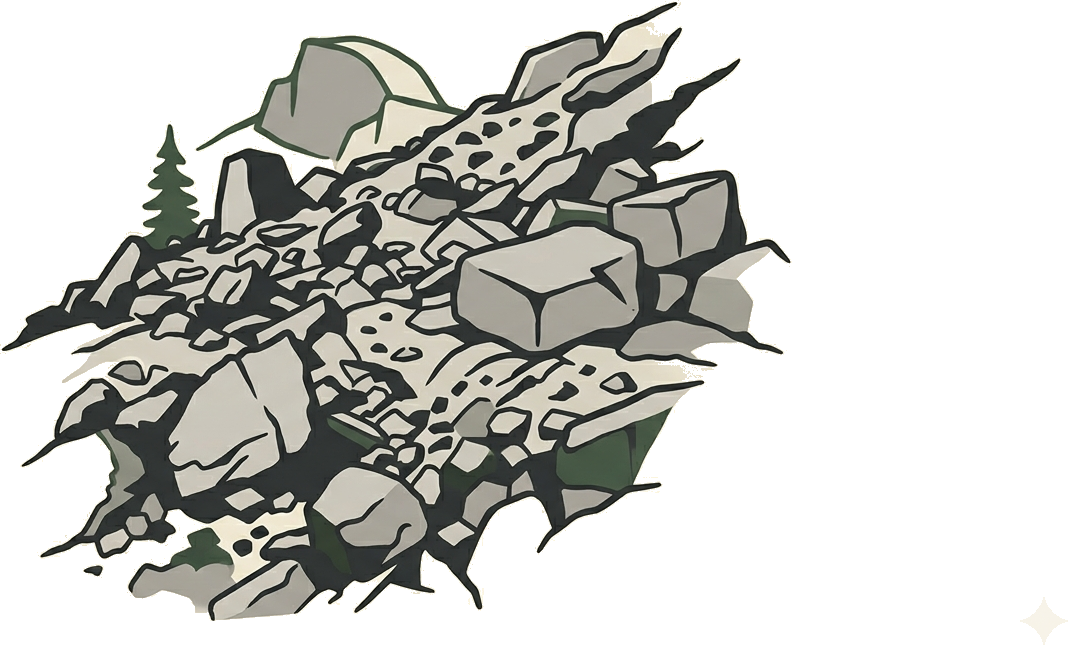
A host of species of insects, practically all of which are beetles, are responsible for these losses. The Western Pine Bark Beetle (Dendroctonus brevicomis) is responsible for the bulk of the damage in the Ponderosa Pine. The Mountain Pine Bark Beetle (Dendroctonus monticolae) is likewise causing the deaths of Sugar and Lodgepole Pines. Incidentally the name Dendroctonus aptly means killer-of-trees. It is against these two insects that the greatest efforts are concentrated but there are several other beetles of importance that are destroyed whenever they are met with in the insect control operations. These minor beetles include the Jeffrey Pine and Red Turpentine Bark Beetles, both of which are Dendroctonus species; several members of the Engravers or Ips; and certain members of the Flatheaded beetles. One of the Flatheads (Melanophila drummondi), the Hemlock Bark Borer, is responsible for considerable losses in the Douglas Fir on the talus slopes of Yosemite Valley. Control work on this beetle must occur in the winter months because of the high fire hazard existing on the rock terrain where refuse cannot be dug for protection.
An old problem has reappeared in the Lodgepole Pine where the same insect responsible for the "Ghost Forests" has again been observed in unrelentingly larger numbers. The Lodgepole Needle Miner has been found in rather large numbers in widely separated, practically inaccessible portions of the Park. It is at Porcupine Flat that they are now causing the most concern. Ordinarily an infestation of the Needle Miner is not serious in itself; however, it prepares the way for an outbreak of the Mountain Pine Bark Beetle which is the same beetle heretofore responsible for the deaths of many of our fine Sugar Pines.
Sugar Pine
One of the interesting features of the Needle Miner, which is a moth,
is that it takes two years for a complete life cycle. The flight of the moths took place last year in August and there will not be another flight until the same time in 1935.
Insect control operations entail the expenditure of large sums of which approximately 75 per cent is absorbed directly into labor costs. The insect organization has been very fortunate in obtaining a great number of skilled loggers temporarily out of employment due to the shutdown of the large logging operations on all sides of Yosemite National Park. At least 70 per cent of the men employed on
Dead Lodgepole Pines (Pinus contorta)
insect control have been taken from the list of residents of Mariposa County. The rest of the labor came mostly from adjoining counties while a few specialized men were from the state at large. There is no question but that the use of the residents of Mariposa County in insect control alone has been a big factor in the unemployment relief situation in this county. At times this activity of Yosemite National Park has had on its payrolls as many as 80 men of this county experienced in work closely allied to insect control. The low cost and the high rate of efficiency of the spring control campaign of 1933 can be directly traced to these experienced men.
Insect control work in Yosemite National Park is on a major basis and forms an important part of the forest protection system. Fire is a very spectacular and evident force for evil in the life history of the forests. But insects account for more losses year in and year out than any one or all of the large fires in the recent history of the Park. The losses for the over-wintering generation of 1932-1933 in the treated areas amounted to 3,900 trees with a volume of 11 million feet of some of the finest timber in the world. One must take into consideration that the losses enumerated are for one generation and there are often under favorable conditions three generations of these insects in a single year.
Again one must consider that the insect control campaign of the spring of 1933 did not cover the entire Park and hence the losses recorded are not the actual losses for the entire Park for that one generation. A total of 48,909 acres of the Sugar, Ponderosa, and Jeffrey Pine types were involved in that campaign, approximating 1/15 of the area of the Park. Taking everything into consideration it is estimated that for that one particular generation the losses from destructive insects must have been close to 8,000 trees having a volume of 20,000,000 board feet.
The administration of Yosemite National Park is keenly aware of the seriousness of the forest insect infestations and everything possible is being done to keep intact our splendid forests.
Mt. Hemlock (Tsuga mertensiana) Replacing dead Lodgepole forest.
Several Species of Deer Found in Yosemite By A. E. BORELL Naturalist
There are very few deer hunters and naturalists who have not argued about the species of deer found in the Yosemite region. Until recently most of the writers had maintained that the deer of Yosemite was the Rocky Mountain Mule deer (Odocoileus hemionus hemionus). Hunters who were familiar with typical Rocky Mountain deer felt sure that the Yosemite deer were not the same as, say, those of Modoc County.
Two recent books, "Review of the Recent Mammal Fauna of California" by Joseph Grinnell and "The Deer of California" by H. H. Sheldon, indicate that we may expect to find two species and one sub-species of deer in this region. The distribution given by these authors indicates that the ranges of three varieties meet in the general Yosemite region.
The Columbian Black-tailed Deer (Odocoileus columbianus columbianus) ranges through the northern and north central part of the state, south along the Coast Range to San Francisco Bay and south along the western slope of the Sierra Nevada at least to the southern Feather River country and possibly to Mariposa County.
The Rocky Mountain Mule deer ranges in northwestern California and south along the Sierra Nevada into Tuolumne County.
The California Mule deer (Odocoileus hemionus californicus) is found in the mountains of south western and south central California west of the Colorado and Mohave Deserts, from the Mexican boundary north along the western slope of the Sierra to the Yosemite region.
With this distribution in mind it is obvious that deer of any of these varieties or intergrades may be found in this region.
The two kinds of mule deer are only sub-species and therefore are much alike, whereas the Black-tailed deer is usually easily distinguished from either variety of mule deer. Size, character of tail, shape of rump patch, length of metatarsal gland, and size of ear are the main external characters used in distinguishing the different kinds of deer found in this region.
The Yosemite Museum By A. E. BORELL Naturalist
A large percentage of the thousands of visitors who come to Yosemite each year think the Yosemite Valley is synonymous with Yosemite National Park. Of course those who are familiar with Yosemite know that the valley is a small portion of the Park as regards both area and interest. The Museum with its exhibits, relief maps, library and information service provides for the visitor an easy index to the outstanding features and activities of the entire Park. The Museum also serves an important function in bringing to the visitor a knowledge of our forests and wild life.
One section of the Museum displays the common birds and mammals of Yosemite as they are found in relation to altitude. Here the visitors have an opportunity to learn the identity of the birds and mammals which he sees daily about his camp.
People in general profess no knowledge and little interest in geology. But when they visit Yosemite and see this tremendous chasm cut in granite and bordered by cliffs 3,000 feet high they want to know — "What happened?" A series of reliefs and other exhibits showing the work of water and ice proves of great help and interest. These exhibits are augmented by daily talks given by members of the naturalist staff. This set-up makes it possible for the visitor to get within half an hour a fairly good idea of the factors responsible for the formation of this great world spectacle.
As one stands at some vantage point such as "Tunnel View" and looks down on Yosemite Valley he ponders over the feelings of the first white men who looked upon the virgin valley. Who were these men and what brought them here? He also wants to know about the Indians who were living here when the first white men came. Two rooms, one devoted to early history and the other to the Indians, bring to the visitor a romantic story of the aborigine, of discovery, war and pioneering.
In the flower and tree rooms are exhibits of the common flowers and trees of Yosemite. The tree room is now being rebuilt and we hope very soon to have exhibits showing the bark, wood, cones and foliage of every species of tree found within the boundaries of Yosemite National Park.
In conjunction with the Museum is a garden containing the majority of wild flower species of the park. Daily throughout the summer hundreds of people go to see the gardens and to enjoy the Indian demonstration which is set up there. Houses or dwellings of
incense cedar bark and granaries or acorn caches where the acorns are stored were built by the present day Indians of the same materials and in the same manner as the original homes and store houses were. To add to this picture Maggie (Ta-bu-ce) works here daily making acorn bread or weaving baskets. Chief Lee-me adds life to the scene by doing Indian dances at stated times during the day.
For those who wish to delve more deeply into the knowledge of the geology, Indians, flowers, or fauna a library of books on the Yosemite region is at hand.
All of us realize that the more we know about our forests and wild life the greater enjoyment we will get from daily life and especially from the time we spend in the out-of-doors. Our forests are friendly and tell a vivid story to those who know them. The Yosemite museum plays an important part in bringing, through knowledge, added joys to thousands of Yosemite visitors.
Editor's Note: In answer to many requests from readers of NATURE NOTES, we are at last able to print the complete version of the Big Yosemite Mountains, as written by Park Naturalist C.A. Harwell (Photo on right). The first stanza is the verse; the rest, choruses.
The Big Yosemite Mountains Words by C. A. HARWELL (Tune: "In the Big Rock Candy Mountains")
One evening as the sun went down, And the campfires all were burning, Down the trail came a hiker hiking, And he says "Boys, I'm not turning, I'm headed for a land that's far away Beside the crystal fountains, So come with me and we'll go and see The Big Yosemite Mountains!"
In the Big Yosemite Mountains There's a land that's fair and bright, Where you can swim, to suit your whim, And the fire falls every night. The trails are never dusty, 'Cause we sprinkle them every day; And you can hike, forty miles or more, Your nose never burns, nor your feet get sore! In the Big Yosemite Mountains.
In the Big Yosemite Mountains The Dogwood never barks, The Aspirin trees are sure to please, You ought to go out for a lark. The Buttercups all get full of milk, When the cowslips down the hill; So the place for me's beneath a tree, Where all the girls Balsam Fir me, In the Big Yosemite Mountains.
In the Big Yosemite Mountains The Rangers are polite; They'll carry your wood, if you are good, And chase bears away at night; They'll answer all your questions, They often tell the truth; They know why the falls fall over the walls, They know the calls when the fire fall falls In the Big Yosemite Mountains.
In the Big Yosemite Mountains There's a campfire every night, And folks all come for miles around Why, you'd think there was a fight. — is so handsome, Now ladies please don't crowd. They'd sit or stand to see this man. Oh, boy! There's now isn't he grand? In the Big Yosemite Mountains.
In the Big Yosemite Mountains There's a bunch of Big Black Bears And when one goes woof! or Woof! woof! woof! You better say your prayers, 'Cause a Bear's too big to fool around with. Never try to feed one from your hand. For if you do, there's a hospital for you. And you'd better hide your bacon if you Don't want it taken. In the Big Yosemite Mountains.
In the Big Yosemite Mountains There's a grove of Great Big Trees, They're so tall and you're so small You want to get down on your knees. They call them Giant Sequoias, They've been growing there thousands of years. They were there when Moses had the halitosis, They were there when the whale took Jonah for a sail, They were there when Columbus crossed the ocean blue To discover the Americas for me and you. They'll be there when you go to see them, then. In the Big Yosemite Mountains.
Digitized by Yosemite Online Library Dan Anderson