Yosemite Nature Notes · Volume 11, Number 5
May 1932
Volume XI May 1932 Number 5
THE PUBLICATION OF THE YOSEMITE EDUCATIONAL DEPARTMENT AND THE YOSEMITE NATURAL HISTORY ASSOCIATION
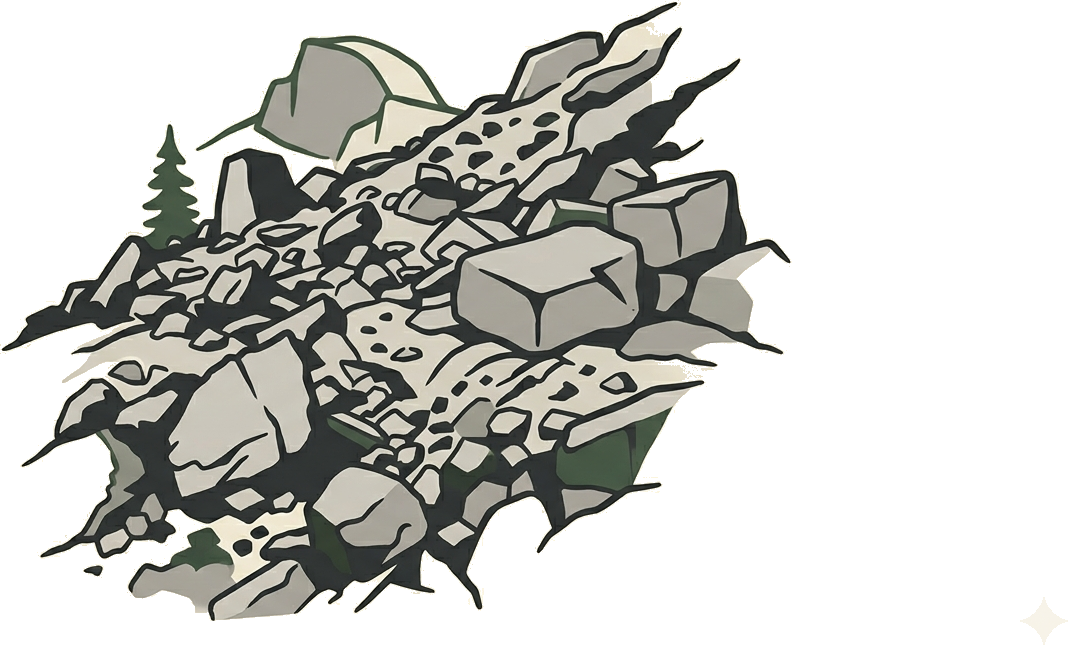
:Published Monthly Volume XI May 1932 Number 5 Little Haymakers of the Sierras By ARTHUR STURM, Ranger-Naturalist High up in the timberline region consistent winds play over ice fields of our western mountain ranges which may linger throughout the lives the cony, a little gray-brown summer. haymaker of the heights. Its most Life at this high elevation is hard closely related cousins are the rabbits -hard as the rocks which make and from these it differs somewhat in appearance, in habits, and stony cry of the Clark's crow especially in the kind of environment which dares to wing its way to this environment which it chooses for its home. bleak height, Even the high. In size and general appearance pitched "check-ick" of the conies the conies resemble guinea pigs. is in harmony with the surroundings The ears are rounded, the body for you can duplicate it by short and compact, and the tail merely striking two rough pieces almost wholly lacking. These of granite together. In this bleak strange little animals live among country there is no summer and the rocks high up on the slopes of no autumn Spring comes late, rethe Rockies and the Sierra Nevadas remains six or eight weeks, and is Their companions are the followed by a long cold winter marmots, the alpine chipmunks, Such is the home of the cony. the picket-pin ground squirrels, and,
HAYING SEASON
in some areas, the wild mountain In August and September the goats. In the High Sierra of Yosemite National Park, where my observations on the conies were made, very plants are carried to the haystack few species of trees dared venture which, though open to the bright to the rugged heights where these sun, is sheltered from the rain by little fur-bearers dwelt. It is a its position against the rocks. I region which fairly overwhelms have come upon fresh sweet-smelling stacks of this kind which contained granite mountains, a region where contained as much as three bushels of existence for both plant and animal plant material. After being cured life is severe, a region where per- in the sun, the hay is transported
to some shelter lying deep down numbers of these rock-dwellers. in the interstices of the rocks. This, THEIR HIGH RANGE then, becomes the food of the cony Near Washburn lake, at an elevaduring the many months when deep tion of approximately 7600 feet, blankets of snow cover the mountain sides. - was the lowest elevation at which Little is known of the cony's I have seen or heard conies in winter activities. This is largely Yosemite National Park. The highest due to the slide-rock which, when range of these animals goes up covered with snow, makes footing almost to the summits of the very extremely precarious. Safe is the highest mountains—at least to cony from foxes, bears and birds 12,500 feet on the slopes of Mt of prey at this time of year. But Dana, second highest mountain in Lyell never is he safe from the most the park. near the foot of Vogelsang, dangerous enemy of all, the blood- on the slopes of Vogelsang, thirsty mountain weasel. near Ireland lake, and no doubt in Near the slide-rock slopes of all the timberline, I have attracted the attention of these sinewy-bodied glacial cirques in the Yosemite, these animals are to be found in killers by making a series of sharp greater or less number. For one squeaky notes, and have watched to encounter them in this high the slender, beady-eyed animals country where the trees are often running nervously over the rocks reduced to prostrate scrawny forms as though expected momentarily to and where only a limited number come up the path of some luckless of living things have maintained prey. Capable of following the themselves in the severe struggle cony wherever the little hay-maker for existence, is a revelation and may choose to go, the mountain an experience never to be forgotten. weasel brings death to large numbers. Beginning of Nature Guiding By C. A. HARWELL, Park Naturalist Our half million visitors a year to Yosemite are coming more and more to appreciate the opportunities offered by our museum, our program of popular lectures at camps and resorts and our organized trips afield under the leadership of well trained ranger-naturalists. During the last season in Yosemite 278,000 people visited the Yosemite Museum, 250,000 park visitors were in attendance at our lectures and 23,000 nature lovers went out with our naturalist guides on field trips, auto caravans, or longer hikes through the high Sierra. This is a relatively new movement in our national parks but its rapid growth attests the fact of its very worthwhileness
"In Norway and in Switzerland, ing developed the technique of nature curiously enough, was found the guiding, offered the University original nature guide work that has of California to finance a first spread to our national parks. As unit of nature guide work at a president of the World Recreation string of California resorts. They Survey I made certain studies there suggested Lake Tahoe as strategically over a quarter of a century ago, the best area. The university This world-wide movement was inaugurated conferred with Dr. H. C. Bryant that the then novel of its faculty, then consultant American playground technique to California Fish and Game Commission. Arrangements were concluded. overseas lands. In making the world with six Tahoe resorts for survey, it developed that certain a free program of daytime field other nations had types of recreation work and evening lantern slide lectures work valuable to us. Nordic motion pictures, camp fire Europe had, for example, the highly talks. Dr. Loye Miller of Los Angeles organized nature-study field-excursion co-operated with Dr. Bryant in inaugurating the work.
LEADING THE BLIND INVITATION FROM MATHER
"This work was studied in Scot- "In the autumn of 1919 the late land, England, Holland, Germany, Director Mather, traveling from Switzerland, Scandinavia. The nature Yosemite to Sacramento by way excursion for the blind in Denmark, of Tioga Pass, stopped at Fallen utilizing songs of wild birds, Leaf, He observed the auditorium was made available to blind schools was so crowded for the evening lecture that people actually stood out side at doors and windows to hear. Germany's superiority in world trade Director Mather, then struggling was largely based upon Germany's with certain amusement concerns scientific training commencing that wanted to convert Yosemite with nature field excursions, that into a gigantic Coney Island, with such training made for alertness ferris wheels and 'hot dogs,' invited in business. A similar tradition is us to abandon the Tahoe work handed down in Huguenot families the Yosemite base. He declared The latter believe their usual business that such work was the best back- ability is largely due to general training fire against commercializing Yosemite. As there training of their young. Switzerland and Norway was no Government appropriation at the time, the considered the nature guide movement Yosemite work was financed partly an asset commercially. It attracted by Director Mather and partly by tourist travel. It also was Mrs. Goethe and myself. Dr. Bryant a valued part of their educational and Dr. Miller, who had both system. In Switzerland the nature been pledged for the 1920 campaign guide work was expanded into a at Tahoe, agreed to transfer their system of exchange of material activities to Yosemite. The California throughout the German, the French Fish and Game Commission and the Italian speaking world again co-operated with the National This was conducted along the lines Park Service. Thus began of our former 'Agassiz Association the nature guide movement, which "By 1918, Mrs. Goethe and I having has since spread to all of the national parks."
Yosemite Falls Ice Cone Norman Clyde (upper) well known mountaineer and Ed. Beatty, Asst. Park Naturalist, climbing the cone. Photo by Bert Harwell, Park Naturalist.
A Trip to the Ice Cone M. E. BEATTY, Assistant Park Naturalist This years ice cone at the base of the Upper Yosemite Fall was the largest for several years. On February 20, Park Naturalist Bert Harwell, Norman Clyde, the well known mountaineer, and the writer decided to explore and photograph it. We left early in the morning equipped with ice axe, rope and cameras. The cone generally disappears about the first of April, sometimes causing floods around Yosemite Creek. This year it melted gradually and by the middle of April had entirely disappeared. This ice cone is always of interest. It can be plainly seen from the The trip was made by way of a south side of the valley and each narrow ledge or shelf which leads along the north wall of the valley. In winter thousands study it from there long the north wall of the valley with binoculars and cameras but few directly to the crest of the Lower become so intimate with it as our Yosemite Fall. From there we made party of three. our way up the steep granite walls to the base of the Upper Fall, after depending several times on our rope and the alpine experience of Norman Clyde. Our effort to emulate mountain goats was rewarded, for before us stood the ice cone rising from the base of the Upper Fall to a height which we estimated as nearly 300 feet. It stood like an inverted funnel, the base occupying nearly the entire width of the miniature hanging valley and rising on a 45 to 60 degree slope to a sharp peak at the top. Several factors combine in forming the cone; snow and ice floating over the brink, spray freezing on the cone and ice masses which plaster the margins of the fall each cold night dropping on the cone as daytime brings warmer temperatures. Norman, Clyde and I cut steps on a zig-zag up the side of the cone to within 30 feet of the top where we were forced to stop due to the heavy barrage of ice falling from 1400 feet above. Bert Harwell took pictures as we climbed and also as we slid down the cone using our knapsacks
YOSEMITE MUSEUM NATURE LIBRARY
By Ruth Casaday, Librarian Yosemite National Park is the pioneer among national parks regarding the organization and cataloguing of its library. The work has begun this past summer through the initiative of park officials and the stimulation of the American Library Association committee on libraries in national parks, of which C. E. Graves is chairman. The survey of book collections in national parks made by the committee showed Yosemite to have approximately 3000 volumes, the largest collection in any park. The books are all gifts, the Yosemite Natural History Association being the donor of many of them. The Yosemite Museum Nature Library is a special library of books on Yosemite lore and nature study, but it seems advisable to have a supplementary collection of books on general subjects for guests and residents who desire to pursue studies in other fields or to read widely
for information or recreation. 2. The making of effective displays Those who will use the library are of subjects emphasized in the park naturalist and his staff, the park museum. This is especially park officials, permanent residents desirable since most of the of the park, park guests and specialists libraries are located near or are who visit the library for research purposes closely associated with the museums and such displays would aid During last summer 503 books in the educational program of the were catalogued. This entailed the National Park Service. ordering of Library of Congress cards, accessioning of each book, with the various national park libraries classifying and cataloguing each other libraries and book title, typing and filing of the cards, agencies in order to make the library embossing, painting and pasting collection more complete in. each volume, and keeping a statistical its chosen field. record of the work done. The 4. The searching for material catalogue contained 1341 cards at requested by the park naturalist the end of the summer. The first and any member of the staff or copy of every title was made reference the public. so that a copy of every 5. The preparation of material book owned by the library could for a periodical bulletin containing be had upon request. All library information of new books and technique employed was in accordance publications of interest from a with modern library practice national park viewpoint. so that the work can be carried on NOTED visitors easily by succeeding librarians. The national park librarian meets yet the position of librarian is a many interesting people. Last summer temporary one for the summer Dr. Ray Lyman Wilbur, Secretary months only. of the interior, visited the li
LOOKING AHEAD
brary and inspected it quite thoroughly, since this was the first experiment Library is, indeed, bright, for there of any national park in is much to be done in the way of the library field. Dr. Clark Wissler, initiating new ideals and in the curator of the American Museum achieving - of ideals already set. of Natural History, also visited the Each national park of any size park and was extraordinarily interested should have a permanent resident in the progress of the library. librarian and her duties will range He offered many valuable suggestions through the entire field of library and was very sympathetic to science. A few of the specific tasks the library movement in national that suggest themselves are as follows Parks. : The beginning step in organized 1. The preparation of a bibliography of the entire library and of made at Yosemite, but there is special subjects. These lists would much left to be done. Other national be helpful to specialists in various parks soon will begin the fields and of great assistance in cataloguing of their books, and the building up that particular collection of books and collections in offers much opportunity for initiative other national parks. and service.
THE YELLOW-BILLED MAGPIE, A NEW BIRD FOR THE YOSEMITE REGION
carrion. During the fall of the year they consume quantities of grasshoppers.
THERE OVER 60 YEARS
By Ranger-Naturalist A. E. Borell Chriss Peterson, who owns a Yellow-billed magpies are especially interesting because their range ranch upon which part of the col- ony nests, told us that he had been lies entirely within the State of in the vicinity for 63 years and that California. Even within the State this colony had been there at least they are very local in their distribu- that long. He estimates the num-tion. They live in colonies and ber of magpies about his ranch at most of the individual nesting colonies are on record. He estimates the number of magpies about his ranch at 200, and told us that he knew of no other nesting magpies in the Previously there had been no published region. record of yellow-billed magpies in the Yosemite National Park region. We saw about 25 of these birds in pies in the region of Yosemite National Park. On April 3, while an area one-half mile long and one-fourth mile wide. It is hard to driving on the main road from understand why so many magpies Hornitos to Mariposa, Mariposa should be concentrated in this small county, several yellow-billed magpies area when so much of the surrounding were seen two miles east of country apparently presents exactly the same conditions. Hornitos at an elevation of 1200
feet. On April 10, I returned to the On April 11, Clifford Presuail, vicinity with Ralph Anderson, and Charles Michael visited the colony. Government photographer for Yosemite National Park, to take pictures One magpie was seen to enter and gather more information in a nest and remain 10 minutes, when these birds. another magpie, supposedly the The nests of this colony are lomale, appeared with something in cated in white oaks, which grow its beak. The male called several abundantly over the rolling hills in times and the female came out of this region. We examined 22 nests, the nest and followed the male most of which were located in the from limb to limb, begging for food. tops or near the ends of branches During this process there was considerable of the largest oaks in the vicinity. talking and scolding by The nests are large globular structures, the pair, When the male finally did completely roofed over, having feed the female she fluttered her only a small entrance on one wings as a young bird does, and side. They are composed of sticks then returned to the nest, where and lined with grass or roots. Some she remained half an hour, when of the nests are three feet in diameter the observers departed. and one would expect them to magpies, with their extremely be very conspicuous, but this is not long tails, are decidedly larger than always the case. These oaks are any of our jays. Their coloration is heavily infested with mistletoe, conspicuously black and white. which grows in large masses and Their bills are bright yellow, which from a distance it is not easy to easily distinguishes them from the black-billed species east of the mistletoe and a magpie's nest. Sierra Nevadas. The food of the yellowbills consists Yellow-billed magpies have been of insects, seeds, grain and decreasing throughout the State,
due to settlement and persecution It is encouraging to find this colony in such a thinly populated section Here they should be able to live and multiply undisturbed.
FOOTHILL WILD FLOWERS
By M. E. BEATTY Assistant Park Naturalist visitors in Yosemite valley during the early spring are constantly asking about the beautiful wild flower displays along the All Year highway between Merced and the park boundary. They are enchanted by the solid fields of whites, yellows, blues and purples and greatly appreciate learning at least the names of the more prominent of these colorful groups. In order to be better posted on the many varieties of foothill flowers, a group of the museum staff with their families spent Sunday, April 3, in the vicinity of Mariposa, where a total of 65 different species were identified. Specimens were collected, pressed and mounted in Riker mounts for display in our museum flower room. Among the many white flowers along the highway, the ones that furnished a more massive effect were meadow foam (Limanthes douglasii), popcorn flower (Plagiobothrys nothofulvus), woodland stars (Tellima scabrella) and five spot (Nemophila maculata). The dainty five spot just mentioned presents a solid white effect from a distance, although when close at hand the bluish spots on the ends of the petals are readily discernible.
YELLOW AND ORANGE
The yellows were represented by many varieties, but the commonest ones found along the roadside were buttercups (Ranunculus californicus), goldfields (Baeria chrysostoma) and golden brodiaea (Brodiaea ixiodes), while numbers of the sunflower family were seen at various places, but the above mentioned furnished the larger show. Classed with the yellows we might include two prominent orange or golden-colored flowers, the California poppy (Eschscholtzia californica) and fiddlenecks (Amsinckia douglasiana). Poppies were especially spread in great fields along the hills bordering the Merced river between Briceburg and El Portal. The blues and purples were best represented by several varieties of lupine and brodiaea. One of the best loved of the blue group is the demure little baby blue eyes (Nemophila menziesii), while innocence and Chinese houses, of the collinsias, are favorites in the bluish purples. As one nears the park boundary in the vicinity of El Portal several red flowers stand out in small restricted groups, the Indian paint brush (Castilleia pinatorum) and Indian pinks (Silene californica), while the strikingly beautiful magenta-colored red-bud or Judas tree (Cercis occidentalis), seems queen of them all.
PAGEANT OF THE MONTHS
The wild flowers in our foothills start blooming in March, while here in the Yosemite Valley they are several months later. One can enjoy wild flowers, at their maximum of bloom, for six months out of the year in the Sierra if he will follow the advance of spring from the foothills to the very crest of the range where alpine flowers are best in late August. There are 1200 different varieties of flowers in the Yosemite region, offering the flower lover a splendid opportunity for both study and recreation.
Digitized by Yosemite Online Library Dan Anderson