Yosemite Nature Notes · Volume 4, Number 19
October 31, 1925
c,ume IV October 31, 1925.,~ Number 19
VACATION-LAND IN OUR HOMES THROUGHOUT THE YEAR
Few of us are fortunate enough to spend more than a short vacation each year in our mountain playgrounds. How many of us, as we stood upon the heights and felt the thrill of fellowship that comes with first-hand acquaintance with the birds, the flowers, the trees and the mountains themselves, have wished that the inspiring influence of these associations could be with us throughout the year in our everyday life. Our government i s doing its part to help us to more thoroughly enjoy and understand our great playgrounds, the National Parks. In Yosemite we find a splendid museum and a corps of naturalists who conduct daily field "trips along the trailsides and who deliver evening campfire lectures on a wide variety of natural history subjects. But why should we be satisfied with but an introduction to the trailsides of our beloved Sierra? Is there no way in which we may continue our friendship with the Big Country during each month and each week of the year? There is a way! Lovers of the California mountains have organized to interpret and present in popular form all of the manifestations of Nature of the Sierras and more particularly of Yosemite National Park. Primarily the Yosemite NATURAL HISTORY ASSOCIATION concerns itself with the living things of the Yosemite region; yet it must necessarily be a factor in inspiring a regard for American Wild Life in general. Yosemite Nature Notes, which has been published in mimeographed form by the Park Naturalist for a number of years, has been adopted as the official organ of the Association. Cooperating with the government, the Association prints "Yosemite Nature Notes " weekly during June, July, and August and monthly throughout the remainder of the year, each of the twenty-four issues being sent to all members. If you are one of the hundreds of thousands who love Yosemite, you will wish to keep in touch with her, through the Association. There are hundreds of thousands of others who have no conception of the big message of the Out-ofdoors. You will want those uninitiated to learn of what the Park:, has to offer: At now! Fill out the enclosed application for membership and mail it with a check or money order for $2.00 to The Park Naturalist. Yosemite National Park, California. Every cent of the $2.00 will be devoted to keeping you in touch with your Yosemite.
Volume IV October 31, 1925 ' Number 19
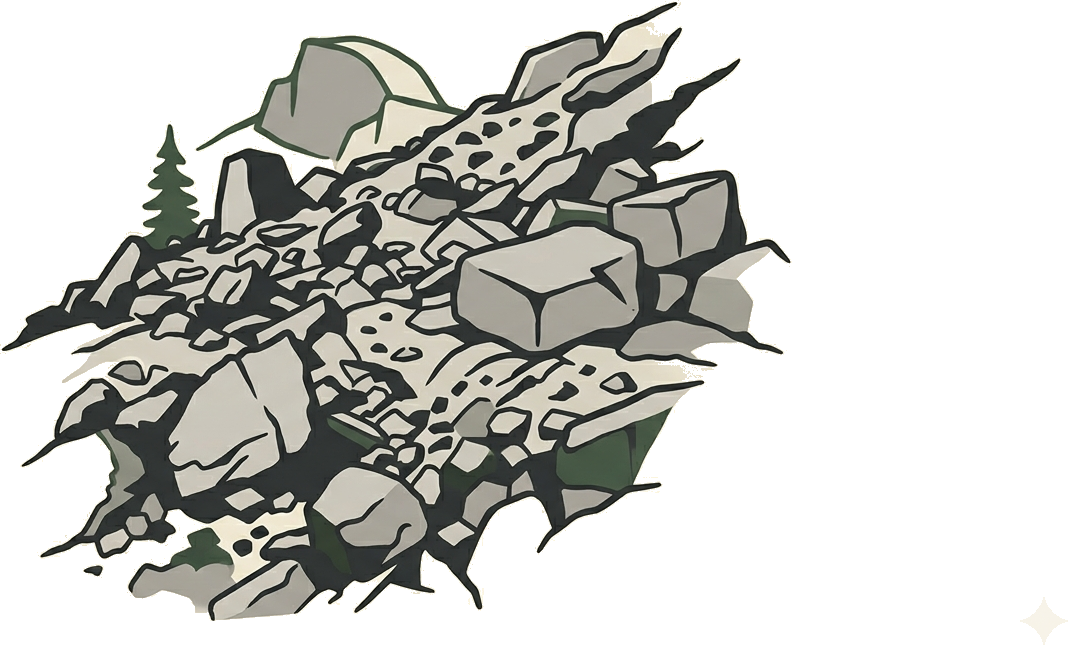
GLACIAL POLISH
By C. P. RUSSELL What Yosemite high country ley's of the lower levels. Then with hiker could fail to be impressed the change to warmer climate with the glassy granite surfaces there came the steady recession of found everywhere along the stream the rivers of ice, until they drew courses east of the valley? Even back to the crests from which they the native Indians found this natustarted. Such a condition of afral wonder too much for their fairs resulted in the summit restolid disposition, and John \lair gion's undergoing continual ice relates haw he was approached by erosion, while the lower canyons a native who questioned : "What were acted upon for bat a fraction make 'urn the rock so' smooth at of the time. Then, too, it is a fact Tenaya?" that the last ice epoch is not yet ended. At the present time many The rock carving of the high lingering remnants of the onee country appears more recent and mighty glaciers may be found on better preserved than do the erothe shaded sides of the Sierra sional features of the Yosemite peaks. The ice has been slowly, revalley and the canyons lower do..cth ceding for thousands of years. the To the tourist who has also visited granite surfaces of the lower canRainier National Park and examyons were uncovered long before fined the polished rocks of that rethe high country was freed from gion of mighty glaciers, it toast its fee mantle. Consequently, weathseem that Sierra glaciers melted eying has exerted its decomposing bui yesterday. For the granite of influence upon the lower glacial the old glacier paths of the Sierras polish for a much longer period in the summit region exhibits the than it has in the summit, region, same smooth, glassy polish : indeed, Within the Yosemite valley, where for the most part it is a smoother, the most wonderful grosser 'teamore mirror-like polish than the tures of ice carving are seen, none rocks of Rainier are capable of of the finer glacial polish has pertaking. silted. A little above. the valley, in F. E. Mat'thes of the United the Little Yosemite, small patches States Geological Survey atirihntes of the mirror-like surface may still this marked difference in freshness be found on the harder parts of of the ice marks in the Yosemite the granite. Still higher, as at high country and lower country to Merced and Tenaya lakes, great the divisions of the ice age into areas, acres in extent, are just betwo or more epochs—a succession ginning to yield to ravages of he of glacial extensions, separated by weather. Above these places. in intervals of milder climate. With shaded cirques at the very crest, each period of low temperatures the granite is yet bound by eternal there was a steady creeping of ice, and the friction of the moving great ice tongues from the summits mass is today adding' to the gloss down through the canyons to 'alof the surface below.
YOSEMITE EDUCATIONAL SERVICE CLOSES BEST SEASON.
D O PARK visitors wish to "know their parks"? Results of the Yosemite Nature Guide Service during the season just ended would indicate that the spirit of "wanting to know" is indeed manifested. Better than ever has been the response from the public, so much better, in fact, that extra naturalists were called upon to enlarge the free -service that has become a Yosemite institution. Ten naturalists were busied in 1925, whereas, in the past, six were employed. Outside organizations have recognized the desirability of furthering the work and through the co-opera tion cf the American Association of
Museums, the Yosemite Park and Curry Company, the Sierra Club and the Yosemite Natural History Association the four extra staff members were salaried Innovations of the year were the establishment of branch museums and the organization of a field school or natural history. At the new Glacier Point lookout a naturalist has been in constant attendance. Tries afield have provided opportunity for visitors to become acquainted with the wonderful flora and fauna of that point en the "rim, " aad;llustroted evening lectures at the Glacier Point Hotel have conveyer the true story of Yosemite to guests of that unique resort. In Tuolumne Meadows nature guides have had the use of the Sicure Clue 's Parsons ' memorial lodge as headquarters. There, mane travelers cn the Tioga road have heard the message of the parks. A cut flower show was maintained et the branch museum and a nature guide in attendance has aided visitors in interpreting the wonders of the Hudsonian zone. Daily field trips were made with small parties and each evening informal cam) fire talks were given at the Tuolumne lodge. Nine die-ds.y trii.•s to the summit region, making use of the hikers' camps, went made. These parties were in most eases small, but tee results were nevertheless worth while. Six consecutive days w ' th the Fame group of people enable a eaturaliet to convince his listeners of the satisfaction resulting from being nature-intuited. Most enthusiastic expressions of gratitude have ecme from visito rs who have avail( d themeelves of these hip"h-country nature study trips. On the valley floor the ojr museum btalding has been rowdcd with visitors. Geology talcs scheduled there regularly have attracted numbers who sought knawl dgg e of the genesis of the marvelous gorge. Four, anti sometimes five. nature guided field trips nave been made daily and in spite of the greeter frequency of trips the averuge attendance has been better than ever. As usual, full day trips to points an the "rim " have beer matte each Saturday. As an experiment nature guides have been detailed to accompany saddle parties and et rtain auto-bus tours. Results encourage further attempts t" enlarge the service In this field. Evening lectures at Camp Curry turd Yosemite Lodge, offered four timea each week, have reached th e usual large audiences that gather at these resorts to enjoy the prograins. A new.phase of service to nature lovers was the Tuesday evening museum camp fire. Groups of one hundred or so gathered once each week around the great fire built at the rear of the new Museum building, and there Informal discussions of topics of particular interest to the group assembled were discussed. The organization of the Yosemite Field School of Natural History, under the direction of Dr. H. C. Bryant, has instituted a new branch of the educational work that will care for the demand for systematized study of field methods. But twenty students can be accommolated in this school, and that number quickly signed up for the 1925 work. These students, after seven weeks nP careful work, hase returned to their twenty respective homes, each,'ualified to originate a new ripple of enthusiasm In the growing nature-study movement. Some renders will be interested in noting the growth In Yosemite 's educational work. To those interested, the following figures will be sinnificant: Museum attendance, May. June,,Ti'!' and August : 1924, 34.513; 1925, 13,243. Lectures : 1924, 37.736 : 1925 50,220. Field trips : 1924, 2618 : 1925. 9912. Total attendance : 1924, 74.867; 1925. 113,875. —C. P. Russell.
YOSEMITE NATURE.NOTES ON THE SIERRA'S SUMMIT
By D. D. McLean • N SEPTEMBER 12, I left Yosemite for the summit region, in the vicinity of Saddlebag Lake and Tioga Pass. Leaving Yosemite t 8 o'clock in the morning, I arrived at Saddlebag Lake about 4 in the fternoon, to find the country bleak and cold with a strong wind and n overcast sky that threatened snow at any time. A strong southest wind swept the. clouds by at a terrific pace. I piled my bedding and camping outfit out and taking them on y back started up the east side of Mt - nnnnesa_ Animal life was scanty on toe ay up the mountain side, only an ccasionel Alpine chipmunk, cony, - osey finch, junco, or Audubon •nrhler appeared to break the.onotony of the boulders end snow nd wind twisted lodge pole pines ad junipers. Shortly before dusk I reached a mall glaciel basin at the limit of e trees and camped for the night. 'he lodge pole pines furnished a cod supply of wood that gave out lontyof beet, thus counteracting ome of the cold that was bound to reep in around the corners to some xtent. A terrific wind was now slowing end it seemed certain that t would snow before long. About 8 ocleck the.snow came flying nearly level before the wind. It stopped about ll and the sky became partially clenr and it,nldentally became colder. About 3 clouded up again rind it snowed til about 8 in the morning. I kept thi fire going di night, d break fart was consequently. onked in chort order rind tn., bed (Pled out before the fire. This camp Was at about ll,400 feet altitude, ~n a shallow canyon en the eastern tilde of mount Conness : [ climbed on up in, the morning. but there was nothing of interest Misting about, so T started hack down to Saddle hayl=ike, errivin: nbout neon or :r little before. I fibbed a while and caught several Ore Cutthroat trout betore starting bark ein of the mountains. On the way out from ct Idlrbag lake to the road at Leevinrny creek I saw a fine red fox running away ttl shout fifty yards.11st= nee. It began to snow ae<rin e e 1 came Into Tioga pass, hut Bonn ceased. fad by the time I reached Tuoimmne Meadows the eke. was fairly deer. Client flocks of Brewer hInekbirde Were wandering about over the Meadows. These birds nest at a low elevation (3000 to sea level) and move up to the hi.ehee mountains later, after the fetin g birds are able to more or less look after
themselves. Juncos, Chipping sparrows ' Hudsonian white-crowned eparrrows, robing, Casein purple finches, Mountain bluebirds, Audu bon warblers Ind several less common birds were more or leas in evidence most of the time : while
Belding ground squirrels, Goldenmantled ground squirrels, and at least two kinds of chipmunks, probt,bly Alpine and Tahoe, me de up the majority of the mammals that were seen about the meadows. One mountain coyote ws seen nut in the midOle of the lower end or the meadows and made off at my approach. T came on down to Lake Tenaya and etopped at the lower end of the lake for shout an hour. FIrre I found a large number of trout that were dead or in a dying condition. What was the cause, I do not know, but there were literally hundreds of the fish lying about in the watersurreunded rocks at the west and south sides of the lake. Some were very sick, but most of them were dead. A r'alifornia;gull ware eating sane of the dead fish, hut was careful to keep well out of my way. Many mammal tracks in the sand also pointed to o bounteous fe:isring on dead and dying fish by them. Fisher coyote, bear :end a smr. filer trarck, possibly mink or marten, were the tracks most in evidence. A pair of large mule deer bucks ether] across a small meadow and watched me for some time as I prowled around through the heuliler' :; at the lake store. At White Wolf three pine grosbe :.ks flew up from the roadside end disappeared into the lodge pole forest. Literal ha hundreds of Casein plr' finches flitted in and out :ef the trees along the stream at White Wolf, and a few Townsend dolit.rires were also seen. I)a.rknes; soon began to fall, and of course the birds and mammals seared to be noticed.
Dead L&1 epole pine in the Cathedral Creek drainage killed by the Mountain Pine bottle after defoliation by the Needle Miner. —Photo by G. E. Patterson.
LODGEPOLE PINE DEFOLIATION DISAPPEARING IN YOSEMITE.
By J. M. MILLER. The lodgepole pine needleminer adult moths occur only every alecurvaria milleri, Busch) has, ternate year, as in 1903, 1905, 1907, rhaps, aroused more interest than etc. Only immature ]arvae could,y 'Other forest insect pest in the have been found during the season ()Semite. "Needle-miner" truly of 1904. *Scribes the food habits of this Following up Dr. Comstock's reee defoliator. The larval form is port, the Federal Bureau of EnSmall that it feeds on the intomology sent H. E. Burke to the nor of the slender pine leaves, Yosemite in 190G to make a study aving the outer skin intact so of fcrest insect conditions in the hat the needle becomes a hollow national park. Mr. Burke made a ell. The adult form is' a tiny pack horse trip along the Tioga bite moth considerably smaller road, but failed to find any evihan the ordinary house fly. dente of the needleminer in the This insect has been in an epiTenaya basin or the Tuolumne. emit status in the Tuolumne WaMeadows. Evidence secured later, Mashed since 1504 and earlier and however, indicated that the insect as defoliated the lodgepole pine was abundant that season in the Ver thousands of acres. Wherever Virginia canyon and areas to the hese epidemics have occurred the north. Odgepole pine has been striped of •1'he Moth Flight of 1913 to foliage everyalternate year No further study was made of nd its growth checked so that the the situation until 1911 when Dr. f ree either dies as a result of the E. P. Meineeke of the Bureau of •efcliation or succumbs to the atPlant Industry passed through the ark of an associated enemy, the Tuolumne Meadows and his report 'mountain pine beetle. shcws that by that time the insect Since 1922 the needleminer has had become thoroughly established !most entirely disappeared within in the Tenaya Basin and the lower be national park. However, the Tuolumne Meadows. In October, host-like dead forests which it 1912, the writer was sent into the -~ elped to create will stand for Tuolumne Meadows by the Bureau any years as a reminder of its of Entomology to secure available ieit. specimens and evidence of the de71vasion Dates Back to 1895 foliater. At that time the immature The history ot this p.irtieular inlarvae had completed one season's, het is closely associated with the feeding and, as a result, fee enosemite. Up to the present it has tire lodgepole forests about Tenaya 'ever been found in epidemic form lake, Cathedral creek and from Utside the boundaries of the YoGlen Aulin to the Soda Springs at mite National Park and only in Tuolumne Meadows, presented a r e last few years has it been rebrownish appearance as though orted from lodgepole pine in any scorcued by fire. In early summer her region. of 1913 the affected needles The earliest reports of the dying dropped from the trees. causing a f She lodgepole or "tamarack" severe defoliation. By the latter hie are from stockmen who male part of July the moths were in rips into the back co-entry. These flight. Ftwas from specimens of sports indicate that there were the adult form collected during the ome areas of dead and dying tiroseason of 1913 and forwarded to, er in Jack Main canyon and other Washington, D. C., that the insect •orthern tributaries of the Tuolwas fist determined as a species ?mne watershed as early as 1895 new to science and later deseriaed nd 1890. In 1904, Dr. S. H. Cornby Mee Busch, tuck or Cornell University, one of The fltgnt of the moths during `' e leading entomologists of the the, season of 1913 was worthy of ountry, 'made a tourist trip note. The height of the fligh t_ rough the Tuolumne, river weperiod nccerred during the 1,st ershed. HP reported that the week of July raid first week in Aui'odgepole pine was being deft-Aigust. In actual numbers the motti.e, ted by a needleminer, but did not can only he compared to rnoegii.ito e, i ecure specimens of the insect. This which fellow the disapp i •irence nt an be more easily underetnod the snow on the l ierra meadows. hen we consider that the needleThroughout Inc dayli ght hours ti. ' Sher goes through a two-year life air was filled with myriads of the, ycle and that the flight of the little white moths. They were n I01
veritable pest to the tourist, mixcontrolling the abundance of native ing into the culinary operations in lepidopterous insects. It was decamp and adding to his disconterrnined that toe infestation died forts on the trail. out in Virginia canyon about 1911 Detailed Steady Began in 191E end has not appeared there since. In 1916 the bureau started a deThe decline iii the Tuolumne mead-tailed study of the life history, owe and `Ienaya regions has been
habits and possibilities of control -if much slower in arriving than a t this insect, This work was carried exported. The first indications ol on during 1917, 1911 and 1919 by a decline were observed In 19'_2,1. E. Patterson, whose paper pubwhen it was found that the insect lashed in the Journal of Agriculhad failed to spread into new are u, traal Research, covers the results during the 1921 flight and that the of these, investigations. abundance of the larvae was apThe necdleminer spread but slowpreciably reduced. Pile 1923 flight ly from the areas in which it was of the meths was considerably refound to he established in 1911 an I duced over that of 1321. During hi 1912. The only perceptible advance trip which his just been made durwas a slow drift to the westward. ing the latter part of July, 191., 1 It crossed the divide between Tenhad considerable difficulty in findaya lake and Snow creek and being speotrnens. Not more than a came established at Snow flat, dozers meths were seen it. flight Porcupine flat and Ten Ali 1 e throughout the entire region. meadows. During the flight season One encouraging feature of the of 1917 it odussed the Tenaya present situation is that with th canyon and became established on dying on e of the epidemic in it; t he Merced drainage in a small recent centers, there has been n tract of lodgepole pine between evidence of an hutbrcak occurring Half Dome and Clouds Best. 1-lowrinyimhere else wither. the boundever. this point marked its furthest arses of t he park. It can now he stivance toward the lodgepoI expected that this season will marl: forests of the Little Yosemite aril the end cf tike outbr e ak which has Merced ennyon, and with the recen t been running for the past fifteen dying out of the infestation this or twenty years The probability timber he apparently safe from deof a return of the eoidemie in tit„ foliation for the present. future is a matter which cannot bs Entomelogists have been, expectsafely predicted at present. Let as frig the snbsidenre of the needlehope at 'east thrt this. will he th miner epidemic for score years dire last visit of the needletriner to the to the presence of parasites which Yorcmite lndgepolo areas for many as a rule ate effective in time in years to wine.
Published weekly in summer and monthly in winter by the National Park Service in cooperation with the Yosemite Natural History Association, in Yosemite Valley. The articles published in "Yosemite Nature Notes" are not copyrighted. It is intended that these articles shall be freely used by the press and by all periodicals that believe in the value of National Parks. When material from this publication is used due credit should be given. Communications should be addressed to C.P.Russell, Park Naturalist, Yosemite National Park.
IO2
FIELD WITH THE NATURE GUIDES
a Nevada Range traveling at about the same rate J 1S Mcenntnin„ of speed. One pigeon dashed he' whole Sierra Nevada range, through a black oak tree but they anding for more than 400 miles other continued straight ahead Mhly parallel to the eastern dovan. under the oaks. Suddenly they ltdary of California, is geologies big awk behind put on a terrific but a single m. ontain, It is a burst of speed that carried it head 1e block of the earth 's crust— on into the pigeon amid a cloud of Ok 40U miles long and 80 milts feathers. that has been tipped up at The pigecm was knocked to the eastern edge. The western edge ground and immediately pounced buried beneath the alluvial upon by the hawk, which proved eltts of the San Joaquin and to be an adult Western Goshawk. E l onto valleys, and the eleA s I approached he picked up the d eastern edeiss is represented pigeon and flew easily away toward he crest of the Sierra Nevada Yosemite creek—D. D. McLean. the Mount Whitney regaun in * * * Youth to the Mount Lassen titsPEREGOY AND BRIDALin the north.
VEIL MEADOWS
~nod simple account of the sacSeveral trips have been made lye uf'lifts that finally raised lately to Bridalveil and Peregoy Sierra Nevada some 13,060 feet Meadows after material for the muhe Yosemite region will be scum collection. id in the admirable geological Birds are scarce at this time et me, "Tire Story of Yosemite year, due to the fall molt. Apparay," written by Francois Fl. ently they have either hidden away then and recently printed on or gone to other :sections that are back of tae Yosemite Valley more secluded. la] sheet. This map may be Black and white-throated Swifts iced from the United States were seen on several occasions flylogical Survey for 10 cents.— ing over in company with numerous el F. Hall groups of violet-green Swallows. ~C
A mixed flock of Western and r~Picicet Platt Mountain Bluebirds were hovering over Peregoy Meadows practically liters in the, high country fanall the time in quest of small lntail to be interested in the sects. A Nevada Savanna Sparrow ettul, loud, clear wntsttu,g that was working in the tall grass along eta them as tai y enter the high the edge of the stream that flows uniain meadows. A little lookthrough meadows. Hundreds of about discloses the identity or Sierra Juncos and Chipping Sparwhistler. 1i'robably the, first rows were flitting about the edges w of him will be had as e end, of both meadows with scattering tit on his haunches very much groups of Cassia Purple Finches. e a miniature prairie-dog', in A great Grey Owl was seen In the he is known to some moandark fir woods between the two ytfers as "prairie—dog." Careful meadows. Several Sierra Chickatching will lead to the discovery gees called my attention to the t he scurries about through the' presence of the owl by their alarm
his short legs keeping htni notes. le to the ground so that he is One Clark Nutcracker flew over rt telueus :Le he moves cols r3ridalve'i] Meadows and stopped for rt t til is held nut behind ramu. ig the habit of most grou nd a few moments on the top of a lrrels. When he sits erect for a large fir above the road. around, he folds his forelegs Chipmunks were fairly common Itre to its body and iodl:s for all throughout the Lodge Pole forest in e• world like a stake driven into company with scattering individv ground. This real nibience has uals of Golden-mantled Ground (e'en him to, name "picket-pin." Stiuirrels. The burrows of the lattis motional of the hash coo ntrp.ie ter species were found to be :a-.en now at Ti,oletnne Meadows, sated mainly along the road, rather Dow Fiat and in r11 of the :hat! in the forest itself padows en the pisses -reseed by Mountain Beaver work was found Vrfa eotis trails anti the Tioga road. at one point lust below Peregoy C. P. Fussell. Meadows. Their tracks showing in the narrow trails leading from their
♦VESTERN G04}I.4 WK
furrows under fallen tree tops ro SCATTERS Yosemite'S RANDthe sl r •am. Qt
T.AIT. PIGEON COLONY
endow mice were at work gathering "hay" throughout both mead_ 'When coming by the Zoo near the owe. S. N. P. S barns on Monday a ftNo Woodpeckers were seen at all neon, September 14, i was stara l though quantities of drilling had ed by a wild flapping and a ginbeen done Previously on many of al exodus of a large group of the Lodge Poles around the Meadfind-tailed Pigeons from the norows, al, In t he spring and early summer Two pigeons went by me like one should find birds and mamreaks and immediately in their mals very numerous in this secake came another big blue bird, tion.—D, D. McLean.
WHAT YOSEMITE'S EDUCATIONAL PROGRAM PURPORTS TO DO
i. It seeks to stimulate use of the recreational resources of Yosemite National Park through the encouragement of a knowledge of natural history. 2. It teaches natural history but it does not overlook the fact that "to be nature-minded is more im portant than to be nature-wise".
3. It reaches beyond Yosemite and beyond the National Park Service in its accomplishments, for popular education in natural history affords a foundation to the intelligent administration of all natural resources. 4. It assists the park visitor in appreciating the wonders preserved for him in Yosemite and in appreciating the value of all out-door recreation. It makes him "want to know" and prepares him to more fully enjoy his park possessions.
<!-- Page ll -->
E YOSEMITE NATURAL HISTORY ASSOCIATION ITS PURPOSES
To gather and disseminate information on the wild-life of the Sierras. To develop and enlarge the Yosemite Museum (in co- • eration with the National Park Service) and to establish sub- • iary units, such as the Glacier Point lookout and branches of filar nature. To promote the educational work of the Yosemite Nature Guide Service. To publish (in cooperation with the U. S. National Park ? Service) "Yosemite Nature Notes ". To study living conditions, past and present, of the Indians of the Yosemite region. To maintain in Yosemite Valley a library of historical, scientific, and popular interest. To further scientific investigation along lines of greatest popular interest and to publish, from time to time, bulletins of non-technical nature. To aridly limit the activities of the association to purposes which shall be scientific and educational, in order that the organization shall not be operated for profit.
MAY WE SEND YOU EACH ISSUE OF YOSEMITE NATURE NOTES?
Your check for $2.00 sent to the Park Naturalist, Yosemite ational Park, will help to pay the cost of its publication for e year and make you a member of the Yosemite Natural 'Story Association for the same period.
OM THE NATIONAL CONFERENCE ON OUT-DOOR RECREATION
Called by PRESIDENT COOLIDGE
S HAT THE CONFERENCE ENDORSE NATURE STUDY IN =SCHOOLS D THE EXTENSION OF THE NATURE STUDY IDEA TO EVERY ERICAN SCHOOL AND FAMILY; THAT THE ESTABLISHT OF MUSEUMS OF NATURAL HISTORY IN NATIONAL PARKS
t L INCREASE THE EDUCATIONAL RECREATIONAL VALUE Or THE 1' xs".----Resolution of the Conference.
I i 5,00 0 Yosemite visitors made use of the Nature Guide Service 4 during summer of 1925.