Yosemite Nature Notes · Volume 3, Number 3
March 31, 1924
Volume III
DEPARTMENT OF THE INTERIOR NATIONAL PARK SERVICE YOSEMITE NATIONAL PARK
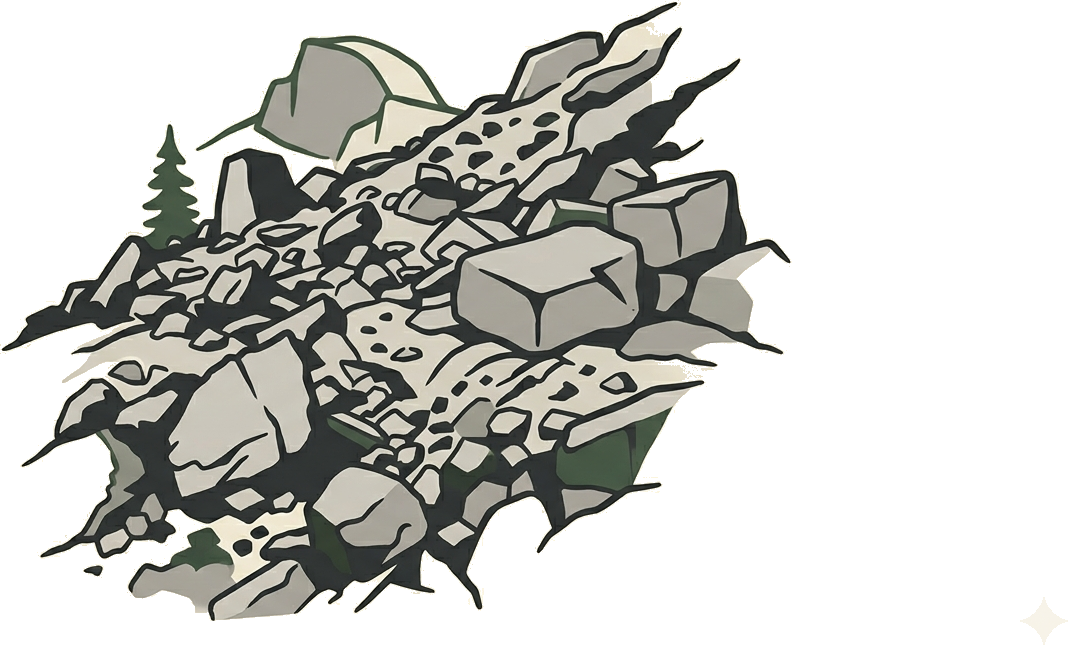
March 31, 1924 Yosemite Nature Guide Service C. P. Russell, Park Naturalist. This is one of a series of bulletins issued from time to time for the information of those interested in the natural history and scientific features of the park and the educational opportunities the park affords for the study of these subjects. Utilization of these bulletins by those receiving them to the end that the information contained therein might be as extensively distributed as possible will be appreciated. W. B. Lewis. Superintendent. An Aerial Love-dance The 11th of March was one of that long series of beautiful days that brought spring and auto campers to Yosemite weeks ahead of regular schedule. The Writer, that morning, stumbled upon a well-worn deer trail that clambered up the rough talus slope that fills the deep embayment in the cliff walls between El Capitan and the Three Brothers. Because the trail promised a means of visiting an unknown region, he ventured to ascend the oak-shaded rock pile and had negotiated about a mile of rough-going when there occurred the incident of this "note". While he was resting a few minutes at the edge of an unforested shoulder of the talus there came to his ear a high pitched, wheedling song, oft repeated and without pause. It was decidedly musical yet insect-like in quality, and, while the listener anxiously looked for the singer, the strange music abruptly ended. The pause was brief, however, and the same voice again sang, but this time it was a new series of notes. There was now introduced
a rich bird-like note, which at first seemed must come from some distant bird and by coincidence was inserted into this wheedling song at just the proper interval. However, it was later determined that one songster was responsible. With mechanical rhythm the song came, eight, ten, a dozen times repeated and then came the climax; the singing ended with a resounding musical explosion, positively startling in contrast with the almost inaudible music that preceded. It was only after a second explosive burst, this time with no preliminary singing, that the observer was able to locate the mysterious entertainer. Above the dead top of a golden cup oak, some seventy feet distant, whizzed a tiny shape. At the very end of one of the dead limbs sat another mite of a creature, Calliope Humming Bird, Time after time the male in the air hovered a moment a few feet above his perched mate and then with speed too great to be followed by the eye, whizzed downward straight at her, bringing up with the resounding pop described. A tight fitting cork jerked from the mouth of an empty quart bottle reproduces the ringing sound very well. Six times he was noted to do this in quick succession. Once he actually sprang upward from the female and produced the sound about four feet above her head instead of immediately in her face. At last he perched beside her for a few minutes and then by some pre-arrangement they whizzed off together and were quickly lost sight of in the depths of the valley below. The writer continued up the trail and in an hour passed the spot on his return. The male hummer was perched in the same dead oak top and ardently sang his wheedling song. The female undoubtedly was nearby but invisible and there was no repetition of the strenuous love dance in the air. Natural History Groups for Yosemite Museum It is planned that the Yosemite Museum shall stimulate and develop interest in all Sierra wild life. Through the good cooperation of visitors it is now a veritable store house of information on nature and Indian lore. Eventually it shall contain a representative of every plant, mammal, bird, fish, reptile, frog, and invertebrate animal native to the Yosemite. We hope these specimens may be so exhibited and simply described that their examination may be profitable to even the least assiduous visitor. The latest addition to the Natural History exhibits is a habitat group of chickarees prepared by the park-naturalist. This is the first of a series of such groups portraying the family life of some of the smaller animal forms common within the park. The setting, as to background and surroundings, is designed to represent faithfully actual habitats. The animals themselves are posed in characteristic habits and the entire display tells a story such as the Nature Guide Service would have all hear. Once observed in the Museum the animal in question becomes an old. friend and is at once recognized as such when the observer comes on to it in life. Without the first museum association many subsequent fleeting meetings might possibly be overlooked or slighted. We believe that in habitat groups there lies a means of making many alert to opportunity of observing wild life in the field. The generous aid of the California Academy of Sciences and the patience and skill of Chief Taxidermist, Frank Tose, of the Academy's Museum has made it possible for the park naturalist to learn something of the methods employed in their laboratories.
Some March Botany Notes The first fifteen days of March, aside from a rainstorm on the second day of the month, were warm and tranquil. All growing things were encouraged to make a supreme effort, and many plants of a tall habit hurried into bloom with scarcely any stem, their flowers less than an inch above the ground, for under cover of the soft seductive air lurked a dread hint of drought. Of all the plants that bloomed the Manzanitas were the most glorious. Mariposa Manzanita (Arctostaphylos mariposa), common on our southern slope, was, when in full bloom, a vision of fresh loveliness. The Green Manzanita (Arctostaphylos patula), growing sparingly in the Valley but common along the trails and roads leading from the Valley to greater elevations, was, when in fresh bloom, supremely beautiful. Along the Wawona Road below Chinquapin this shrub attained its greatest perfection; its sparkling foliage and clusters of vivid pink bells were in startling contrast to the other shrubs that were still in dull winter foliage. The Coffee-berry (Rhamnus californica) was the first deciduous shrub to unfold its leaves. Early in the month the Choke Cherry (Prunus demissa) showed signs of awakening, and by the close of the month the young leaves had begun to burst the winter wrappings. The leafless willows, whose fiery red and brilliant orange stems have lent glowing color to the banks of the Merced River for the past two months, have begun to show signs of bloom. Salix lemmonii, the Lemmon's Willow, has thrust forth beautiful silvery catkins, and other willows will soon follow with flowers. (Enid Michael) The Killdeer again Appears in Yosemite Valley It is a pleasure to greet old friends, and birds returning to the Valley after an absence of months certainly come as old friends. It is also a pleasure to visit with our neighbors, in the resident birds, but the stranger to the Valley is the one that brings the real thrill. These thrilling strangers are classed as "erratic wanderers". They really do not belong in the Yosemite; they just drift in, perhaps in the spirit of adventure. The thrill is produced by the unexpected meeting. Many of these "erratic wanderers" are common to the San Joaquin Valley, and occasionally individuals find their way into the Yosemite. The Killdeer is one of the birds of the San Joaquin that happen in. On the afternoon of March 17, 1924, during a snow storm, a pair of these birds arrived in the Valley. They alighted just above the Sentinel Bridge and spent several hours trotting up and down a gravel-bar at the edge of the river. No trace of the Killdeer could be found the following day. This is the third time that Killdeer have been reported from the Yosemite Valley. On the two previous occasions just single birds were noted -November 11, 1921, and November 29, 1922.
(Enid Michael)
Reading History in Glacial Debris How fascinating must have been the work of the U. S. Geologist, Mr. F. E. Matthes, and his assistants, in deciphering the story of
YOSEMITE :
The available records of the activities of the ancient glaciers consist of ridges of earth and rock scraped up by the nose and sides of the ice masses. Many of these moraines, especially those of the lower levels, are greatly disintegrated and overgrown by chaparral and forests; they are not to be studied from a seat on some vantage point overlooking much territory but must, in many cases, be investigated on hands and knees under the manzanita. In the loose gravel of the moraines are found rounded boulders transported by the glacier from far distant points. The rocks of the Yosemite region are nearly all granite, and, while they are easily distinguished by a petrographer, to the untrained eye the various types of granite are the same in aspect. When thoroughly weathered these rocks may not be recognized even by the trained worker, and at times it was necessary to spend time chipping corners off boulders in order to discover the type of granite. Before this hidden story could be interpreted, it was of course necessary that the workers be familiar with the rock structures of the high country from whence the ice masses projected long tongues into the lower canyons. With a knowledge of the rock types of the summit region it was possible to study the lower moraines and determine the course followed by the glacier in question. Through such work it was established that Glacier Point was inundated by ice of a very early epoch. So long ago was the famous promontory covered by the glacier that all signs of the ice flood have vanished, except for some boulders and cobble stones held within a protecting hollow on the summit of the 3200 foot cliff. When their cobbles were broken, it was determined that they were of the type of granite from the Little Yosemite region and absolutely foreign to the Glacier Point neighborhood. It was then the Merced Glacier that overwhelmed the Point, Specimens of these various rock types collected in moraines far from their points of origin may be seen in the geology room of the Yosemite Museum. Spurred Towhee (Pipilo Maculatus Falcinellus) Another boarder at our camp at the present is a very beautiful male Spurred Towhee. A glossy black cowl drapes neatly to his shoulders, white feathers form an irregular pattern on his back, and in flight his very black tail shows tips of white. Two white wing bands cut sharp lines in his black wings, and a pure white breast and belly is bordered by buffy feathers. One of the Towhee's most striking features is his flashing red eye. We think the Spurred Towhee is one of the most beautiful birds found in the Yosemite. During the nesting season Spurred Towhees are found in all sections of the Valley, but they are never very numerous. They are shy, ground-feeding birds that usually keep well under cover in dense, low-growing brush and for this reason they are seldom seen by the casual observer. It is during the mating season that these birds are most often noted, for then the male bird perches in the top of his home bush and whistles his love song.
He is not a wonderful singer but his short ringing trill expresses well the joy of life. The nest of the Spurred Towhee is built on the ground, well hidden in a tangle of brush, and in a like situation the Towhee spends most of his time scratching for a living. When scratching for food, he certainly can make the leaves fly, and in summer and fall when the leaves are dry, he makes a great commotion. When one gets to know the Towhee well, one may recognize him by the sound of his scratching. It would be well, however, to say that the Fox Sparrow scratches in a similar manner. For four seasons a pair of Spurred Towhees nested and reared their young near our camp. The birds were often seen flying back and forth across the river, going to and from their nest, but it was not until the third season that they began to pick up crumbs about the bird table. The fourth season they became quite bold and would come to the window and call for food. When a piece of bread was tossed out, it was at once seized and carried off. When all is quiet, they may contentedly pick up crumbs about camp, but they have never yet been seen on the feeding table, which is two feet above the ground. (Enid Michael)