Yosemite Nature Notes · Volume 3, Number 14
1924
<!-- Page 1 -->.DEPARTMENT OF THE INTEAIOR
NATIONAL PARK SERVICE YOSEMITE NATIONAL PARK
Yg S,, T E
IEA2.UE.B
12222 !Volume III ' 9 1Q9/1 women,. la Yosemite Nature Guide Service C. P. Russell, Park Naturalist This is one of a series of bulletins issued from time to time for the information of those interested in the natural history and scientific features of the park and the educational opportunities the park affords for the study of these subjects. Utilization of these bulletins by those receiving them to the end t the information contained therein might be as extensively distributed s possible will be appreciated. tr. B. Lewis, Superintendent
THE BOOTHE LAJ(CAMP
Can you feel a thrill in tramping over une- :plored granite heights? 00 you find a satisfaction in discovering unnamed and unmapped glacial lakes? Rave you a love for the situations of the Sierra timberline? Then hie you to that wonderland about the Tuolumne Pass now made accessible by the Boothe Lake Camp. This third camp in the present series of rive HIKERS' CARPS is nearly two miles higher than Ban Francisco. It is located upon a perfect gem of a rock-bound lake, unnamed upon maps, but for Dome time designated locally as Boothe Jake. Before the camp spreads a frontage of white sandy beach and the entire length of this alpine lake beauty. Hemmed in at the back by picturesque cliffs, the tents are well protected from chill winds, which at this altitude may make nights seem wintry. - -
In leaving Merced Lake Camp, peevious7.y described, hikers will travel U the Merced Canyon about one mile to the confessnce of the Merced and the McClure Fork. Here trails branch off to the left, and the traveler may choose between the well constructed Babcock Lake Teail, which parallels Fletcher Creek, or the longer, more difficult, and hors;spectacular Vogelsang Pass Trail. Both of these trails cross Tuolumne Pass. If Fletcher Creek is followed, an ascent is made upon the shining granite scopes with the happy plashing stream ever close at hand. A glacier-modeled dc!ne crowns the summit from ?which the stream seems to pour, and if the climber will leave the trail here and follow fo 'r a short distance along the base of the dome, beautiful Babcock Lake is disclosed. This exquisite little adornment of the granite landscape cannot be seen from the trail, but the Boothe Lake-bound hiker should not fail to take the few extra steps eeaessary to view it. Beyond the previously mentioned dome the trail traverses a series of beautiful meadows. These green expanses were once glacial lakes. Like the ancient Lake Yosemite of Yosemite Valley they have been filled ei t li san i brought to them by feeding streams from masses of disintegrating granite which urre—ez them. dresses and low-growi ^ plants carpet them, but the adjacent stands of ',a :.5epole Pine have not yet invaded their green spread. In the meadows Fletcher Creek meanders through many deep pools, and it is reported that trout are numerous and very hungry. tee rare Golden Trout, which were planted in Fletcher Lake, sometimes make their way to these pools of the creek and may be taken here. No hiker will overlook the preserceof the characteristic little dweller of the high country meadows, for he greets every passerby with a cheering whistle. He will be seen sitting stiffly erect with fore paws reclining on his breast. This interesting rodent is a high country ground sgrdrrel and because of his usual erect posture has been called "Picket Pin" 6 To the right of the meadows VoF:el.sang Peak rears its jagged summits above the sky line. Two glaciers, which once headed upon this mountain, cut enormous amphitheatres in the mountain top. They provide splendid opportunity to study glacial cirques at first heed. Near the upper end of the meadows there is again opportunity to make a short side trip to the left of the trail and gain a view of rock-bound Emeriek Lake. From here on, bulging granite masses-and.- rich-bogy meadows alter- :late. Numerous shallow pools confuse the hiker, making his first trip, as to whether or not some of the large ones may be Boothe Lake. However, on passing finally from a heavy stand of Lodgepole Pine onto unforested slopes, one seer unfolded an unexpected view of the heather-bordered, cliff-enclosed Boothe Lake just below. The lover of the mountains who presides and provides at this hospice produces savory and satisfying meals at ?54 each and beds for 75¢ a night. It should be understood that this camp is on the very backbone of the Cathedral Range, which extends for miles both east and west. The many little-visited wonders of these summits will induce any laver of the high places to remain longer than first plans claimed. The Yosemite Nature Guide Service schedules regular trips into the back country opened un by Hikers' Camps. visitors interested in making the trip with a scientist, who thoroughly knows the natural history of the Sierras, may obtain information at the Yosemite Museum. The guide service is free.
rte.= AND SIERRA JUNCO On the morning of July 23 the alarm notes of many Jixr_eos were heard coming from a clump of willows that grew c a the dry gravel- :g ar. On approaching the thicket to learn the cause of the alarm, we d:Lsoovered that a number of Spurred Towhees were banded with the Juncos adding their eo'es to. :the general comlao t ion. The center of concern appeared to be some object on the ground. The birds were perched low in the bushes and they moved about, hopping from branch to branch while they kept u) a constant chatter. The cause of the excitement was at once apparent when a handsome weasel left the cover of brush and trotted out ono the open bravel-har,;:easels may be undesirables, but this little ellow wee certainly attractive, with his soft, yellow pelage and his long yellow, black tipped tail. In foraging, the weasel traveled a hundred yards and all the while he wa : followed by a flock of protesting Juncos. Finally he went into a hole among the willow roots, and then his tormentors went their s car; ous ways to continue peacefully their search for food. leONHEY FLMERS The Yosemite visitor who clinbs to Glacier Point by the Ledge Trail and returns by the Four hile Trail will meet t;iiuh thee of the most conspicuous of the Monkey Flowers, Along the upper half of the Ledge Trail the common Yellow Llonkey Flower (Mimulus iutsus) makes grimaces at the weary climbers, while the beautiful Pink Monkey Flower (Mimulus leti:.sii), often growing in great beds, seem to be trying to cheer the weary ones on. Mere the Four 'Ale Trail crosses the creep which comes down beside Sentinel Rock, the Scarlet i :onkey Flower (Mimulus cardinalis) can hardly fail to attract the attention of all who pass.
NATURE GUIDE PARTY RETURNS PROM SIX DAY HIKE
"I enjoyed every minute of the trip." ": am sorry this is the last day," "I am going to take this trip again some day." These and similar ezpresstons were heard from members of the nature guide party which made the trip into the country starting July 21 and returning July %d. The five Hikers' Camps are so located that the trip between camps; can be made easily each day with 'rem) for resting, fishing, or exploring the region near by In tattle Yosemite tracks which looked like those of a dog aroused the curiosity of the party, which decided they were made by a coyote. Later in the day a coyote was hoard howling. On the last daffy, near Lake Tenaya, a coyote was seen loping across the meadow. Deer wore very numerous between Little Yosemite and Lake Merced. A group of five bucks eere much admired, A Sierra Grouse with two young chicks strutted before us along the trail for some distance and finally perched on a rook nearby and posed while all had a fine view of her. A marmot as rosy finches were seen at Fletcher' Lake. The White Barked Pines above Evelyn Lake showed the battle they are having with the elements at that high altitude, and the Alpine Willows, only a few inches high, were noted as an excellent example of the adaptation of a plant to unfavorable conditions. Evidences of glacial action were observed all along the way, but when the party reached the Lyell Fork of the Tuolumne River, with
r.~,. _u, w : rs carrying neir oa o s3._, w
1„, - _v y fact, that these was still a living glacier working; in the same way as those which occupied the lower regions in the Glacial Period. Fishing proved to be fairly Good, and the amateur photographers had many opportunities to det views of the near and distant mountains. The Nature Guide Service;Jill conduct o nothe r }arty over hi Lh country trails the week beginning august 4. Reservation for this trip should be made at the Yosemite iuseum.
DROUGHT AND YOS :11TE FLORA
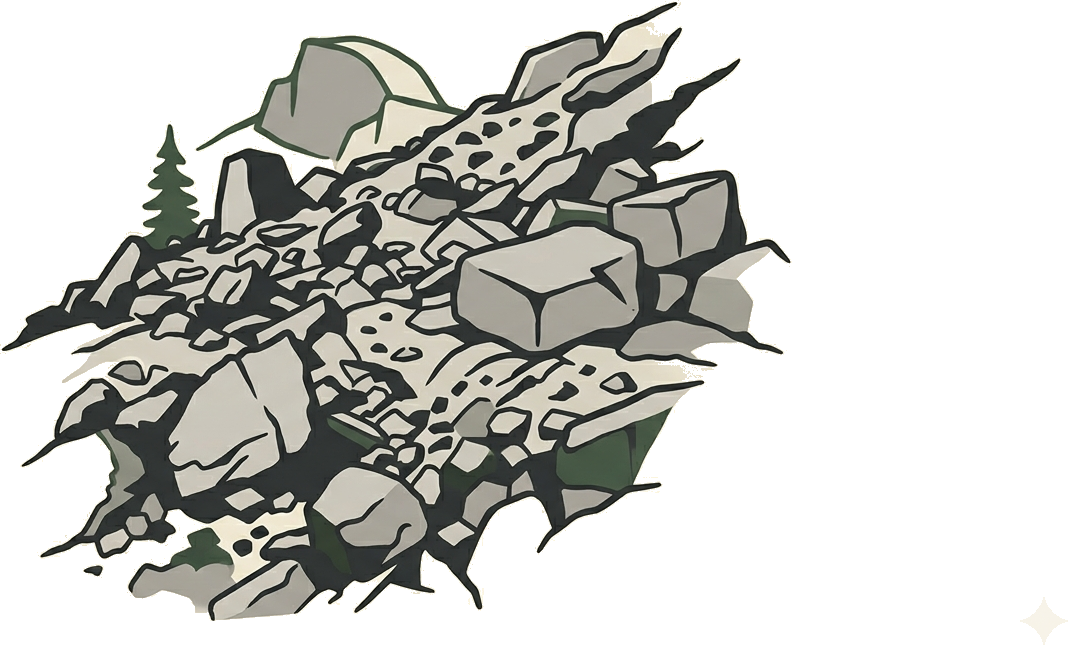
One of the moat important conditions for plant growth is moisture Abundance of soil moisture is requisite for flower formation. This explains the noticeable lack of flowers in the park at the present time and 'rite smaller number of flowers this season as compared with other seasons. This season is a trying one for all plant growth. One onders how many plants can exist at all. Yet on the whole the effect of the d_ ought is not as severe as it would seem. The trees in the Valley retain their freshness to a remarkable degree and show no ill effects. On the ledges the golden can oak is losing somewhat the luster of its leaves, and in places above the Valley some of the pine needles are turnin g yellsand brown, no doubt due to the lack of water in the soil. iiany small firs have a scorched appearance and fre quently one finds small trees that have entirely succumbed. On the whole, however, the `saes of the park are retaining their green color and their freshness in spite of the lack of moistures TELLL. G YOSELi1T =;' S STORY No. 10 -- Glacial Moraines of Yosemite. Would you see a aoraine in the process of building? The Lyell Glacier on the north side of Mt. Tyell s s 13,000 foot summi is nosing un a Great ridge of broken rook debris as even as a railroad. Grade in contour and ty=pical in all respects. At the ends of the other small Glaciers c the park similes. rock masses are accumulating. At trees living;i:tiers, morals may be seen at their best, but throu Lhout the &realer part of the park ancient moraines may be found in various sta ues of decay. It was the moraines, which pave Mr. F. E. Natthes a key to the interpretation of the story of_Yo seznite. Because of the thous :.y :.r s of years 9f-.Feathering to which these Glacial evidences have been subjected, it is not always easy to.recognize them. Certain it is that they cannot be studied as a whole from some point of vantawe, They are in many cases overgrown with forests and chapparal, and the scientist may read their secrets only by laborious work on hands and knees under the Adamanita. In Number 6 of this series reference has been made to the terminal moraine at El Capitan, and the important part it played in forming the Valley.
ley t s flat floor. In Little Yosemite the Merced Glacier, as. it retreated, hesitated sufficiently at three different points to scrape up small terminal moraines_ On the slopes above Little Yosemite remarkable lateral moraines were deposited at the sides of the glacier. At the head of o semi to Vall the debris riding on the sides of the Tenaya Glacier and the Merced Glacier were united at the confluence of these ice streams, and their combined accumulations have formed a large media' moraine. At Glacier Point a. raine was formed., which has been so disintegrated by the elements that only a trained geolonist would suspect its presence. Yosem ite National Bark affords an ideal area in which to study glaciers and glacier monuments.